AI developers at OpenAI, Anthropic, and Google are working 90 hours a week
- AI developers work up to 90 hours a week
- Overtime has become the norm at OpenAI, Anthropic, Google
- Promises of a four-day workweek do not match reality
- Automation increases workload, not free time
In recent years, generative artificial intelligence has been positioned as a tool capable of automating routine tasks and increasing labor productivity. However, those directly involved in creating such systems note that their workload is increasing, and working hours often exceed usual norms.
Overtime work in leading labs
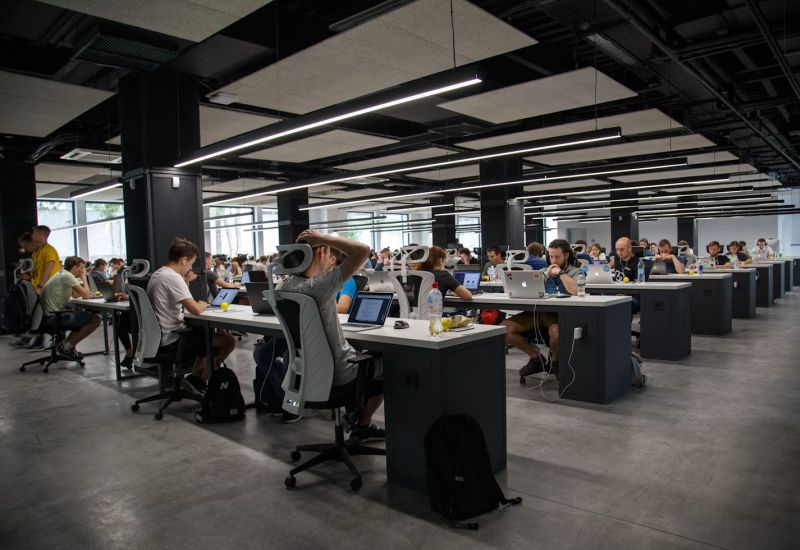
Former and current employees of OpenAI, Anthropic, Meta, and Google reported that in AI development projects, 'marathons' lasting several weeks are regularly organized, during which employees work more than 90 hours a week. Such regimes have become common, especially during periods when it is necessary to launch new models or meet ambitious roadmaps.
One of the former employees of OpenAI emphasized that his usual workload was at least 70 hours a week before leaving the company last year. After moving to a startup, he faces a schedule of 50–60 hours, but during 'sprints', the hours increase sharply.
Inside Google, employees also note that the concentration of resources on AI projects leads to a deterioration in the performance of other departments. When technical failures occur, night shifts are often required to quickly resolve issues.
The contradiction between public statements and reality
OpenAI and Google leadership promotes the idea of a four-day workweek for companies successfully implementing AI in public interviews. Meanwhile, within organizations, overtime has become the norm, and failing to meet strict deadlines threatens mass layoffs.
Employees note that even in small startups, the implementation of AI does not relieve the workload but only adds new tasks that cannot be refused without the risk of dismissal. Often, there is a situation where part of the staff is forced to 'play along' with the work of specialists, while others try to assess the effectiveness of new processes.
Research shows that automation speeds up the completion of individual tasks, but employers simultaneously increase the workload, requiring employees to verify results generated by AI. Thus, the promised reduction in working hours turns into additional pressure.
Experts warn that the increase in productivity due to AI may only intensify pressure on staff if companies do not reconsider their management practices. Without changing approaches to planning and task distribution, the risk of employee burnout remains high.
The situation in the AI industry highlights the need for a more responsible attitude towards the human factor. As competition for leadership in artificial intelligence intensifies, questions about the balance between technological progress and employee well-being remain open.
Source: 3DNews