AI, robots and digital avatars: what “The Lost World” will discuss
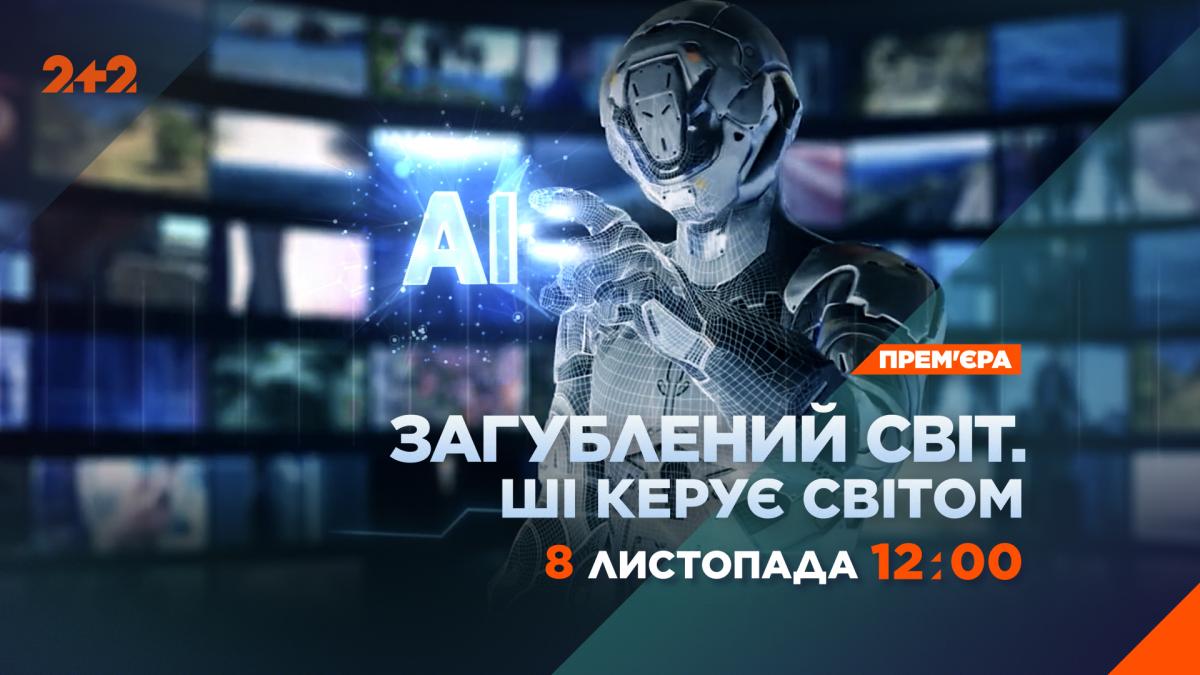
- The 2+2 episode is dedicated to digital avatars of the deceased, robots, and the use of AI in everyday tasks.
- Honor's Flash robot completed the half-marathon in Beijing in 50 minutes and 26 seconds; robots took the top three places.
- The risks cited include voice cloning, fake videos, and vulnerabilities in automated support systems.
AI Between New Possibilities and Risks
The 2+2 TV channel announced an episode of the project “Lost World: AI Rules the World,” which will air on November 8 at 12:00. Host Maksym Sukhenko will examine how artificial intelligence and robotics are changing everyday tasks and what risks come with these new possibilities. This is an announcement for a themed program, not a claim that machines have already replaced people everywhere: the topics mentioned cover both current applications and future scenarios.
The episode description brings together examples from different fields: humanoid robots compete in sports, self-driving cars travel on city streets, and digital tools make it possible to create avatars of the dead. At the same time, AI can be used for manipulation and fraud. This range of topics is important for understanding the story: technology is presented neither solely as a useful tool nor solely as a threat. The focus is on the different consequences of automation, which require separate evaluation.
The program’s main questions are whether robots can replace people, how AI affects our lives, and where the line lies between useful technology and a dangerous dependence on it. The announcement does not prejudge the answers: the scale of worker replacement and ways to protect against convincing fakes are presented as topics for discussion. The episode’s practical value, then, is to compare specific examples of how these technologies are used with their limitations—not to declare that the future already belongs entirely to machines.
Digital replicas: memories without the return of a person
One topic is the possibility of creating a digital replica of someone who has died using their photos, videos, voice, and answers to questions. These materials can be used to reproduce their appearance, facial expressions, and characteristic ways of communicating, and then interact with loved ones in a virtual setting. This may feel like continuing a conversation, but the source describes a digital reproduction of data and manner of communication—not the person’s return or the restoration of their consciousness.
The company StoryFile is cited as an example of these developments. Its head, programmer Stephen Smith, talks about technology designed to preserve human stories for future generations. This approach shows that a digital twin can serve as an archive: it helps people access recorded memories and stories. But preserving these materials does not mean that an avatar can independently experience events or have the same intentions as a person.
Opinions on such copies vary. For some, the ability to hear a familiar voice again and see familiar reactions may be a way to preserve memories and cope with loss; for others, virtual communication risks becoming an illusion that makes it harder to accept death. The program description draws a fundamental distinction: the avatar reproduces responses and behavior, but does not bring back the real person or their consciousness. The announcement does not specify how much such an experience helps or complicates the grieving process.
Robots take to the track and the labor market
Another striking example of advances in robotics is the half-marathon in Beijing, where machines competed alongside people. The Flash robot, created by Honor, covered the 21-kilometer distance in 50 minutes and 26 seconds. According to the announcement, robots took the first three places. The result offers a concrete demonstration of their abilities in a specific sporting challenge, but by itself does not prove that machines are already ready to perform any human task off the track.
The program presents sporting competitions as a testing ground, rather than the ultimate goal of development. Robots tackle challenging courses, learn to box, and perform tasks that previously required human labor. According to the announcement, developers are working on using machines in manufacturing, elder care, and dangerous tasks. These fields differ in their conditions and requirements, so a robot’s success in one demonstration does not guarantee the same level of effectiveness in all the areas listed.
The expansion of automation raises questions about employment: if more and more tasks are transferred to machines, millions of people will probably have to change professions and find a new place in the economy. The original description presents this as a possible consequence, not as an outcome of robotization that has already been measured; it provides no specific forecasts about timelines or the number of jobs. The practical uncertainty is which jobs will change and how widely robots will be able to take them over.
Automation and Digital Threats
Autonomous cars use cameras, radar, and sensors to analyze road conditions, recognize pedestrians and signs, and choose a route. In some cities, passengers can already hail a robotaxi through a mobile app. Another area is robotic equipment for nuclear power plants, inspecting hazardous sites, and clearing mines: cameras and manipulators allow specialists to gather information and perform some operations at a safe distance from danger.
Possible future applications for machines include exploring volcanoes, servicing space infrastructure, and collecting space debris. The announcement presents these tasks as prospective assignments, not as systems already in widespread operation. The common thread in these examples is delegating to robots work that is too dangerous, arduous, or prolonged for humans. This makes it possible to view automation not only as direct competition for jobs, but also as a way to reduce the need for people to be present in hazardous environments.
Alongside its benefits, AI creates opportunities for fraud: criminals can clone voices, create realistic fake videos, or generate convincing messages. The schemes described include a call urging someone to transfer money immediately on behalf of a relative in trouble, and fake videos of politicians, businesspeople, or TV presenters promoting investment offers. Cybersecurity expert Karina Lubenets also highlights the exploitation of vulnerabilities in automated support systems to gain access to other people’s accounts. The announcement does not list specific ways to protect yourself.
Source: UNIAN