USC scientists have found a way to create an endless supply of cancer-fighting cells
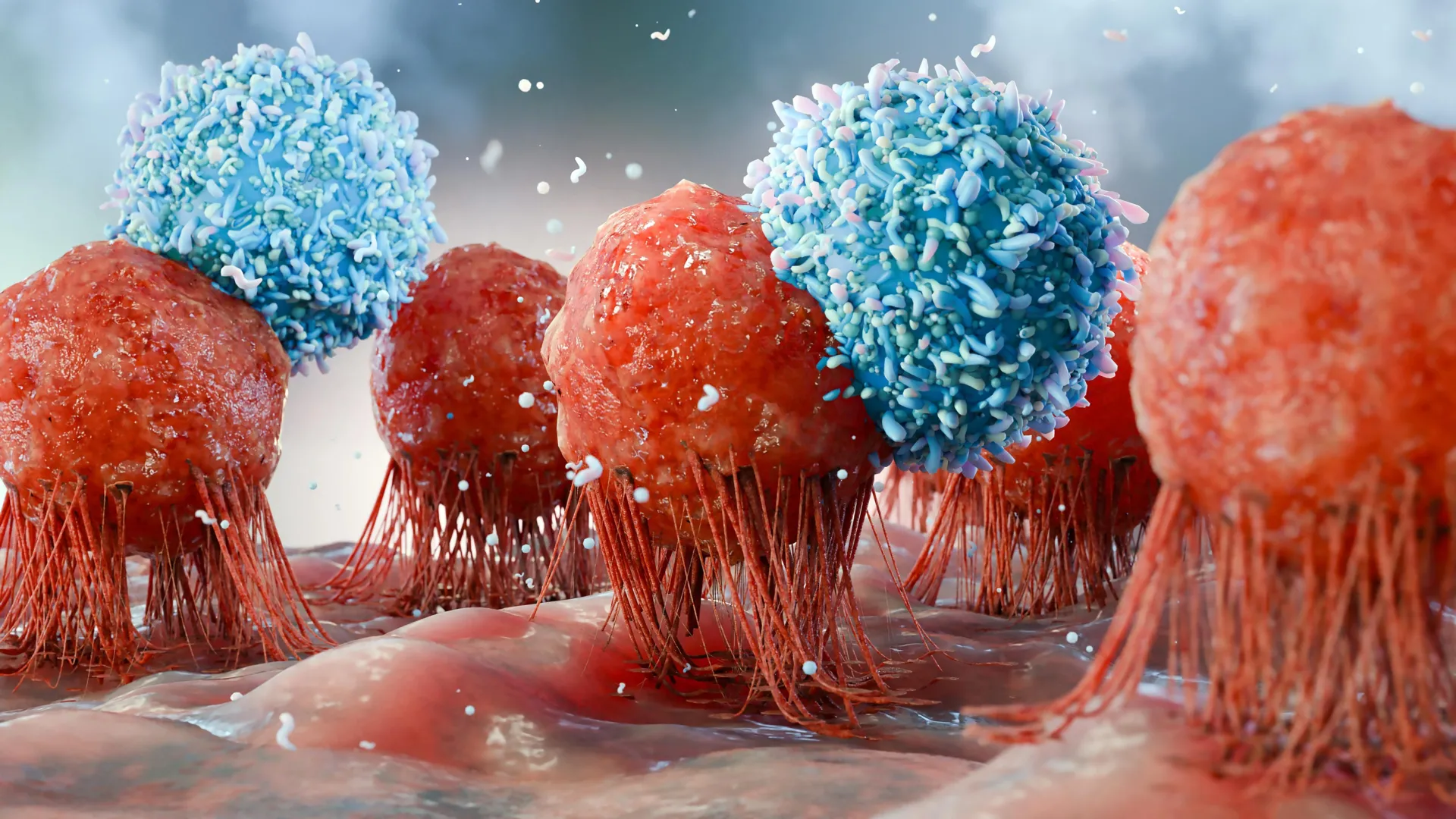
- USC scientists have developed a method for creating cells to fight cancer
- Granulocyte-monocyte precursors can self-replicate
- This opens up new opportunities for treating solid tumors.
The study was published in Cell on June 19, 2026; the antitumor results came from preclinical experiments in mice.
Creating an endless supply of cells to fight cancer
Scientists at the University of Southern California (USC) have made a significant discovery in the field of oncology by developing a method that allows for the production of a potentially renewable supply of cancer-fighting cells. This discovery could be an important step forward in cancer treatment as it addresses one of the main challenges of immunotherapy — the shortage of active immune cells. The study, published in the journal Cell, demonstrates how cells can be genetically modified to recognize tumors and activate the body's natural defense mechanisms.
In experiments with mice, the scientists showed that the created cells successfully integrate into the bone marrow, produce new immune cells, and slow the progression of both blood cancers and solid tumors. The researchers focused on granulocyte-monocyte progenitors (GMPs), which typically develop into macrophages and other immune cells. These cells can be grown in the laboratory in large quantities while maintaining their ability to develop into functional immune cells.
Dr. Qi-Long Yin, the lead author of the study, noted: "We have established a scalable GMP platform for cell immunotherapy and presented concepts that may have far-reaching implications for both cancer immunotherapy and stem cell biology." This discovery not only opens new horizons in cancer treatment but also challenges traditional notions of blood cell and immune system development.
Breakthrough in cancer immunotherapy
It has traditionally been believed that the ability to self-replicate in the blood system primarily belongs to hematopoietic stem cells, which can produce all major types of blood and immune cells. However, the USC study showed that GMPs can also retain this ability under certain conditions. Instead of rapidly maturing into other types of cells, the precursors continue to divide, maintaining their identity and ability to produce functional immune cells.
This discovery may have special significance for the development of treatment methods that require large and reliable stocks of genetically modified immune cells. Macrophages, with their high versatility, can attack cancer cells and coordinate immune responses, making them attractive candidates for cancer immunotherapy. However, creating effective macrophage-based treatments faces a number of challenges, including the complexity of their mass production and genetic modification.
Existing therapies based on engineered T cells have achieved the greatest success in treating certain types of blood cancer, but treating solid tumors has proven to be a more complex task. Macrophages may offer an alternative approach, as they naturally migrate to tissues and can penetrate tumors. However, after maturation, macrophages are difficult to reproduce in large quantities outside the body, which limits their use in therapy.
New opportunities for treating solid tumors
USC scientists decided to start with an earlier stage of immune cell development, focusing on HSCs that can produce macrophages. They developed a precisely defined mixture of chemicals that allowed HSCs to survive and proliferate in the laboratory for an extended period, preventing premature cell maturation. This ensured the preservation of a renewable population of precursors that can be used to create therapies.
After extensive laboratory expansion, HSCs retained their defining molecular characteristics. Importantly, they also maintained the ability to develop into functional macrophages and other related immune cells as needed. This approach could enable the mass production of engineered immune cells from an initial population that can be continuously expanded, rather than constantly creating new cells.
Thus, the opening of USC could significantly change the approach to the treatment of cancer and other diseases that require active immune cells. Scientists emphasize that their work opens new horizons for research in the field of cell therapy and stem cell biology. This could lead to the creation of more effective treatment methods that will be available to a larger number of patients.
The potential of granulocyte-monocyte precursors
However, questions remain about how exactly these cells will function in the human body and how long they will be able to maintain their activity after administration. Further research is needed to understand how these cells will interact with other components of the immune system and how they will respond to different types of tumors.
In addition, it is important to determine how to optimize the production process of GMP and their genetic modification to achieve maximum efficiency in treatment. Scientists must also consider potential side effects and risks associated with the use of genetically modified cells in therapy.
In conclusion, the discovery by USC scientists represents a promising step forward in the field of oncology and immunotherapy. It opens up new possibilities for creating effective treatment methods that can change the lives of millions of people suffering from cancer. However, further research is needed to fully understand the potential and limitations of this approach.
Source: ScienceDaily