The VLT telescope recorded a brief plume after the Falcon 9 stage hit the Moon
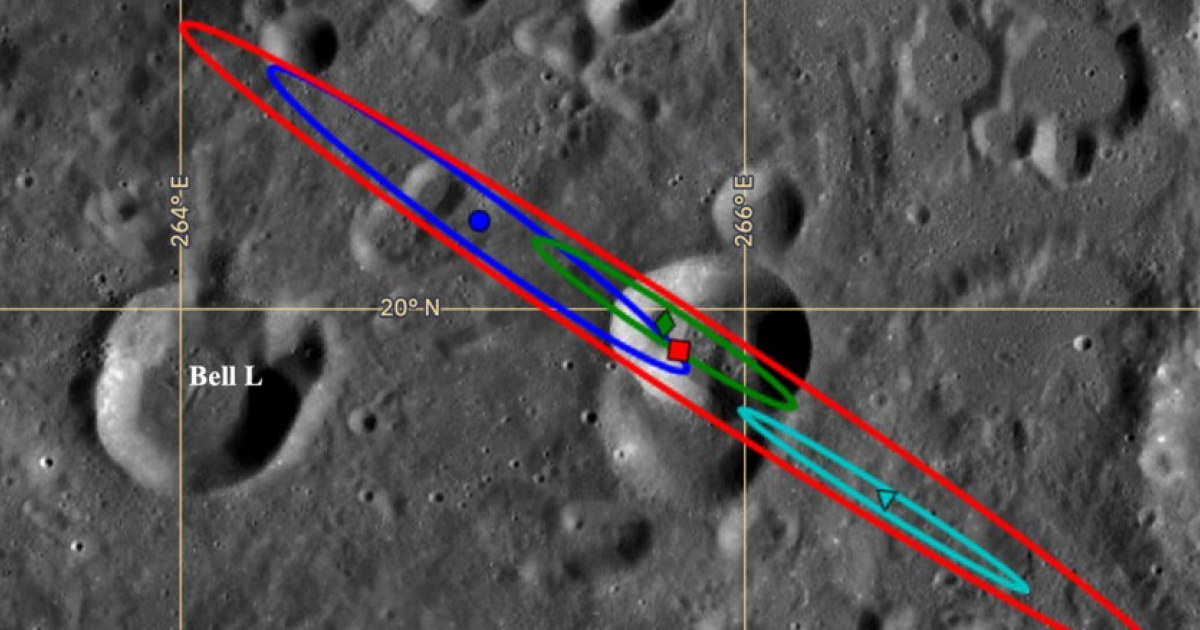
- VLT recorded the plume after the Falcon 9 stage fell on the Moon.
- The plume lasted less than ten minutes and contained sodium and lithium
- This is the first ground-based observation of such a phenomenon in real time
- The data will help study the impact of space debris on the lunar surface
The European Southern Observatory (ESO) reported an unusual phenomenon recorded by the largest ground-based telescope VLT (Very Large Telescope). In images obtained during routine monitoring of the lunar surface, a bright plume was observed, which appeared immediately after the Falcon 9 rocket's booster stage fell to the Moon in early September.
The Falcon 9, owned by SpaceX, regularly uses the first stage after completing its primary mission. In cases where the flight's objective does not require a return to Earth, the stage is directed to the Moon, where it undergoes a controlled descent. Upon impact with the lunar regolith, a plume of ejecta is formed, which can be detected from Earth under favorable observation conditions.
Characteristics of the plume
According to data obtained from the VLT, the plume was visible for less than ten minutes. Spectral analysis showed that it contains sodium and lithium atoms – elements characteristic of lunar soil, as well as possible traces of fuel and stage materials. The presence of sodium is explained by the fact that it is often found in the form of oxides in the regolith, while lithium may be a result of thermal degradation of battery components.
The duration of the observation indicates that the cloud quickly disperses in the vacuum of the Moon, where there is no atmosphere to hold particles. Nevertheless, even such a brief phenomenon provides scientists with unique data about the processes occurring during the collision of artificial objects with natural bodies.
Context and significance of the observation
The event became the first recorded real-time plume from the impact of a spacecraft on the Moon, observed by a ground-based telescope. Previously, similar phenomena were only recorded by orbital spacecraft or in the form of video recordings made by astronauts. The ability to observe such processes from Earth opens new perspectives for studying the interaction of space debris with the lunar surface.
In addition to scientific interest, such observations are important for monitoring space debris. The falls of stages and other elements on the Moon can affect future missions, including plans for establishing lunar bases and research stations. Understanding how material is distributed after an impact helps plan safe landing zones and minimize the risk of contamination.
As part of international cooperation, the observatories have already transferred the obtained spectral data to an open archive, where researchers from different countries can study them. It is expected that subsequent analysis will help clarify the composition of the lunar regolith in the impact zone and assess the degree of impact of artificial materials.
Thus, the VLT observation confirmed that modern ground-based telescopes are capable of detecting even brief and subtle phenomena on the surface of the Moon, providing valuable material for science and the practice of space flights.
Source: N+1