Study: ancient Europe was a mosaic of forests and open landscapes
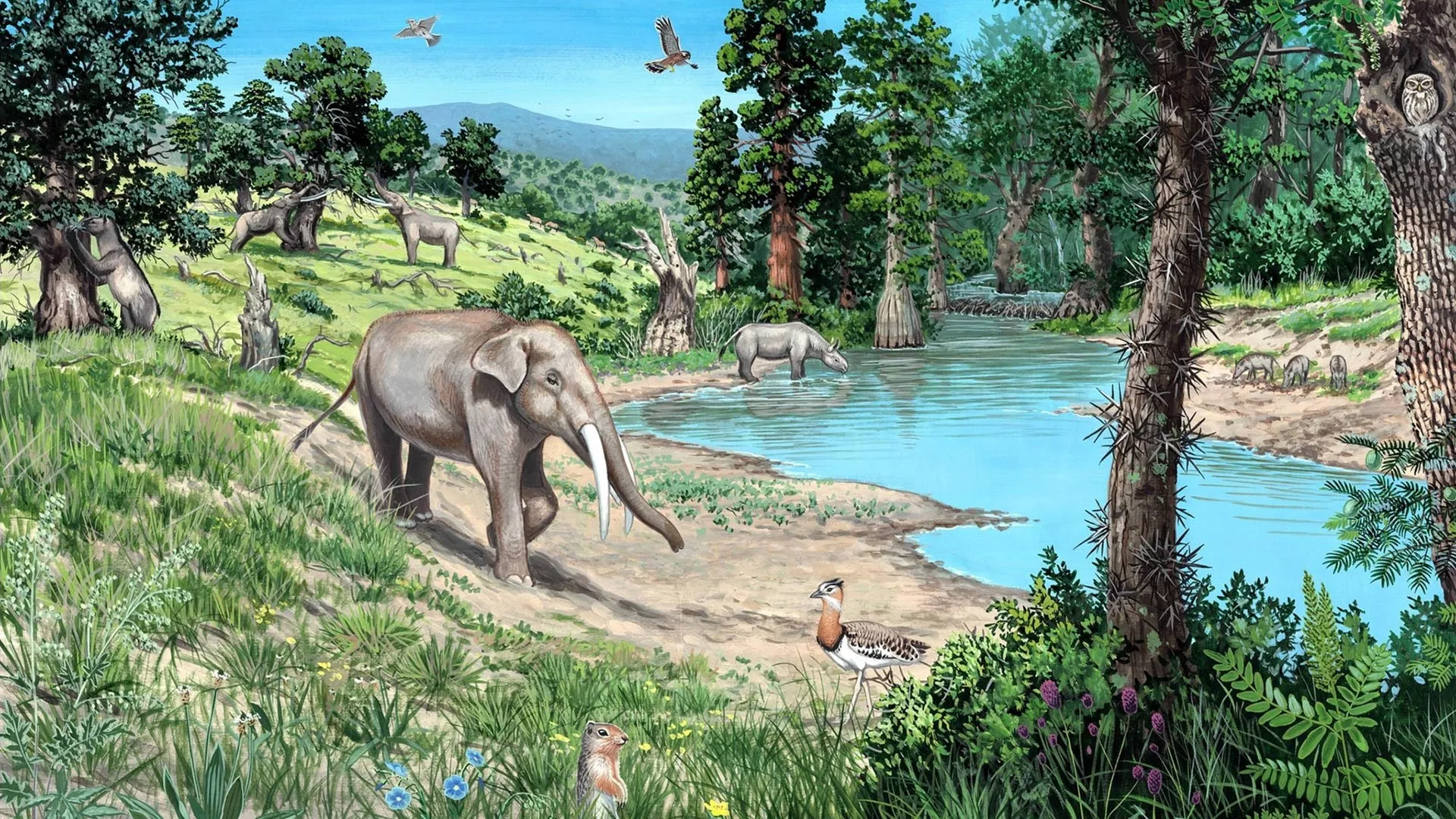
- For more than 20 million years, Europe’s landscapes were a mosaic of trees, open areas, and grasslands—not continuous forest.
- Researchers compared pollen, plant remains, charcoal, fossils, chemical traces, and ancient DNA.
- The authors warn that prioritizing dense forests in nature restoration programs may overlook the historical diversity of habitats.
What the reconstruction of Europe’s ancient landscapes revealed
The image of prehistoric Europe as an unbroken forest with a closed canopy that let in almost no light may be wrong. A new study led by scientists at Aarhus University portrays the continent differently: trees stood alongside open areas, grassy clearings, and flowering meadows. This landscape was not merely a rare exception—the study suggests that a combination of different habitat types was characteristic of Europe for a long time.
The authors concluded that a changing mosaic of forests and open spaces predominated across Europe for more than 20 million years. This does not mean there were no trees or that all regions looked the same: rather, it describes a mix of woody vegetation, shrubs, grasses, and areas with varying degrees of cover. The study challenges the view that continuous dense forest was the typical natural baseline in Europe before widespread human intervention.
The study was published in the journal *Biological Conservation* and examines the period from the Miocene to the preindustrial era. The Miocene began about 23 million years ago, so the study’s time span is considerably broader than that of many earlier studies, which focused on the more recent past. According to the authors, the dense, dark forests now found in many parts of Europe became common relatively recently in the continent’s ecological history.
How the researchers studied the past
To reconstruct the past, the team compiled extensive paleoecological data. Paleoecology studies ancient ecosystems using preserved natural evidence, such as fossils and sediments. The researchers analyzed fossil pollen and larger plant remains, as well as charcoal left by ancient wildfires. Each type of material offers a separate clue about vegetation, but on its own may not reveal the full picture.
The team added chemical traces from the teeth and bones of herbivorous animals, as well as insect and mammal fossils, to this evidence. They also studied ancient environmental DNA extracted from sediments: genetic material left behind by organisms in their surroundings. Comparing different independent sources allowed the researchers to assess not only the composition of vegetation, but also how ecosystems changed and what impact animals had on them.
The study’s lead author, ECONOVO graduate student Szymon Czyżewski, explained that each type of data reveals a different aspect of the past. Combining them, he said, helped the team distinguish more confidently between dense forests, open grasslands, and intermediate landscapes, tracing changes from the Miocene to preindustrial times. This approach is important for drawing conclusions about long-term changes: previous studies that relied on just one reconstruction method had a less diverse body of evidence.
Herbivores as creators of habitat mosaics
The overall pattern the researchers observed cannot be reduced to a single, unchanging landscape. Over the period studied, the mix of trees, areas free from dense cover, and flowering plants changed, but the mosaic structure persisted. The authors found it not just under one particular type of weather or climate: similar landscapes existed both in temperate conditions comparable to those found today in many parts of Europe and during warmer or colder periods.
Sunny, open spaces supported species that struggle to survive beneath a dense canopy. The study’s account notes that birds and butterflies thrived in these habitats, while meadows and clearings provided opportunities for grasses and wildflowers. At the same time, wooded areas continued to provide space for forest-dwelling organisms. The study’s conclusion, then, is not a call to replace forests with meadows, but an indication that a diversity of conditions was itself an important feature of ancient European ecosystems.
Large herbivores played a special role in this landscape. Elephants, rhinoceroses, aurochs, and bison lived in ancient Europe; by feeding on vegetation and disturbing the soil as they moved, they helped keep some areas open. Where trees and shrubs did not occupy all the space, grasses, wildflowers, and other plants could thrive. In this way, interactions between animals and vegetation supported several types of habitat at once.
What the findings mean for nature restoration
This impact is also important for understanding how ancient ecosystems differed from modern ones. According to the authors, today’s Europe is missing a significant number of the large wild herbivores that once shaped its landscapes; traditional grazing practices have also declined. The study thus points to the role of animals, alongside climate and trees, in maintaining open areas. However, the available text does not specify which particular species or management methods should be used today.
The authors link the findings to a reassessment of the so-called closed-forest paradigm—the idea that, before humans cleared the land, Europe’s natural landscape was covered by an almost continuous canopy of trees. From this perspective, restoration is often understood as bringing trees back to open areas or planting forests where they no longer exist. The new data challenge the universality of this model: it may overlook the fact that European species evolved in both open and forested environments.
Senior author Jens-Christian Svenning, a professor at Aarhus University, argues that current restoration programs focused solely on dense forests may harm biodiversity and diverge from the historical types of ecosystems in which European species evolved. He cites Denmark as an example, where, he says, subsidies are provided only for planting dense forests. The practical takeaway from the study is to account for different habitats rather than treating increased forest cover as the only measure of restoration. The study does not specify exactly what future programs should look like.
Source: ScienceDaily