Botanists confirmed Darwin's hypothesis about predatory stonecrops
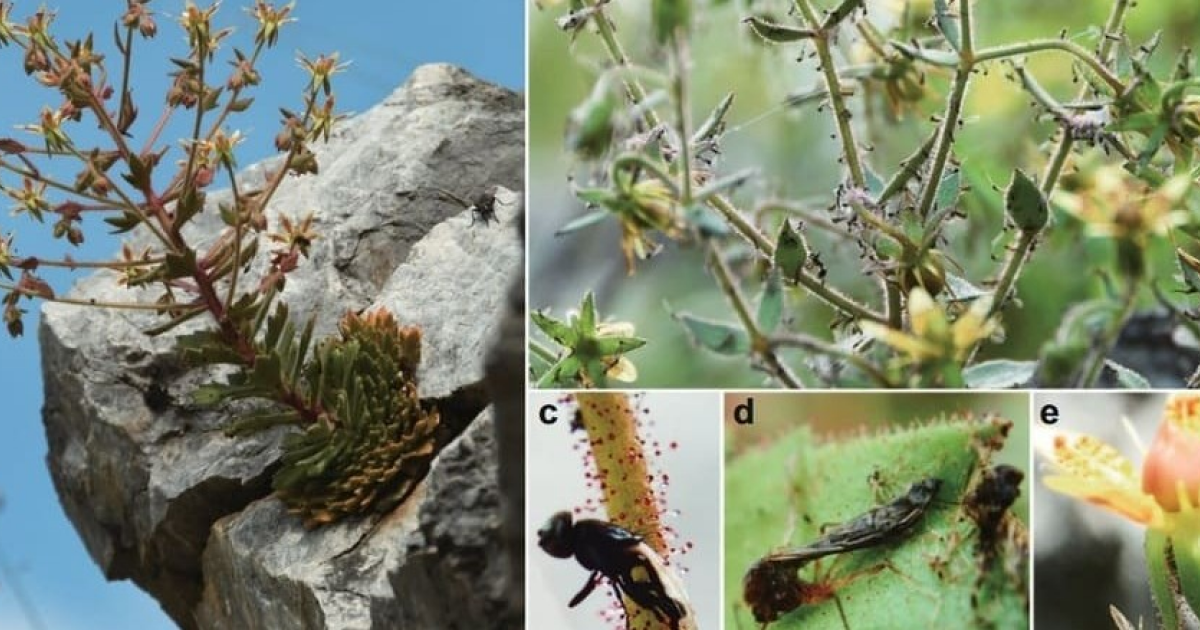
- Botanists have proven the carnivorous nature of Saxifraga candelabrum.
- The plant catches insects with sticky hairs.
- The scent of the flowers attracts prey, and then digestion occurs.
- Evolution: from protection to full-fledged predation.
A recent study published in the journal Nature Communications, confirmed Charles Darwin's hypothesis, proposed more than a century and a half ago, that some members of the genus Saxifraga are capable of carnivorous feeding. Scientists focused on the species Saxifraga candelabrum, which grows in the extreme conditions of the Tibetan plateau.
A team of botanists conducted field observations and laboratory experiments, recording the behavior of insects near the plant's stems. It turned out that the surface of the stem is covered with microscopic sticky hairs capable of holding small beetles and larvae.
The mechanism of prey attraction
Researchers found that the saxifrage emits aromatic compounds typical of floral scents, which attract potential victims. Once trapped, the insects become stuck to the hairs, after which the plant begins the process of enzymatic breakdown of their tissues.
The analysis of the chemical composition of the plant tissues showed the presence of proteolytic enzymes capable of breaking down the proteins of prey and releasing amino acids, which are then absorbed by the plant. Thus, Saxifraga candelabrum obtains an additional source of nitrogen and other nutrients that are unavailable in poor mountain soils.
The evolutionary context was also considered. According to scientists, the sticky hairs originally arose as a defense mechanism against herbivorous invertebrates that could damage young shoots. Over time, with prolonged exposure to limited access to nutrients, these structures acquired the function of trapping and digesting insects, turning the plant into a full-fledged predator.
The confirmation of Darwin's hypothesis is important for understanding the adaptive strategies of plants in extreme ecosystems. It expands the understanding of the diversity of ways to obtain nutrients and highlights the role of convergent evolution, where similar functions arise in taxonomically unrelated groups.
Researchers emphasize that further study of such species may reveal new biochemical pathways potentially useful for agriculture and medicine, as well as help in preserving unique mountain ecosystems vulnerable to climate change.
Thus, 150 years after Darwin's first formulation, modern methods of molecular biology and field observations allow us to definitively confirm that the stonecrop Saxifraga candelabrum indeed belongs to carnivorous plants.
Source: N+1