Was Verica a queen? Archaeologist reconsiders the role of the Atrebates’ ruler
- In 43 CE, Roman troops landed in Kent under Emperor Claudius
- Miles Russell suggests that the exiled Verica may have been a woman
- Archaeologists disagree over the interpretation of the name and images on the coins
Verica and the theory that he was a female ruler
In 43 AD, Roman forces led by Emperor Claudius landed in the county of Kent. This invasion became a major event in British history. Now archaeologist Miles Russell is proposing a rethink of the role played by one of the figures involved in the events leading up to the campaign: in his view, Verica, traditionally considered a king, may have been a queen. This is not an established fact, but a controversial hypothesis based on interpretations of coins, names and written sources.
Verica was a Romanised Briton who led the Atrebates, a tribe that controlled parts of what are now Hampshire and West Sussex in southern England. After the death of the powerful leader Cunobelinus, power passed to his son Caratacus, and Verica was driven into exile. He went to Rome and sought Claudius’s support. Russell believes that the exiled ruler’s appeal may have been connected to the decision to launch a military campaign in Britain.
The researcher believes that the invasion might not have happened without Verica, and links the hypothesis about Verica’s gender to the broader picture of Iron Age politics. If Verica really was a woman, this would change how we understand not only a particular ruler, but also the distribution of power among the British tribes. However, the source offers no definitive proof either that Verica persuaded Claudius to launch the campaign or that Verica was a woman: both ideas remain subjects of scholarly debate.
What Russell sees in the inscriptions and coins
One of Russell’s arguments concerns Verica’s name and Latin titles. He notes that Latin names ending in “a” often belonged to women, although this was not an absolute rule. The word Rex also appears on Verica’s coins. The archaeologist notes that in the late first century BC and the first century AD, this term could be used for powerful allies of Rome on the empire’s borders. In his interpretation, the word itself does not clearly indicate the ruler’s gender.
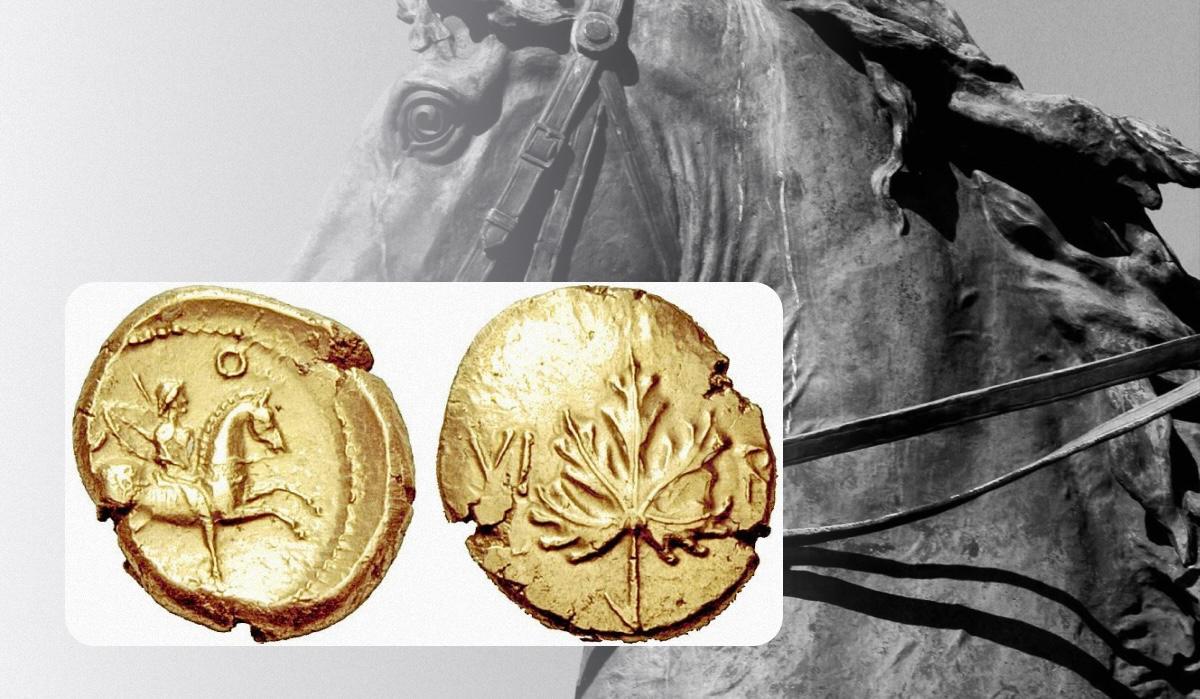
Russell also draws attention to images on coins issued under Verica. He believes they depict a naked woman riding a horse, and sees the figure as a possible indication of the ruler’s sex. For comparison, the researcher cites coins of Cunobelinus and Caratacus: on these, he says, the naked riders have noticeable male features. This comparison forms part of his argument, but the conclusion depends on how confidently the figure’s sex can be identified from the image.
Another part of the argument concerns abbreviated Latin inscriptions on coins. These were previously understood to mean “son of so-and-so,” whereas Russell allows that they could also mean “daughter of so-and-so.” He presented his conclusions in the book “Caratacus: The Great King of Britain.” The researcher also cites earlier work by himself and colleagues suggesting that women played a significant role in Iron Age society. These considerations strengthen the context for the hypothesis, but do not, on their own, establish Verica’s sex.
Why specialists disagree with the new interpretation
Specialists do not agree with the new interpretation. Roger Tomlin, a professor at the University of Oxford who studies Latin texts and epigraphy, points out that some Latin masculine names also ended in “a.” At the same time, he considers the existence of the masculine form Vericus the most compelling argument that Verica may have been a woman. This clarification does not settle the question; it shows that even linguistic evidence can be interpreted in different ways.
Tomlin also points to the testimony of the ancient author Dio Cassius, who considered Verica a man and called him “Beric.” Russell allows that the name may have been corrupted: Dio described events more than 200 years after they took place, and his text passed through generations of copyists and translators. But this explanation, too, remains a hypothesis. Tomlin also stresses that there are not yet enough examples to confirm that Rex was used for rulers of both sexes.
Tomlin is also unconvinced that the image of a horseman confirms Verica’s gender as female. On the reverse of one of the coins, he sees what is probably a bare-chested warrior, but considers this detail an unreliable basis for drawing conclusions about the ruler. As an analogy, the archaeologist points to Queen Victoria’s gold coins: they depict a horseman slaying a dragon, but that does not mean Victoria herself was a man. The comparison highlights the risk of confusing the image on a coin with the identity of its owner.
What questions remain open
Daphne Nash Briggs, an archaeologist and specialist in Iron Age coins, is also skeptical of the hypothesis. She notes that some coins bearing Verica’s name depict an unmistakably male horseman. In her view, others may show the ruler himself in male priestly attire. In addition, on some images of Verica’s head and neck, Briggs discerns an Adam’s apple. Her objections draw on the same evidence that Russell interprets differently.
Russell disputes Briggs’s interpretation: he suggests that the image showing a head and neck depicts the emperor. As for the figure in priestly attire, the researcher considers both its gender and its connection to Verica uncertain. Thus, the dispute concerns not only the surviving coins, but also exactly who is depicted on them. The evidence presented offers no single explanation for all the figures and inscriptions, so neither interpretation has yet dispelled the other side’s doubts.
Russell acknowledges that his hypothesis may spark debate, but believes that discussing it is useful for historical scholarship. The practical result of the hypothesis for now is a reason to reassess the language of coins and the evidence of power in Iron Age Britain, rather than a definitive revision of the history of the invasion. Verica’s gender, the meaning of Rex in this context, and the connection between coin imagery and the ruler remain open questions. Without further compelling evidence, the queen theory remains possible but contested.
Source: UNIAN