NASA explores ways to extend the Hubble Telescope’s operations and safely end its mission
- NASA has asked commercial companies for information on technologies to service Hubble and safely end its mission
- The telescope could reenter the atmosphere in 2033–2034; NASA estimates the mission will be needed until 2032 to raise its orbit
- The request for information does not mean that any option has already been approved
NASA is seeking commercial solutions for Hubble
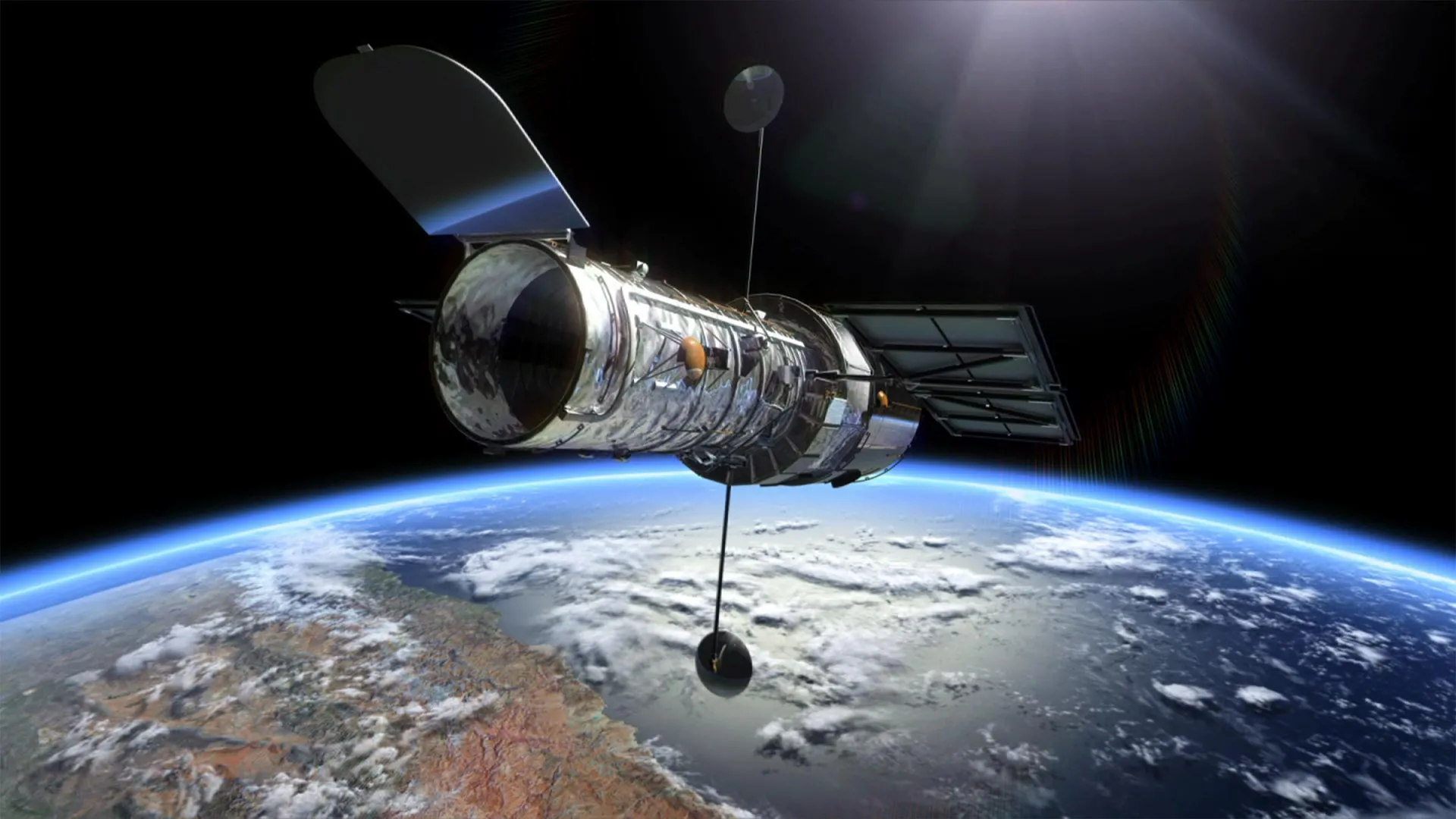
NASA is exploring whether private space companies could help extend the life of the Hubble Space Telescope, which has been reshaping our understanding of the universe for more than 35 years. On October 29, the agency published a request for information on commercial technologies for servicing the spacecraft in orbit. NASA wants to find out whether new spacecraft could support the observatory’s operations, enhance its capabilities, or help safely end its mission. The request is simply a call for information, not approval of a specific project.
NASA Administrator Jared Isaacman said that Hubble still has important scientific work to do and that the agency considers it prudent to explore ways to continue operating it. His reasoning brings together the interests of the scientific community and American taxpayers: if innovative and cost-effective ways exist to extend the service life of a spacecraft already in orbit, they should be considered. However, the statement does not confirm that a ready solution exists, or that one has been funded or launched.
The request outlines several areas of investigation, and extending Hubble’s scientific operations is not the only goal. NASA is looking into whether the telescope could be raised to a higher orbit, whether a spacecraft could be sent to service it or enhance its capabilities, and how to prepare for a safe end to its mission. Options for retiring it include a controlled descent into the atmosphere and disposal in orbit. For now, all of these scenarios are being considered as possibilities, not as an adopted plan.
Why the telescope’s orbit is decaying
Hubble is in low Earth orbit, where traces of the atmosphere create drag on spacecraft. Even hundreds of miles above Earth, the gas does not disappear completely: slight drag gradually lowers the orbit, and the spacecraft slowly descends toward denser layers of the atmosphere. This is a gradual process, but it affects the telescope’s long-term fate and limits how long it can remain in its current orbit.
The key technical limitation is that Hubble has no propulsion system capable of periodically raising its orbit and compensating for the decline. So the telescope cannot reverse this process on its own; changing its orbit would require outside assistance. NASA is inviting commercial companies to assess just such a possibility. The agency’s request does not claim that a suitable spacecraft already exists or that any particular technology is guaranteed to carry out the maneuver safely.
According to NASA’s current analysis, Hubble is likely to reenter the atmosphere sometime between 2033 and 2034. If the agency decides to prevent this scenario by raising its orbit, it estimates that the mission would need to be carried out by 2032 at the latest. That means there is time before the deadline not only to compare proposals, but also to assess the solution, develop the mission, and carry it out. The source does not specify when a contractor will be selected or the project approved.
What options is the agency considering
Raising the orbit could counteract its gradual decay and possibly give the telescope additional years of scientific observations. NASA is also interested in servicing the spacecraft and potentially improving its capabilities. However, the request does not reveal which systems might be upgraded, what work would be required, or how much the telescope’s performance might change. So it cannot yet be taken as established that servicing will necessarily extend its scientific operations: the agency is only exploring what options are available.
The outreach to the commercial sector reflects how rapidly the industry’s capabilities for capturing and servicing satellites in space have advanced in recent years. NASA Associate Administrator for Science Nicky Fox cited this as a reason to explore a broad range of options for Hubble while the agency develops its future flagship mission. The practical goal of the request is to understand what technologies are available and whether they could be feasible and affordable. The source does not report any company responses or the results of such a comparison.
NASA is also considering scenarios in which the telescope’s scientific work would come to an end. One option is to direct the spacecraft into the atmosphere in a controlled manner; another is to dispose of it in orbit. This makes the request broader than simply finding a way to extend observations: the agency also wants to understand how the end of the mission could be managed. But no decision date, specific plan, or choice between the options has been announced. NASA’s wording emphasizes that it is exploring possibilities, not formally approving the spacecraft’s decommissioning.
Scientific Value and Unresolved Questions
Hubble has been operating for more than three decades and has become one of the most influential scientific observatories ever launched. Its observations have changed astronomers’ understanding of the cosmos, and the telescope continues to produce results that are important to research across different fields of astronomy. The question of its service life is therefore about more than the condition of its orbit: it determines how long scientists will be able to use an observatory that is still operating. The source does not specify what future discoveries might be made.
The telescope is the result of long-standing international collaboration between NASA and the European Space Agency. NASA’s Goddard Space Flight Center in Greenbelt, Maryland, is responsible for managing the telescope and mission operations; Lockheed Martin Space in Denver provides additional operational support. Science operations are conducted by the Space Telescope Science Institute in Baltimore, which is operated on behalf of NASA by the Association of Universities for Research in Astronomy. The request for information adds an assessment of commercial opportunities to this structure.
The next step depends on the information companies provide and whether they demonstrate practical solutions at an acceptable cost. NASA is accepting responses to the request for information until 3:00 p.m. Eastern Time on Monday, November 30; the notice does not specify the year. It remains unclear whether the agency will choose an orbit boost, servicing, one of the mission-ending methods, or another approach. Only the broad parameters have been set: atmospheric reentry is expected in 2033–2034, and an orbit boost must be carried out before 2032.
Source: ScienceDaily