Volkswagen presented the Mission Efficiency concept: 1200 km on 55 kWh
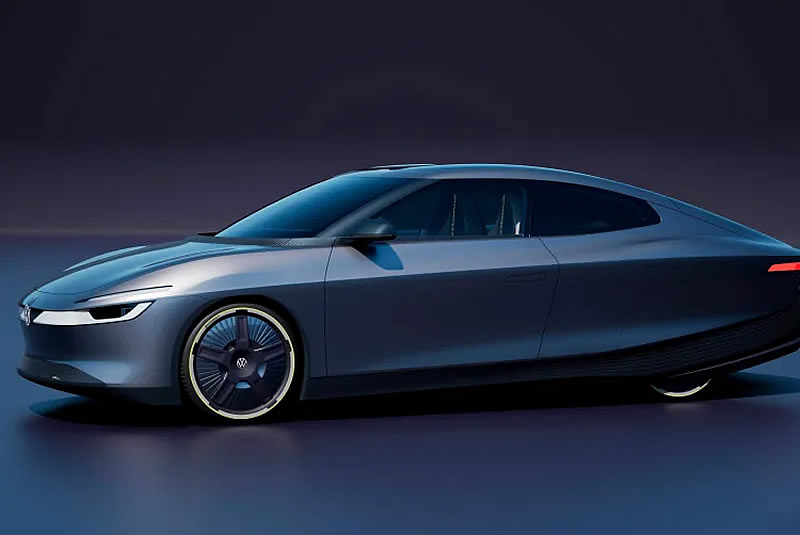
- Mission Efficiency traveled over 1200 km on a single charge
- The drag coefficient reached a record 0.158
- Average energy consumption – less than 7 kW·h per 100 km
- Solar panels on the roof add up to 30 km of range
As part of a series of concepts aimed at increasing energy efficiency, Volkswagen introduced the Mission Efficiency model built on the MEB+ platform. The vehicle uses front-wheel drive components planned for installation in future versions of the ID. Polo and ID. Cross, allowing it to maintain the brand's familiar technological level.
The main technical achievement was aerodynamics: the air resistance coefficient was 0.158, making it the most aerodynamic road electric vehicle in the world. When tested at a constant speed of 68 km/h without activating auxiliary systems, energy consumption was 6.48 kW·h per 100 km.
Real range
In a practical test from Wolfsburg to Vienna, the prototype covered 1,278.36 km on a single charge of a 54.9 kW·h (net) battery. For comparison, the base Tesla Model 3 has a 57.5 kW·h battery and a claimed range of 438 km. The average consumption of Mission Efficiency in real conditions was 6.89 kW·h/100 km, and considering charging losses – 7.51 kW·h/100 km at an average speed of 67.72 km/h. Upon arrival in Vienna, there was about 164 km of range left in the battery.
The exterior of the car is entirely focused on reducing drag: a teardrop profile, closed wheel arches, frameless windows, and recessed door handles. Special protective sheets are installed under the chassis, and the interior has opted out of a central touchscreen in favor of a dock station where the user can connect their own smartphone or tablet.
The roof is integrated with solar elements capable of adding up to 30 km of range to power auxiliary systems without affecting the main battery.
It is important to note that these record figures were achieved without the use of unique electric motors or new battery chemistries – it all comes down to optimizing the design and aerodynamics, allowing for a rethinking of the familiar body of the compact ID. Polo.
Similar efforts are observed among competitors, who are also looking for ways to reduce the energy consumption of electric vehicles. The question remains open as to which of the Mission Efficiency solutions will find their place in production models and how consumers will accept such a radically streamlined design.
Source: 3DNews