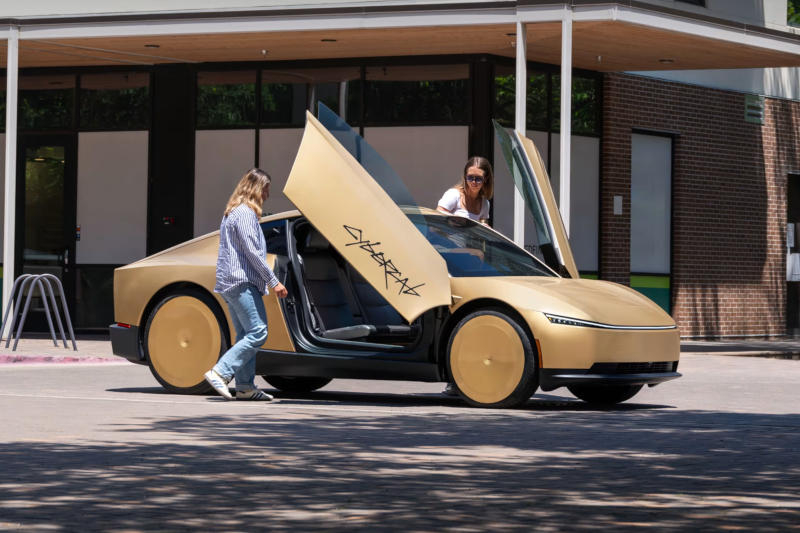
Tesla has begun testing the Cybercab in the USA: regulator is examining compliance with new taxi standards
- NHTSA is investigating Tesla Cybercab's self-certification.
- Cybercab operates without a steering wheel and pedals, which raises questions.
- Tesla plans to sell the model for less than $30,000, with a production of 125,000 per year.
- If they do not meet the standards, the regulator may require a recall.
In Texas, in the city of Austin, Tesla officially launched a self-driving taxi service called Robotaxi. A ride is ordered through a mobile app, and the vehicle used – the Cybercab model – is completely devoid of traditional controls: steering wheel, accelerator, and brake pedals. This design raises questions with the National Highway Traffic Safety Administration (NHTSA), which has already begun an investigation into the manufacturer's claimed self-certification.
According to the Wall Street Journal, Tesla assures the NHTSA that the Cybercab meets "all applicable" federal safety requirements. However, the agency intends to find out which specific standards the company deemed inapplicable to the new type of vehicle and on what basis this conclusion was made. If the investigation reveals non-compliance, the NHTSA has the authority to demand a recall of the vehicles and rectify the identified violations.
For Tesla, self-driving cars are becoming a strategic direction for the business. The company announced plans to gradually expand the commercial deployment of Cybercab, increasing the number of cars and the cities covered. In the US, automakers are not required to obtain prior approval from NHTSA before releasing a vehicle – they certify the products themselves, and the regulator checks compliance only after the product hits the market.
Regulatory nuances
Earlier, NHTSA proposed to eliminate the requirement for traditional controls in vehicles to accelerate the adoption of new technologies, but these changes have not yet come into effect. In July of the same year, the agency allowed Amazon Zoox's robotaxi to operate commercially, but imposed restrictions: operation in heavy rain or snow is prohibited, and the maximum speed is limited to 72 km/h.
Tesla's current plans include selling the Cybercab to private buyers for under $30,000 and creating a production line capable of producing up to 125,000 units per year. At the time of publication, 45 Cybercabs are registered in Texas, and the total Tesla Robotaxi registry, which also includes driverless Model Y vehicles, counts 420 cars.
The NHTSA review could be a decisive factor for further scaling of the project. If the regulator deems the model compliant with current requirements, it could pave the way for broader use of autonomous taxis in the U.S. Otherwise, the company may face the need to revise the design or even temporarily suspend the service.
Source: 3DNews