Psilocybin rewires neural connections, forming and removing contacts at the same time
- In mice, psilocybin increased the number of new dendritic spines within 24 hours and accelerated their maturation
- The drug was also associated with the removal of some existing connections, and its effects depended in part on a history of chronic stress
- The findings could help researchers explore ways to affect neuroplasticity without hallucinations, but clinical benefits have not yet been established
Psilocybin changes neural connections in several ways
Researchers at the University of California, Santa Cruz, studied how psilocybin—a psychedelic substance found in so-called magic mushrooms—affects connections between nerve cells. The study was published in the journal Nature Neuroscience on October 15; the year of publication was not specified in the announcement. The authors found that the drug promotes the formation and maturation of new connections, but the picture is not simply one of enhanced communication between neurons.
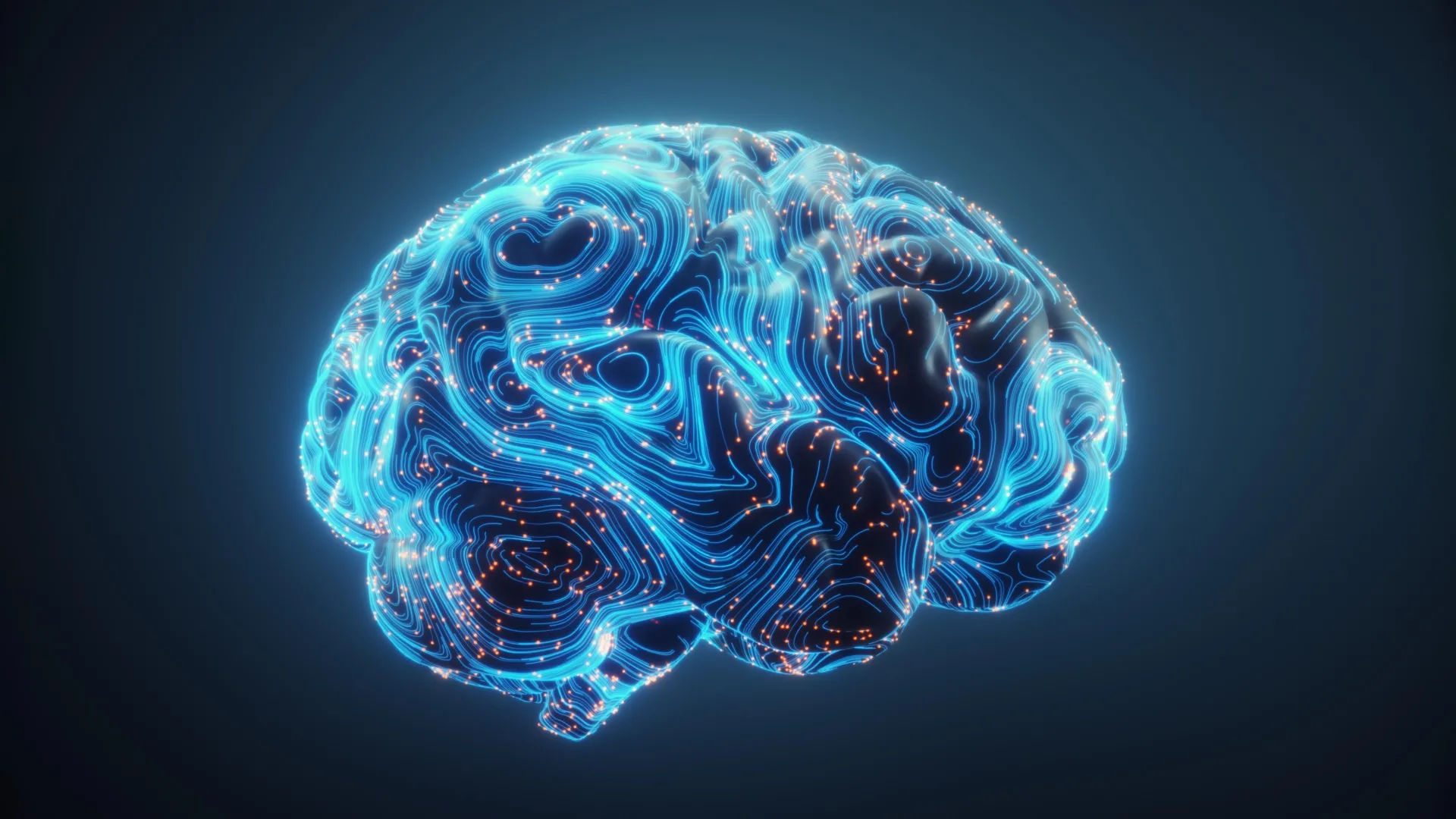
Along with the formation of new connections, psilocybin promotes the removal of some existing ones. This is important for understanding neuroplasticity—the brain’s ability to remodel its structure and activity by creating, strengthening, reorganizing, or eliminating connections. Thus, the observed effect involves both the formation and selection of neural connections. The study does not prove that such remodeling necessarily leads to improved mental health or occurs in the same way in humans.
The authors consider one particularly notable finding to be the possibility of separating cellular changes associated with the remodeling of connections from the behavioral response usually linked to psychedelic effects. This suggests that some structural effects on the brain may be achievable without hallucinations. However, these conclusions are based on experiments in mice, not on an established treatment or a confirmed effect in patients.
How researchers observed brain remodeling
To track changes, the team used two-photon microscopy, an imaging technique that makes it possible to observe tiny structures inside living tissue in detail. The scientists tracked individual connections on neurons in mice over several weeks. This approach made it possible to see how contacts changed after psilocybin was administered, rather than simply comparing the brain before and after the experiment.
The focus was on dendritic spines—small protrusions on neurons that receive signals from neighboring nerve cells. They help form synapses, specialized communication junctions between neurons. Synapses are important for information processing, learning, memory, and emotional regulation; changes in their number, strength, and organization can alter how signals travel through the brain. The study examined the structural aspect of these processes.
Within just 24 hours of the substance being administered, the scientists observed a noticeable increase in the number of dendritic spines forming. The new structures also matured unusually quickly. Young spines can normally remain small and immature—so-called stubby spines—and many are unstable and disappear before developing into full-fledged connections. After psilocybin, a larger proportion reached a mature “mushroom” shape; these spines tend to be more stable.
The effect depends on stressful experiences and the activity of specific neurons
The study also points to a specific group of neurons in the cerebral cortex that plays a necessary role in psilocybin’s effect on connections. This narrows down the possible mechanisms: the substance does not simply have a nonspecific effect on the brain as a whole. However, the report does not provide details that would reveal exactly how this group drives the rewiring, or whether it could be selectively targeted in future treatments.
According to the study, the drug’s effects are not the same in all brains: they depend in part on whether the brain has experienced chronic stress. This cautions against assuming a single, unchanging response to psilocybin. The source does not specify exactly what differences were observed between the groups or how they appeared in each measure. Stress is therefore identified as a significant factor, but its practical importance remains to be determined.
The study’s senior author, Yi Zuo, a professor of molecular, cell, and developmental biology at the University of California, Santa Cruz, called the research an important step toward understanding how psilocybin changes neural circuits and what this could mean for treating mental disorders. This is the researcher’s assessment, not evidence of an already proven therapy. The experiments describe cellular changes in mice and help raise questions for further investigation.
From a laboratory finding to a possible therapy
Scientific interest in psychedelics has a long history. In the mid-20th century, psilocybin and LSD attracted Western researchers because of their effects on perception, consciousness, and mood; early studies suggested that such substances might have applications in psychiatry. Research then slowed considerably after the United States passed the Controlled Substances Act in 1970, imposing strict restrictions. In recent years, scientific interest in these compounds has grown again.
Some psychedelics are called psychoplastogens because, according to the scientific context presented in the source, they can stimulate neuroplasticity after a single dose. This is appealing to researchers because depression may be associated with disruptions in circuits that regulate mood, emotions, and behavior. But this broad perspective does not mean that results from an experiment in mice already confirm a treatment for depression or post-traumatic stress disorder in humans.
The FDA previously granted psilocybin and MDMA Breakthrough Therapy designation, intended to speed the development and review of promising treatments for serious conditions; this is not equivalent to drug approval. In September 2026, the agency held a public hearing on the possible future therapeutic use of psychedelics. Topics included provider qualifications, risk management through REMS programs, and the design of clinical trials. Cellular mechanisms may help make future approaches safer, but their effectiveness remains an open question.
Source: ScienceDaily