A rare metabolic disease in a Portuguese patient manifested as shortness of breath and tongue enlargement.
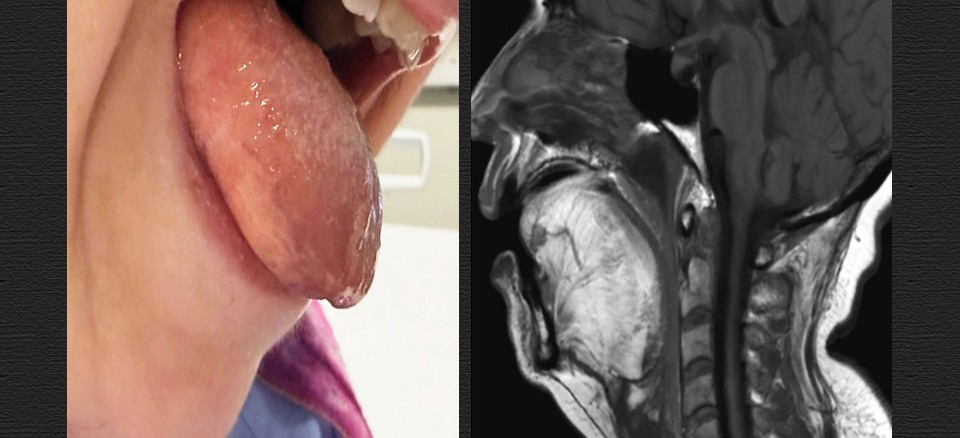
- A 54-year-old woman with progressive weakness and falls.
- Shortness of breath and tongue enlargement appeared in the last few days.
- CK rose to 373 U/L; MRI showed fat infiltration of the muscles.
- Suspected metabolic myopathy, biopsy of the deltoid muscle.
A 54-year-old woman was admitted to the emergency department of one of the major medical centers in Porto with complaints of increasing fatigue and frequent falls that had been occurring over the past four months. Five days before her visit, the patient also began to experience shortness of breath, which worsened with minimal exertion.
During the physical examination, the doctors noted an unusual enlargement of the tongue (macroglossia) as well as a drooping head, which indicated weakness of the neck muscles. Additionally, a small but symmetrical weakness was recorded in the proximal areas of the arms and legs, typical for skeletal muscle damage.
Laboratory tests showed an elevated level of creatine kinase – 373 units per liter, while the reference values do not exceed 173 units. Such an increase in the enzyme often indicates damage to muscle fibers.
Magnetic resonance imaging revealed fatty infiltration of both the tongue and paravertebral muscles. This data heightened suspicions of metabolic myopathy – a group of rare genetic disorders that disrupt energy metabolism in muscles.
A biopsy of the deltoid muscle was performed to clarify the diagnosis. The obtained samples were sent for enzyme analysis and genetic testing, the results of which are still pending.
The case was described by doctors Sofia Rodrigues and Inês Marques Ferreira from the Santo António University Hospital Center in Porto. Their material was published in The New England Journal of Medicine, highlighting the rarity and clinical significance of the observation.
Context and significance
Metabolic myopathies include diseases such as Gaucher's disease, Pelizaeus-Merzbacher disease, and some forms of hereditary lipid myopathy. They often manifest in middle age when muscles gradually lose the ability to effectively use energy, leading to weakness, falls, and, less commonly, organ involvement such as the tongue.
Macroglossia can also be a sign of systemic diseases, such as amyloidosis; however, in this case, the absence of other characteristic signs and the presence of fatty infiltration indicate a metabolic nature of the process.
Early recognition of such conditions is important: timely genetic confirmation allows for targeted therapy and informs relatives about the potential risk of inheritance.
Doctors emphasize that a comprehensive approach – a combination of clinical examination, laboratory markers, imaging methods, and biopsy – remains key in diagnosing rare muscle diseases.
Source: N+1