Fear can blur the distinction between danger and safety

- In experiments with mice, representations of dangerous and safe environments in the brain became less distinguishable
- Overlapping memories could speed up retrieval of threat memories, but reduce the accuracy of responses
- Whether the same mechanism is involved in anxiety and PTSD in humans has not yet been established
Fear and memory: why a safe environment can seem dangerous
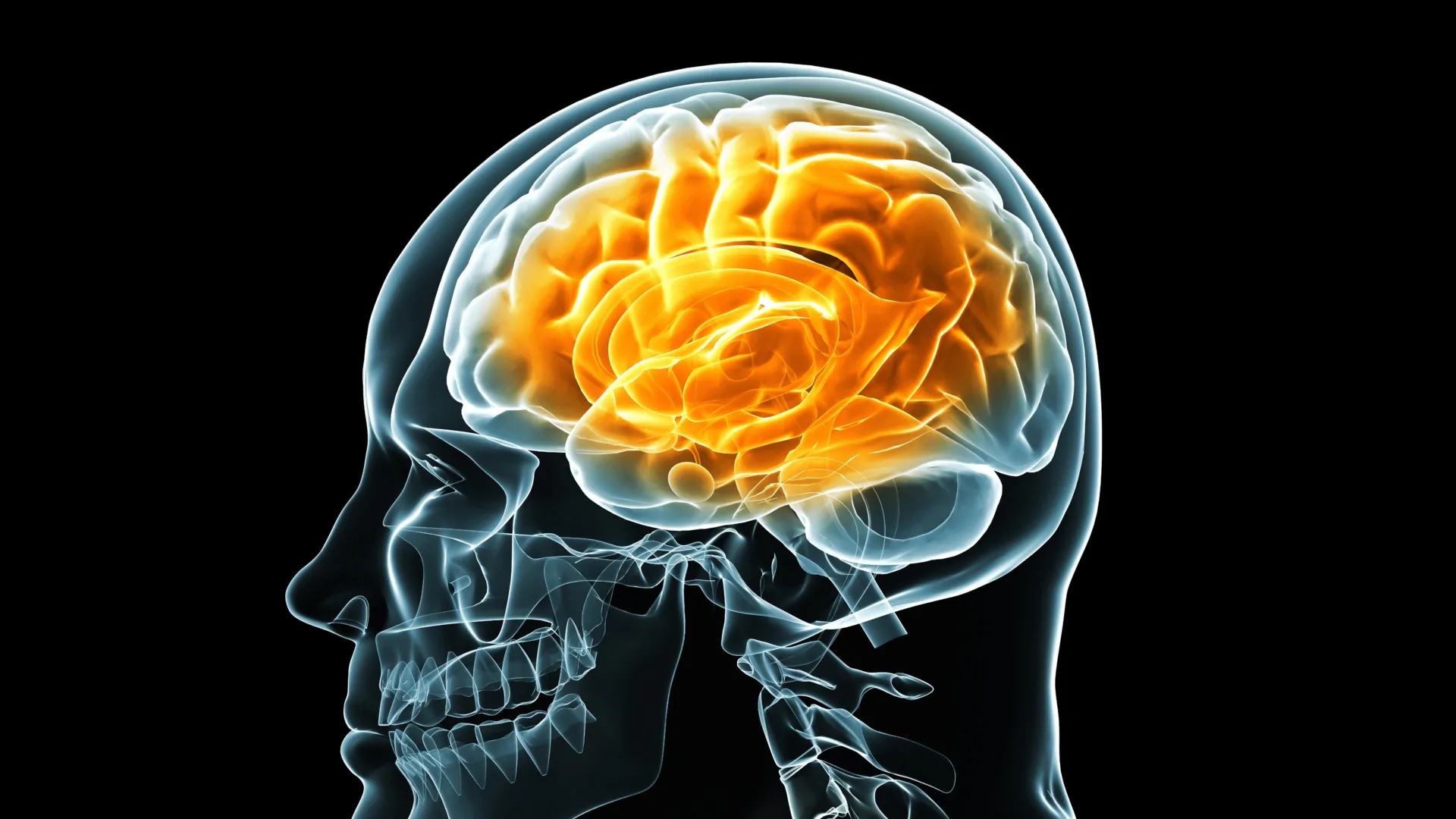
The brain must recognize threats, but sometimes fear arises where there is no immediate danger. A new study offers a possible explanation for this mismatch: fear may not sharpen the distinction between memories of safe and dangerous experiences, but instead blur it. This challenges the conventional view of how memory helps us navigate threats and raises a new question about the cost of a rapid defensive response.
The study was conducted by researchers from the Douglas Research Centre at McGill University and the University of Toronto Scarborough. The findings were published in Nature Neuroscience. The authors studied not human responses, but brain activity in mice trained to associate one environment with danger and another with safety. So conclusions about anxiety and post-traumatic stress disorder remain a possible explanation, not a confirmed mechanism in humans.
During the experiments, the neural representations of the two environments became more overlapping rather than increasingly distinct. In other words, the brain had more difficulty clearly separating memories of the safe place from those of the place associated with threat. Senior author Mark Brandon noted that fear may blur the boundary between danger and safety instead of sharpening it. This does not mean that the mice stopped distinguishing between the situations in every respect: the experiment identified a change specifically in the observed patterns of brain activity.
Experiment Revealed Overlapping Memories
To see how these patterns formed, the team combined a virtual environment with real-time imaging of brain activity. A specially equipped arena made it possible to simulate moving a mouse between environments by changing the visual and auditory cues around it. The animal did not need to be physically moved to another location. This approach helped researchers observe transitions between threat-related and safe experiences within a single experimental system.
At the same time, miniature microscopes tracked the activity of hundreds of neurons in the hippocampus, a brain region important for learning and memory. According to lead author Robert Roeske, this made it possible to see how the brain switched between competing maps of dangerous and safe memories from moment to moment. Conventional fear-conditioning experiments did not provide the same real-time view of this transition. The method therefore made it possible to link behavior in changing surroundings with the dynamics of neural signals.
The researchers paid particular attention to the ventral hippocampus, a part of the hippocampus involved in processing emotionally significant experiences, including fear and anxiety. In this region, overlapping representations could support the rapid retrieval of a threat memory. This observation describes a possible function of brain activity in mice, but does not prove that one brain region alone explains complex disorders in humans. The significance of the findings lies in the proposed link between memories of different situations and the speed of defensive switching.
Fast protection comes with a trade-off
Blending memories of safe and dangerous situations may seem like a flaw at first. However, the authors suggest that this feature may have an evolutionary purpose: overlapping representations may have allowed the brain to retrieve information about past threats more quickly. If danger does arise, faster recognition may help an animal respond before it is too late. In the experiment, this idea serves as an explanation for the possible benefit of the mechanism, not as proof that speed is always more important than accuracy.
The gain in time comes at a cost. When the brain favors speed, it may react to a potential threat even in a harmless situation. In terms of survival, a false alarm may sometimes be less dangerous than missing a real threat, the researchers believe. Robert Roeske described the ventral hippocampus’s role as a possible part of a system that opts to “play it safe.” However, the experiments themselves do not establish how often, or under what conditions, this cost arises beyond the laboratory task.
This interpretation is important for understanding why a sense of threat can arise without immediate danger. If safe and dangerous experiences are encoded in partially overlapping neural representations, memories of past threats may be activated more quickly in a new situation. A strong reaction, then, does not necessarily mean that a person consciously considers the situation dangerous: it may reflect a mechanism that rapidly shifts the body into a defensive state. But the study did not examine this process in humans.
The link to anxiety remains to be tested
The authors connect their hypothesis to anxiety and PTSD, in which a harmless sight, sound, or place can trigger memories of a traumatic event and intense fear. They suggest that these reactions may be linked to an oversensitive version of a normally useful survival mechanism. This is a cautious explanation: the mouse experiments did not study people with diagnoses or show that overlapping memories cause these disorders. Separate studies are needed to directly test the link.
Mark Brandon suggests that these responses need not be viewed as a breakdown in the system that separates memories, but rather as an overactive version of a normal protective mechanism. From this perspective, a potential focus for therapy could be an overly rapid shift from recognizing safety to expecting danger. This may guide future questions about treatment, but the study did not test therapeutic methods and does not justify concluding that any specific approach has already been validated. For now, the practical value of the finding lies in a new hypothesis to test.
The main limitation of the study is that the experiments were conducted in mice. It remains to be determined whether a similar mechanism contributes to anxiety and PTSD in humans, and how well the results apply to their experiences. The study was supported by the Canadian Institutes of Health Research and the Natural Sciences and Engineering Research Council of Canada. For now, the most reliable conclusion is that in mice, fear was accompanied by less distinct neural representations of safety and threat, which may have sped up the retrieval of fear memories.
Source: ScienceDaily