Alibaba rents 20,000 Nvidia H200 chips for training Kimi from Moonshot
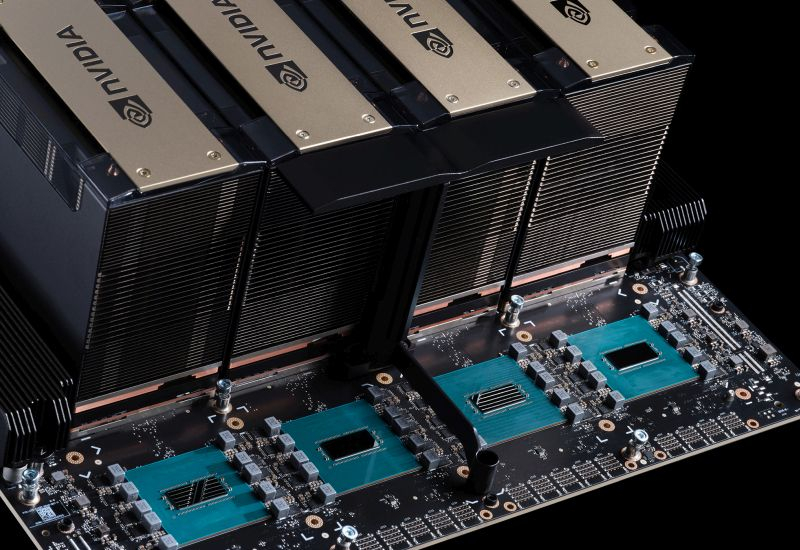
- Alibaba provided Moonshot with 20,000 Nvidia H200 chips.
- The chips belong to the Hopper generation, not Blackwell.
- The deal strengthens Kimi's competition with Alibaba's Qwen models.
- The USA believes that such rentals circumvent export restrictions.
Alibaba Group announced the provision of a large computing cluster consisting of 20,000 Nvidia H200 graphics processors to the Chinese startup Moonshot. According to Bloomberg, these accelerators have become the main part of the resources that Moonshot uses to train its artificial intelligence models under the Kimi brand.
Technical details
Nvidia H200 chips belong to the Hopper generation and are somewhat inferior to the newer Blackwell accelerators, which were previously reported by The Information. Nevertheless, their performance remains high, and supplies to China are officially restricted. Alibaba, being one of the largest investors in Moonshot, traditionally offers to rent computing power to the companies it invests in.
Alibaba representatives denied rumors of a direct rental of H200 chips to the startup in an interview with Bloomberg, but did not deny the existence of 20,000 graphics processors as part of the joint project. Thus, renting the computing cluster remains an official channel for accessing advanced technologies, circumventing direct imports.
Competitive Dynamics
Kimi's models are successfully competing with Alibaba's own developments – the Qwen family of language models. This fact has caused some disappointment among the holding's management, as the company has effectively created a strong competitor that has received support in the form of computing resources.
American officials note that access to Blackwell accelerators may not only be available to Moonshot but also to other Chinese startups, such as Deepseek, which, according to their estimates, rent equipment from companies located outside of China, particularly in Thailand.
Geopolitical Background
According to American legislation, Chinese developers are allowed to rent advanced Nvidia chips outside the country, but their purchase is prohibited. Official supplies of H200 chips to China remain limited, making such rental schemes an important way to obtain computing power.
Moreover, the American side suspects that in training the Kimi K3 model, Moonshot used a distillation method based on the advanced Fable model from Anthropic. This approach allows for achieving high results even with relatively modest computational resources.
Overall, the agreement between Alibaba and Moonshot illustrates the growing complexity of technological relations between China and the USA: companies are seeking ways to circumvent export restrictions, while governments are tightening control over advanced AI technologies. For the Chinese AI market, access to powerful accelerators remains a critically important factor for competitiveness.
Source: 3DNews