Decimen Optical Transfer: data transmission via QR codes at a speed of 190 KB/s
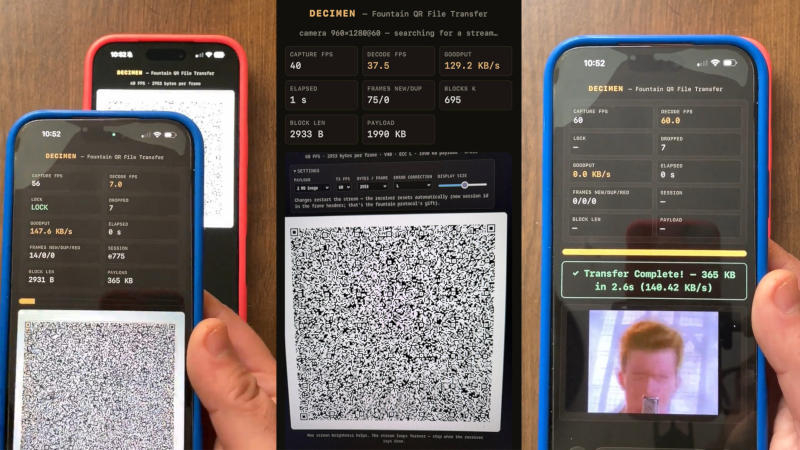
- Decimen Optical Transfer transmits data via QR codes at 60 fps.
- The transmission speed reaches up to 190 KB/s.
- The technology is open on GitHub under the MIT license.
The new experimental technology Decimen Optical Transfer offers a way to transmit digital information between mobile devices without the need to connect them through a common wireless network. Instead of traditional radio signals, the system uses a continuous sequence of QR codes that are updated at a rate of 60 frames per second, allowing for a throughput of about 190 kilobytes per second.
How it works
At the core of the solution is a cacheable web application that runs in the smartphone's browser and requires access to the camera. The application generates a sequence of QR codes, each containing a part of the transmitted data. The receiving device scans the frames in real time, assembles them in the correct order, and reconstructs the original file.
Technical Specifications
To ensure reliability, each QR code is equipped with a 20-byte header that contains the session identifier, frame number, block size, total number of blocks, length of the transmitted file, and a checksum. This set of metadata allows for the detection and correction of errors that occur under poor lighting or slight camera shifts.
A speed of 190 KB/s was achieved on regular smartphones with standard cameras. In comparison, a similar experiment conducted earlier on an iPhone with ProMotion technology provided about 128 KB/s, and with complete stillness of the devices – up to 186 KB/s.
The code was developed by an enthusiast known by the pseudonym Bashalarmistalt. According to him, the majority of the software was created by the artificial intelligence Anthropic Claude Code, acting as a programming assistant.
The source code of the project is hosted on GitHub and is distributed under the open MIT license, allowing other developers to freely use and adapt the technology.
The technology can be applied in situations where traditional communication channels are unavailable or limited: in field conditions, when working in closed networks, and for quickly transferring small files between devices without the risk of interception over radio channels.
However, the system has limitations: direct visual contact between cameras is required, and effectiveness decreases with strong vibrations or poor lighting. Further research may focus on improving recognition algorithms and increasing resilience to external interference.
Source: 3DNews