The crane hawk in Brazil uses streetlights to extract sparrow nests
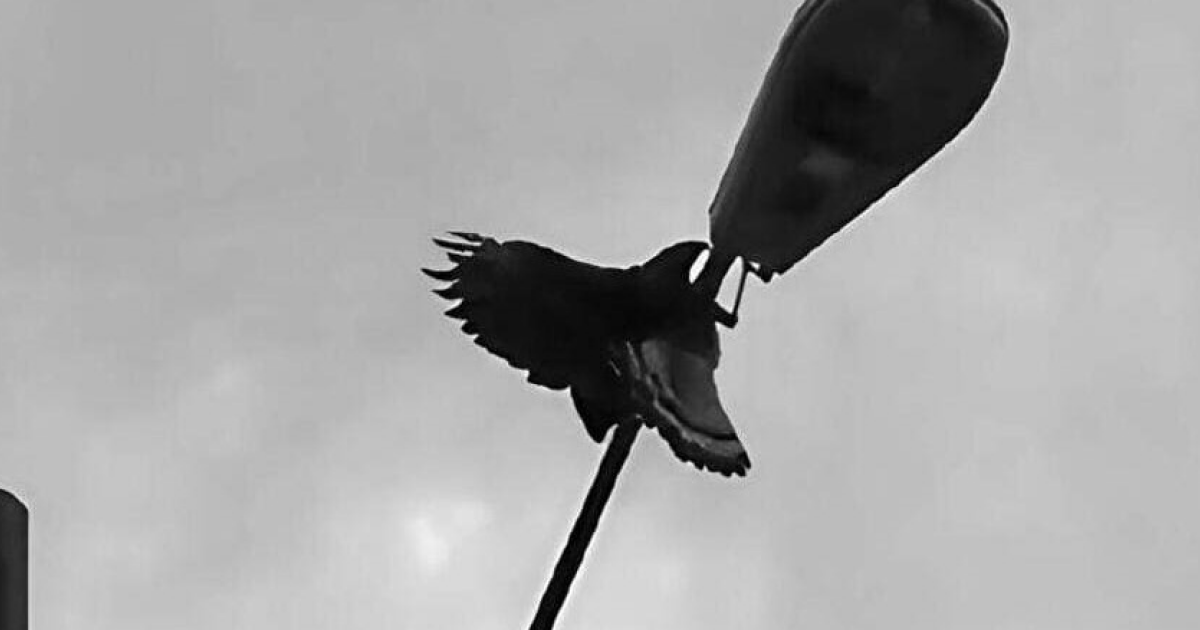
- The hawk lands on street lamps and pulls out sparrow nests.
- From seven lamps, the bird extracted one nest each.
- No signs of egg or chick consumption were found.
In one of the major Brazilian metropolises, researchers observed an unusual hunting strategy of the crane hawk (Geranoaetus albicaudatus). The bird regularly chose streetlight poles as a height for landing, after which it used its foot to retrieve the nests of house sparrows located in a tiny gap between the lampshade and its mounting.
How the action took place
Seven individual light fixtures were recorded, each of which was used by the hawk once. On each of them, the hunter carefully approached the narrow space where the sparrow nests were hidden in the pole's wall and pulled them out. During this, the bird did not display aggressive behavior, but simply gently grasped the nest with its foot.
It is important to note that during the observation, there was no record of egg consumption or chick destruction. This suggests that most of the nests found were already empty, or their contents had been removed earlier.
Researchers are considering several hypotheses: the hawk may use empty nests as shelter, collect them to build its own nest, or simply check for prey in new locations. However, the absence of signs of consumption indicates that direct consumption of eggs or chicks was not the goal.
This behavior highlights the increasing flexibility of raptors in urbanization conditions. There have been previous cases where hawks and falcons used tall buildings, bridges, or power lines as observation points. Now, it is observed that they are capable of using even small architectural details, such as gaps in light fixtures.
The authors of the study published in the journal Ornithological Science, believe that this observation expands the understanding of how large predators adapt to human environments. They emphasize the need for further monitoring of such cases to understand how often these strategies are employed and what consequences they may have for urban ecosystems.
In a broader context, the discovery indicates that anthropogenic structures create new niches that can be utilized by both predators and their prey. This raises questions about the impact of urbanization on bird population dynamics and the need to consider such changes when planning urban landscapes.
Source: N+1