The discovery of a Roman temple in Germany: archaeologists find traces of an ancient civilization
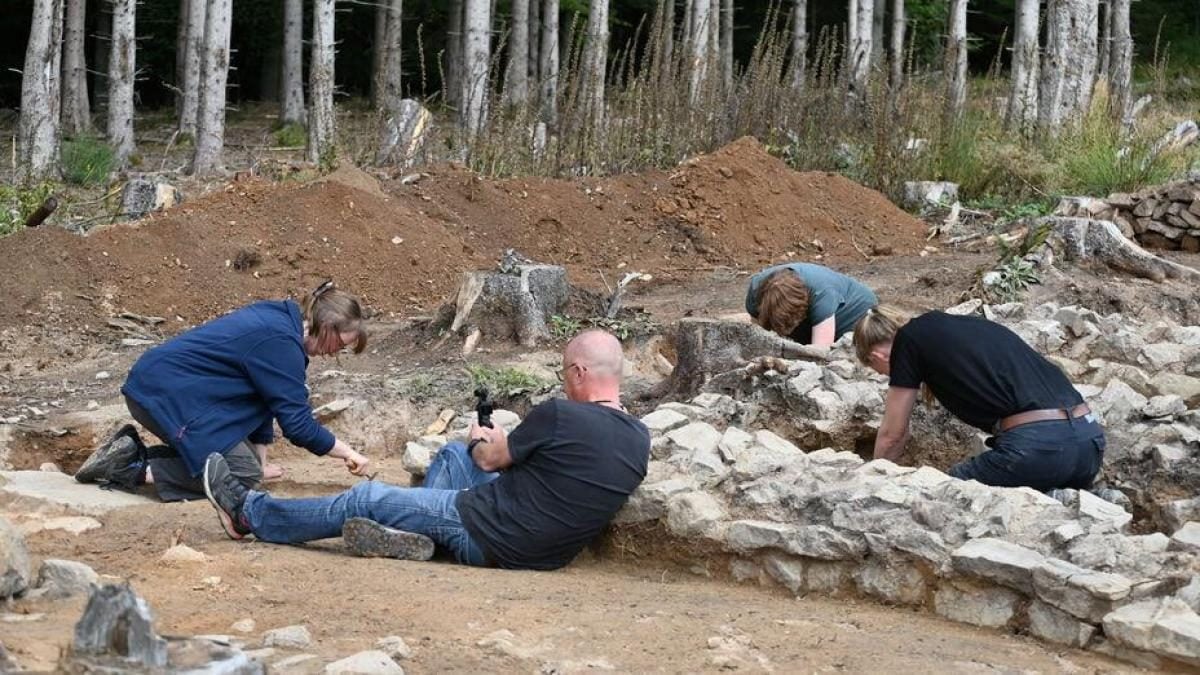
- A Roman temple dedicated to Mars has been found in the Taunus mountains
- The discovery could change the understanding of Roman life in the region
- A figurine of Victoria and ritual stones have been found
Discovery of a Roman temple in Germany
Recently in the Taunus mountains, located in Germany, archaeologists made a significant discovery: they uncovered the remains of a Roman temple dedicated to the god of war Mars. This find, which had been hidden underground for almost two thousand years, was made near the modern town of Rosbach vor der Höhe, close to the Roman fort of Kapersburg. The temple, nearly 5 meters long, was found just a few inches below the surface of the ground, making it one of the most interesting archaeological discoveries in the region.
During the excavations, archaeologists also found a small bronze figurine of Victoria and two ritual stones. These finds were made during the investigation of the "vicas" — a civilian settlement that was located near the fort. The archaeological office of the state of Hesse, which announced the discovery, emphasizes that work at this site began in 2024, and it has already yielded significant results, allowing for a better understanding of Roman life in this region.
Researchers noted that they initially observed a rectangular outline hidden beneath the forest cover. In the center of this outline, well-preserved walls approximately 45 cm thick were discovered, indicating that this is indeed a temple. Archaeologist Katarina Grisshaber expressed her excitement about the find, noting that such well-preserved Roman walls are a real stroke of luck for archaeologists.
Archaeological finds in the Taunus mountains
The discovery of the Roman temple is significant for understanding how the Romans organized their lives, conducted religious rituals, and defended the borders of their empire. The temple was likely used by local residents for sacrifices to the gods in exchange for protection and guidance. This discovery may shed light on the social and economic aspects of life in this region about two thousand years ago.
Fort Kapersburg, near which the temple was found, was part of the Upper Germanic-Rhaetian limes — a defensive system that protected Roman territories north of the Alps. This fort housed an auxiliary unit known as the "Numerus Nidensium" for about 150 years. This discovery highlights the importance of the region for the Roman army and its strategic significance.
Dr. Kai Mückenberger, who led the recent archaeological work, noted that cultural layers have been preserved in this area that are unparalleled in Hesse. This is due to the fact that the land has never been used for agricultural purposes, which allowed artifacts to be kept in good condition. Archaeologists also discovered traces of craft production, including a forge, indicating the presence of a developed economy in the settlement.
The significance of the finds for the study of Roman history
The importance of the finds lies not only in their historical value but also in the fact that they can help in understanding life in this region during the decline of the Roman Empire. Around the 3rd century AD, Capersburg ceased to function as a military site; however, the finds indicate that the settlement continued to exist even after the departure of Roman soldiers.
In particular, among the discovered artifacts was a clasp from the late antique period, which indicates that this place was subsequently occupied by other groups of people. This discovery may change the understanding of how migration and assimilation of various cultures occurred in this region after the fall of the Roman Empire.
Archaeologists continue to explore the area, and their work may lead to new discoveries that will help better understand how the Romans interacted with the local population and how life developed in this region. It is important to note that the excavations may also shed light on how life unfolded in this area during the decline of the Roman Empire.
The future of research and its consequences
According to the latest data, archaeologists have also discovered remnants of Roman roads, which allows for the reconstruction of the structure of the civil settlement. These findings confirm that the "vicus" was not just an appendage to Capersburg, but represented an independent settlement with its own economic life.
In conclusion, the discovery of the Roman temple in the Taunus mountains is an important step in studying the ancient history of the region. It not only adds new facts to the history of Roman civilization but also opens new horizons for future research that could change our understanding of life in this area.
Thus, the finding of the Roman temple and other artifacts in Germany highlights the importance of archaeological research for understanding the history and culture of ancient civilizations. The discoveries made in this region could serve as a foundation for further research and in-depth study of Roman history.
Source: UNIAN