Oxford scientists revealed how viruses assemble without a blueprint
- Oxford scientists studied virus self-assembly
- The discovery could lead to new antiviral drugs
- The research helps understand the process of assembling viral shells
Research on virus self-assembly in Oxford
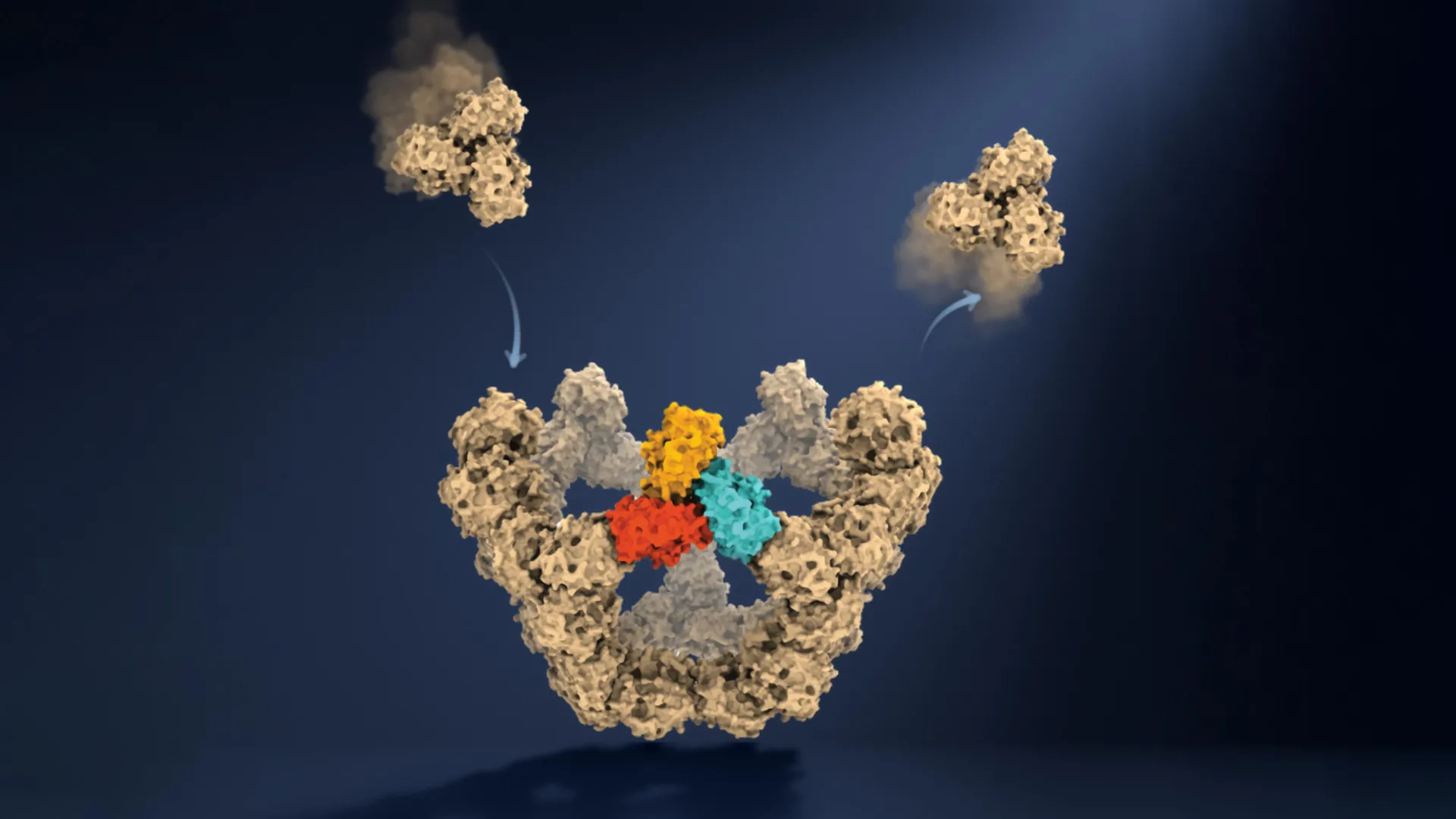
Recent studies conducted by scientists at the University of Oxford have revealed astonishing mechanisms that allow viruses to assemble their protective shells without any blueprints. In a paper published in the journal Nature, researchers observed how virus-like particles assemble molecule by molecule, following simple rules that ensure the reliability of forming complex biological structures. This discovery could lead to the development of new antiviral drugs and improved vaccines.
Viruses store and protect their genetic information inside organized protein shells known as capsids. These shells can consist of dozens or even thousands of individual protein components. Remarkably, in most cases, proteins can self-organize into the correct structure without external guidance. Understanding this process could aid in the development of new medical solutions aimed at combating viruses.
The study of virus self-assembly presents a complex challenge, as many intermediate structures exist only for a short time and in very small quantities. Traditional research methods allowed scientists to study only the starting materials and finished particles, without showing how one form transitions to another. Oxford researchers overcame this limitation by studying a specially designed virus-like particle made up of 60 protein units.
New discoveries in the field of virology
To observe the assembly process, researchers used mass photometry, a method that allows for the determination of the mass of individual molecules by measuring the light they scatter. This technology, developed at Oxford, combined with a new approach to trapping molecules in a confined space, enabled the team to repeatedly measure the mass of the growing particle as additional proteins attached. This allowed for tracking the assembly process in real time.
The research coordinator, Dr. Roi Asor, noted that viruses need to solve complex assembly tasks by finding the right combinations among many possibilities. "We can observe what happens molecule by molecule and see the physical rules that make this possible," he added. This discovery allows for a better understanding of how proteins organize into the correct structures despite the vast number of possible connections.
The study showed that virus assembly resembles navigating a complex maze, where only certain paths lead to a successful outcome. At the initial stage, protein components form weak bonds that can easily break if the combination turns out to be unsuccessful. This flexibility allows molecules to try different combinations until they form closed structures that become more stable.
Methods of self-assembly research
One of the key stages in the assembly process is the formation of a closed pentagonal ring made up of five large protein blocks. This is the first highly stable structure in the assembly process. After its formation, each subsequent stable stage requires fewer additional blocks, allowing the particle to grow faster. This discovery highlights the importance of the initial stages of assembly and their impact on the growth rate of viruses.
Dr. Asor also noted that weak interactions allow the system to make mistakes. "Most encounters do not necessarily have to be successful: components can separate and try again. But once enough components connect in the correct closed configuration, the structure becomes stable, and assembly can continue," he explained.
Understanding the molecular interactions that control virus assembly may lead to the development of methods that intervene in the process of forming viral protein shells in the future. This could open new horizons in the fight against viral infections and the development of vaccines.
Practical implications and the future of research
Furthermore, the knowledge gained can be used to create virus-like particles for vaccines and other therapeutic applications. This could significantly improve the effectiveness of existing medical solutions and lead to the creation of new treatment methods.
The study of virus self-assembly also highlights the importance of understanding the intermediate structures that arise in the process. These structures can serve as molecular checkpoints that narrow down the vast number of possible assembly routes to a much smaller number of successful pathways.
In conclusion, the work of Oxford scientists opens new horizons in the field of virology and molecular biology. Understanding the mechanisms of virus self-assembly not only deepens our knowledge of biological processes but can also lead to significant breakthroughs in the development of new medical technologies.
Source: ScienceDaily