Improvement of hurricane warning maps: serious issues remain
- Updated hurricane maps do not increase risk awareness
- People do not take precautionary measures
- Better communication about risks is needed
Improvement of hurricane warning maps
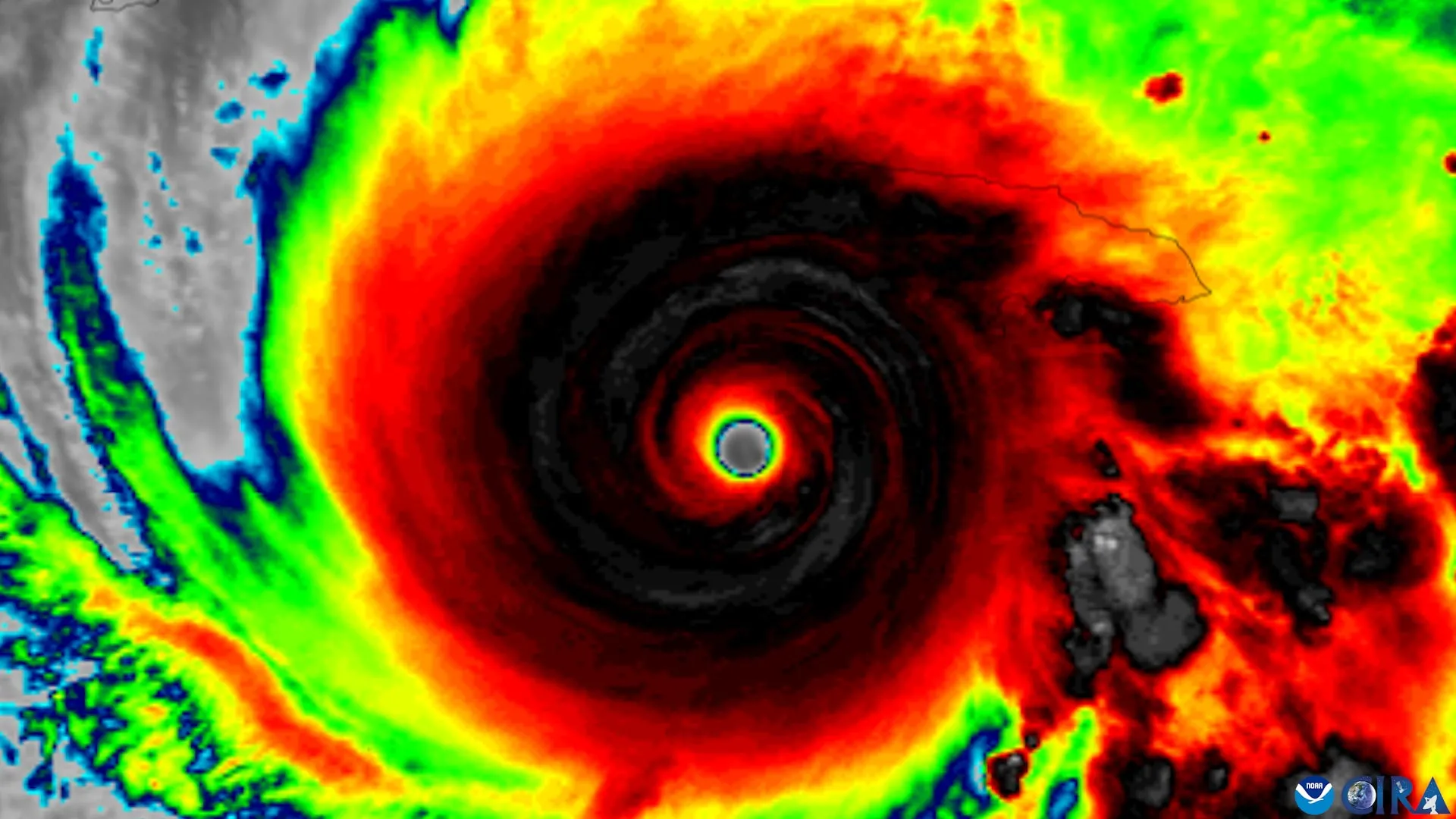
Recent studies show that updated hurricane forecast maps developed by the National Hurricane Center (NHC) help people better identify areas at risk of hurricanes. However, despite these improvements, a study conducted at the University of Florida found that many people do not feel more vulnerable and do not take necessary precautions. This raises important questions about how weather information is perceived and used by the public.
As part of the study, researchers evaluated new experimental graphics that expand the traditional hurricane forecast cone to include warnings for tropical storms and hurricanes for inland areas. Previously, the cone focused on coastal zones, although dangerous conditions can extend far inland. The results showed that the updated graphics helped people without specialized training better recognize inland areas at risk, but did not increase their concerns about the potential threat.
A study published in the American Meteorological Society journal found that participants who saw the updated graphics were better at identifying areas under storm warnings. However, this did not lead to a significant increase in their concern or intentions to take precautions. This highlights the need for further research on how people perceive weather information and how it affects their behavior in the face of threats.
New maps and their impact on risk perception
One of the key issues identified in the study is the widespread misunderstanding associated with the traditional hurricane "cone of uncertainty." Many people mistakenly interpret the width of the cone as an indication of the physical size of the storm rather than as information about the uncertainty of its projected path. This misunderstanding can hinder adequate risk perception related to hurricanes.
Researchers emphasize that while the updated graphics provide a more comprehensive view of potential threats, they do not always lead to increased awareness of personal risk. "Our goal was to find out whether the changes actually help people understand what the graphics say about the risks they face," noted lead author of the study, Elizabeth Ray.
Despite the high accuracy of NHC forecasts, the study's findings highlight the complexity of presenting intricate meteorological information in an accessible form. "If people find the information credible but do not understand it well enough to take protective actions, then the communication has failed," added co-author of the study, Patrick Merl.
Issues with interpreting information
The study also points to the importance of using hurricane forecast graphics in conjunction with local weather forecasts and detailed information about potential impacts. Understanding specific threats to the area and protective measures to consider can provide a more useful basis for decision-making.
Scientists recommend not to rely solely on one chart, but to use it together with clear local information about what consequences to expect and what actions to take. This will provide a more complete understanding of what a hurricane may mean for a specific region and what to do next.
The importance of a comprehensive approach to perceiving weather information is becoming increasingly evident. Given that hurricanes can cause devastating effects not only in coastal areas but also inland, it is essential for residents to understand their risks and be prepared to act.
Recommendations for increasing safety
The study was funded through an internal SEED grant from the University of Florida and was based on discussions with the NHC, which provided experimental charts for evaluation. This collaboration highlights the importance of interaction between scientific institutions and meteorological services to improve communication about risks.
In conclusion, the research findings emphasize that even with improved graphics, the issue of risk perception remains relevant. It is necessary to continue working on making weather information more accessible and understandable to a wider audience.
Thus, the study shows that to enhance public safety, it is necessary not only to improve forecasting schedules but also to develop communication skills so that people can correctly interpret information and take necessary precautions.
Source: ScienceDaily