Birds are more afraid of women than men: the reasons remain unclear
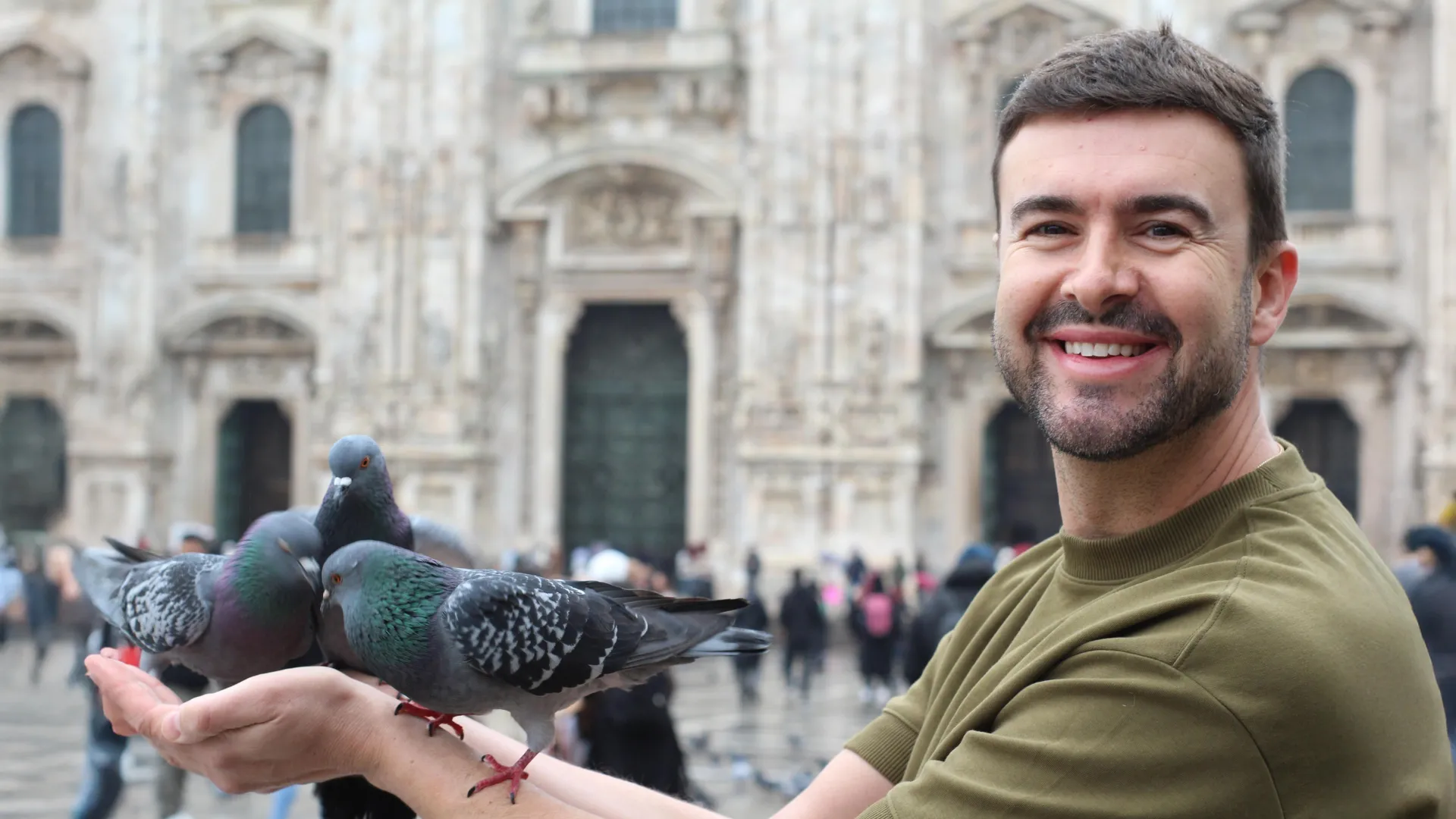
- Urban birds react to women more cautiously than to men
- The study covered 37 bird species in five countries
- The reasons for the differences in reaction remain unclear
Birds and their reaction to people: new research
A recent study conducted by an international team of scientists revealed an interesting phenomenon: urban birds, such as tits, sparrows, and black sparrows, react to women more cautiously than to men. This discovery was made in five European countries, including the Czech Republic, France, Germany, Poland, and Spain. Scientists observed how birds react to the approach of people and found that men can get a meter closer to them before the birds take off.
A study published in the British Ecological Society journal showed that differences in reaction are observed in all 37 bird species that were studied. This includes both easily startled birds, such as magpies, and those more accustomed to humans, like pigeons. The scientists used a methodology that allows for precise measurement of the distance at which birds begin to flee, known as the flight initiation distance.
Professor Daniel Blumstein from the University of California, Los Angeles, who participated in the study, noted that the results are compelling despite the lack of explanation. "I fully believe in our results, but I can't explain them right now," he said. This underscores the need for further study of bird behavior in urban environments.
Unusual results of the study
Among the possible explanations for the differences in birds' reactions to men and women, scientists proposed several hypotheses. For example, birds may respond to chemical signals such as pheromones, or differences in body shape and gait between men and women. However, these ideas remain speculative, and additional experiments will be needed to test them.
Dr. Yanina Benedetti from the Czech University of Life Sciences, who also participated in the study, noted that the discovery challenges her expectations about how birds react to humans. "As a woman in this field, I was surprised that birds react to us differently," she said. This finding has important implications for urban ecology and equality in science.
Dr. Federico Morelli from the University of Turin, a co-author of the study, emphasized that the uncertainty of the reasons is one of the most interesting aspects of the discovery. "We identified a phenomenon, but we don't know why it happens," he added. This highlights the complex ability of birds to assess their environment.
Possible explanations for bird behavior
The study's results suggest that urban birds may be sensitive to human characteristics that people themselves rarely notice. Identifying these signals could help scientists better understand how wildlife assesses potential threats in the context of coexistence with humans.
Dr. Benedetti also noted that urban birds clearly respond to subtle signals that humans do not always notice. Subsequent research may focus on individual factors such as movement patterns, scents, or physical traits, testing them separately rather than grouping by the observer's sex.
Although the study included 2701 observations, the scientists emphasize that their findings are still preliminary. Further research is needed to determine whether the difference in birds' reactions to men and women persists in other conditions and populations.
The need for further research
So far, the discovery points to an intriguing possibility: birds living in our cities may pay attention to subtle differences between people that scientists do not yet fully understand. This finding could change our perception of the interaction between wildlife and the urban environment.
The study also raises questions about how human behavior and appearance can affect wild animals. Understanding these interactions may help in developing strategies for wildlife conservation and improving conditions for coexistence between people and animals in cities.
In conclusion, the results of this study open new horizons for studying bird behavior and their interactions with humans. Scientists hope that further research will help clarify the reasons for the observed differences and deepen our understanding of urban bird ecology.
Source: ScienceDaily