NASA launched the Roman telescope: Hubble's successor with a new field of view
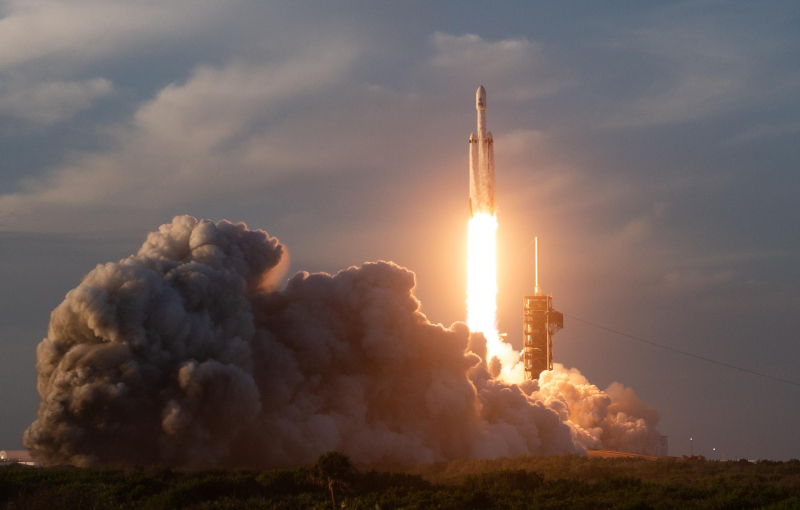
- NASA launched the Roman telescope on August 30 on Falcon Heavy
- Roman will operate at the L2 point, with the first images expected in 2027.
- The WFI camera covers a field of view 100 times wider than Hubble
- The mission will study dark energy, dark matter, and find ~2500 exoplanets
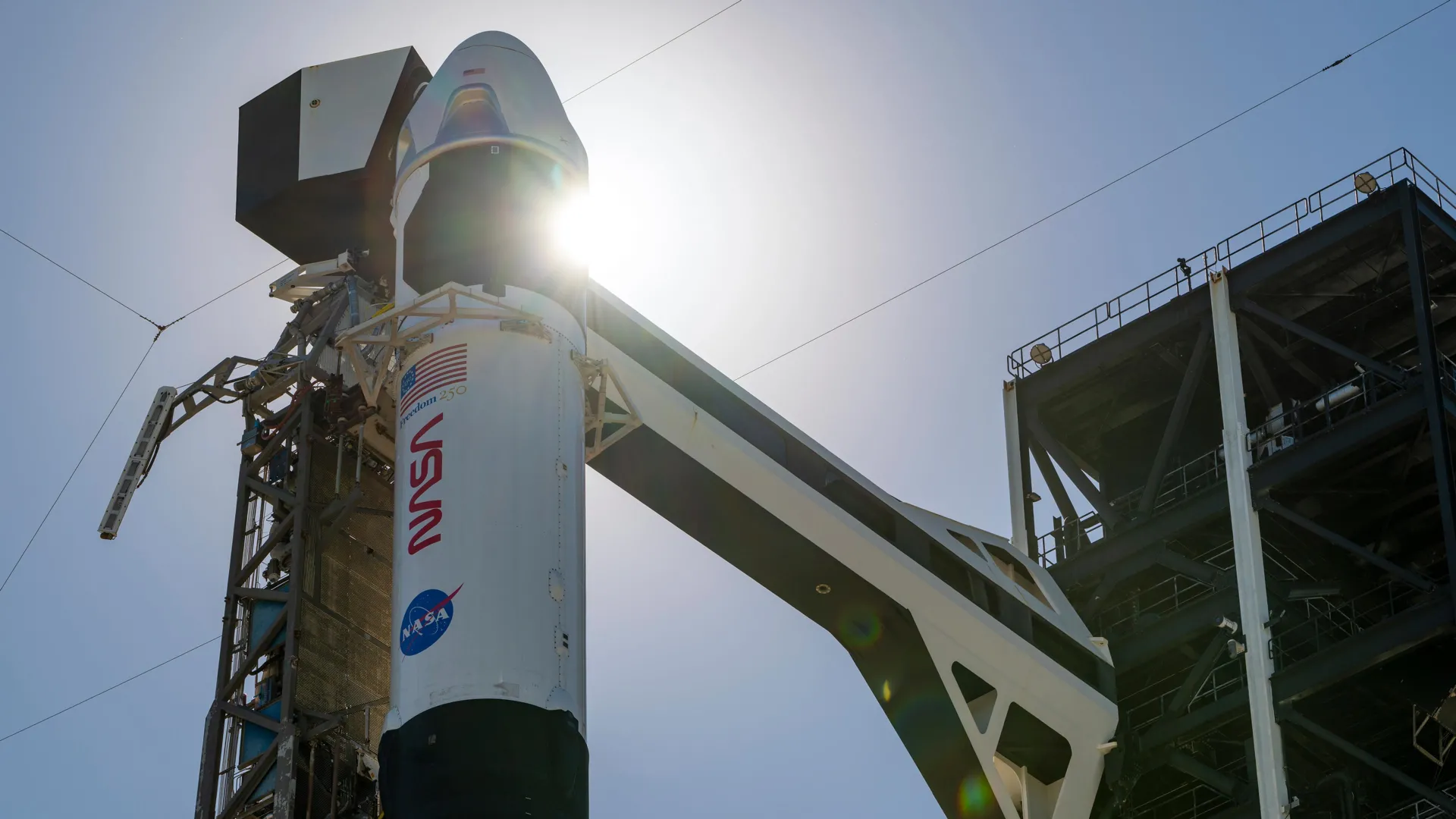
On August 30 at 07:26 Eastern Time (14:26 Moscow time), the Nancy Grace Roman Space Telescope was launched from pad 39A of the Kennedy Space Center. The launch was carried out by the SpaceX Falcon Heavy rocket; after 32 minutes, the spacecraft separated from the second stage and continued its flight autonomously. Communication with the telescope was established immediately, confirming the deployment of the solar panels and the lower part of the sunshield. The two side boosters of the Falcon Heavy successfully returned to their landing sites, while the central core was not recovered.
The journey to L2 and preparation for operations
After exiting the atmosphere, Roman will embark on a three-month journey to the Lagrange point L2 of the Sun-Earth system, located about 1.5 million km from the planet. The James Webb Telescope is already in this region, but each spacecraft will move along its own orbit. During the flight, specialists will deploy the antenna and telescope cover, adjust the trajectory, and calibrate the scientific instruments. The first scientific images are expected to be published in early 2027.
Technical Specifications
The main mirror of Roman, like that of Hubble, has a diameter of 2.4 m, providing comparable resolution. The main difference is the 300-megapixel infrared camera Wide Field Instrument (WFI), capable of capturing a section of the sky at least one hundred times wider than Hubble's field of view in a single shot. One image from Roman will contain information equivalent to one hundred images from Hubble. In the first five years of the mission, it is planned to survey more than 50 times the area of the sky than Hubble has observed in thirty years.
The Roman Telescope will serve as a 'wide-angle' lens, while James Webb remains a 'telephoto lens'. Webb is capable of studying small areas and individual distant objects in detail, while Roman will create huge panoramas, find rare galaxies, supernovae, black holes, and other interesting targets for subsequent detailed study.
One of the main scientific tasks of Roman will be to investigate dark matter and dark energy, which, according to modern cosmology, make up about 95% of the mass-energy content of the Universe. The telescope will observe more than 2 billion galaxies, creating a three-dimensional map of their distribution. Analyzing gravitational lensing, supernovae, and the distribution of galaxies will allow scientists to test the reasons for the accelerated expansion of the Universe and assess how accurately the current theory of gravity describes processes on cosmic scales.
The second important area is the search and characterization of exoplanets. Roman will photograph hundreds of millions of stars in the direction of the galactic center, capturing changes in their brightness caused by gravitational microlensing. This method allows for the detection of small planets located on distant orbits, as well as free-floating worlds. According to NASA estimates, during the mission, the telescope could identify about 2500 new exoplanets and tens of thousands of objects discovered by the transit method.
For direct imaging of exoplanets, Roman includes an experimental coronagraph – an optical device that blocks the bright light of a star, allowing the faint reflected light of its planets to be distinguished. This will open up the possibility of studying the atmospheric properties and composition of potentially habitable worlds.
Source: 3DNews