Japan will attempt for the first time in history to deliver soil from the moon of Mars
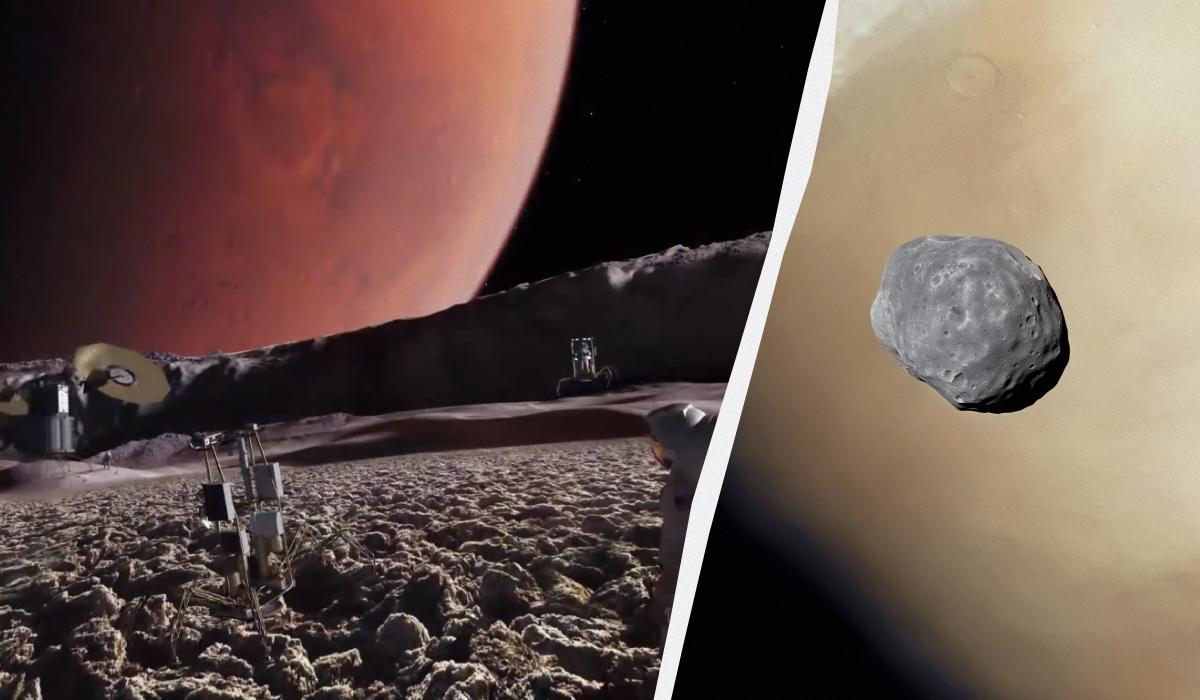
- Japan is launching a mission to deliver soil from Phobos
- Success could shed light on the origin of the moons
- The mission will conclude in 2031
Japan is launching a unique mission to the moon of Mars, Phobos
The Japanese space agency JAXA has launched an ambitious mission to deliver soil samples from the moon of Mars, Phobos. This mission, known as MMX (Martian Moons Exploration), aims not only to collect samples but also to explore the mysterious satellites of the Red Planet. The success of this mission could significantly expand our knowledge of the origins of Phobos and its smaller moon, Deimos, as well as the possible conditions for the emergence of life in the Solar System.
The launch took place at the Tanegashima Space Center, which is Japan's primary launch complex. The MMX mission includes landing a robotic spacecraft and rover on Phobos, making it unique in the history of space exploration. If everything goes well, soil and dust samples from Phobos are expected to arrive on Earth in 2031, marking an important step in the study of Mars and its moons.
The scientific research conducted as part of this mission may help answer questions about how Phobos and Deimos were formed. Scientists suggest that about 0.1% of the material that will be delivered from Phobos may have Martian origins. This discovery could provide new clues about the geological history of Mars and its moons.
Goals and objectives of the JAXA mission
The MMX spacecraft consists of three modules: propulsion, exploration, and return. The total mass of the spacecraft is about five tons. It will be equipped with 13 scientific instruments, including the rover "Idéfix," which will explore the surface of Phobos. This mission also includes a flyby of Deimos to collect data about it, which may help further understand its origins.
The MMX mission is the result of international cooperation involving five space agencies, including NASA. Japan leads the project, while other countries provide equipment and support. This collaboration highlights the importance of joint efforts in space exploration and may lead to new discoveries in the future.
Phobos, which has a diameter of about 20-30 km, is gradually approaching Mars at a rate of 1.8 meters every hundred years. At this pace, in 50 million years, Phobos will either collide with the planet or break apart, forming a ring around it. This makes the study of Phobos particularly relevant for understanding the future of Mars and its moons.
Technical details and international cooperation
The scientific data collected during the mission can help prepare for future crewed expeditions to Mars. A Japanese radiation monitor will collect data on radiation, which is important for ensuring astronaut safety. This may also aid in the development of technologies for utilizing Mars' resources in the future.
The "Idefix" rover, developed jointly by France and Germany, is set to land on Phobos and conduct research for 100 days. This data will be critically important for preparing for sample collection by the Japanese spacecraft. JAXA scientists plan to collect at least 10 grams of soil using American and Japanese methods.
The Tanegashima Space Center, established in 1969, is Japan's largest rocket launch complex. It is located on the island of the same name, which is also known as a popular resort. This site has become the starting point for many significant Japanese space missions and continues to play a key role in the development of the country's space technologies.
The future of research and potential consequences
The MMX mission may also be an important step towards the future of terraforming Mars. Previously, scientists developed a microbe capable of surviving in conditions that mimic the Martian environment. This discovery could lead to new opportunities for utilizing Mars' resources and creating conditions for life on the planet.
Despite all the achievements, questions remain about how exactly samples will be collected and what technologies will be used for their analysis. The success of the mission depends on many factors, including technical aspects and conditions on Phobos. This underscores the importance of careful preparation and planning in space exploration.
Overall, JAXA's mission to deliver samples from Phobos represents an important step in the study of Mars and its moons. The success of this mission could not only expand our knowledge of the origins of these objects but also open new horizons for future research and colonization of the Red Planet.
Source: UNIAN