FAA halted departures across the United States due to a communications outage
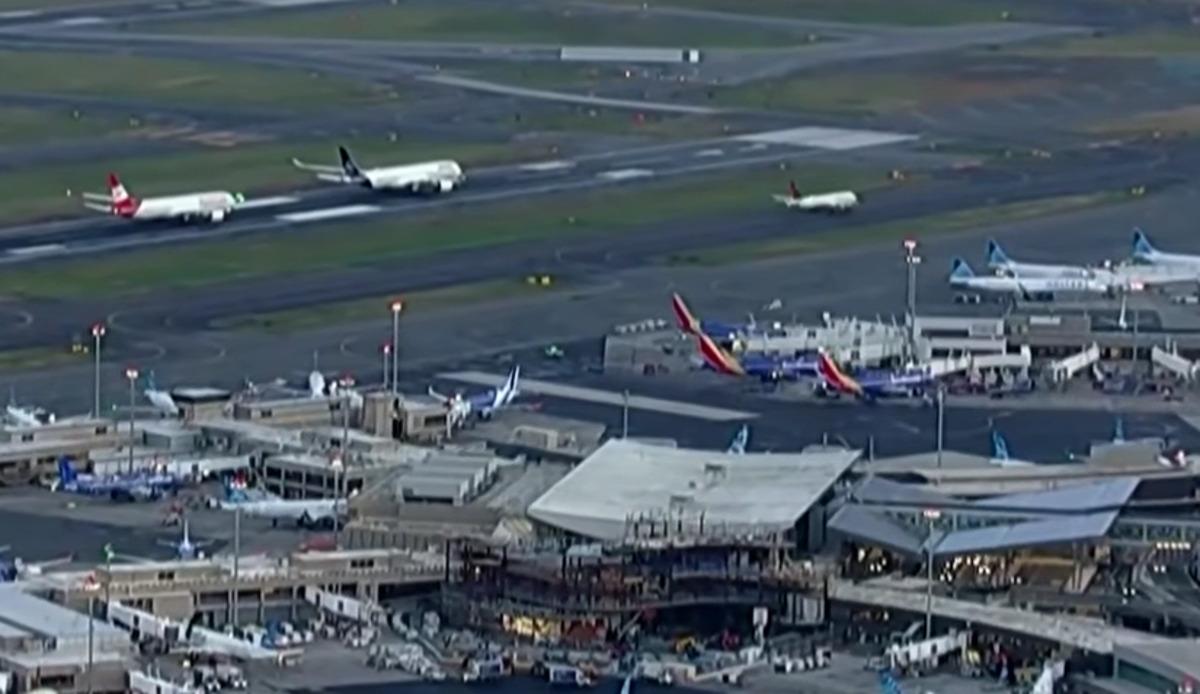
- The FAA imposed a nationwide ban on departures after communications problems at air traffic control centers.
- Arriving international flights had to be handled individually; FlightAware reported more than 10,000 delayed or canceled flights.
- The cause of the disruption had not been determined, and a possible cyberattack and a connection to the new AI system remained theories, not confirmed findings.
Nationwide suspension of departures
On Friday, November 13, the U.S. Federal Aviation Administration (FAA) suspended departures nationwide. The restriction was imposed in the afternoon following communications problems at regional air traffic control centers. The agency explained that the decision was prompted by emergency circumstances and safety requirements. At the time, the cause of the problems had not yet been determined, so the announcement described precautionary measures rather than a definitive conclusion about what had happened.
The FAA directive stated that, on the orders of the Air Traffic Control System Command Center, a ban on departures was being imposed at all U.S. airports. Aircraft preparing to depart were instructed to remain on the ground until further notice. This wording applies specifically to aircraft departures: it does not mean that all aircraft in the air had to land or that every arriving flight was automatically canceled. This distinction is important for understanding the scope of the measure.
For international flights bound for the United States, the directive provided for a separate handling procedure. Their status was to be assessed individually, while departures from airports across the country were subject to a blanket ban. Therefore, the announcement of a suspension of flights does not describe identical restrictions for all destinations and flight categories. The FAA announced a temporary measure pending further notice, meaning the duration of the restrictions and the process for lifting them depended on subsequent instructions from the agency.
What is known about the communications failure
Preliminary reports linked the incident to equipment and communications between air traffic controllers. The FAA separately reported a communications problem affecting air traffic control centers and said technical specialists were investigating it. At this stage, this was a preliminary description of the malfunction, not a completed technical finding. The published information did not specify which devices or communication channels had failed.
The ATC App reported that the restriction was nationwide: according to the service, pilots and air traffic controllers in different regions of the United States received the information. The service later published a message saying that Canadian controllers linked the situation to an FAA radio communications outage. This indicates how the incident was described by participants in aviation communications, but does not in itself establish the root cause of the outage or replace the findings of an investigation by the U.S. agency.
U.S. Transportation Secretary Sean Duffy wrote on the social network X that the FAA had announced a nationwide ground stop at all airports because of a communications problem affecting all air traffic control centers. He said agency specialists were investigating what had happened and promised to share updates as they became available. The statement confirmed the scale of the restrictions, but did not provide a definitive explanation for the failure or a timeline for restoring communications.
Consequences for passengers and air traffic
FlightAware data reflected the practical scale of the disruptions: the portal reported that more than 10,000 flights in the United States were delayed or canceled. The published figures combine these categories, so they do not show the number of cancellations and delays separately. They also concern the impact on air traffic overall, rather than a confirmed count of flights directly affected by each individual air traffic controller instruction. Nevertheless, the estimate shows that the restrictions were accompanied by significant disruptions.
According to preliminary reports from aviation services, the restrictions took effect at around 20:53 GMT, or 22:53 Kyiv time. This is an approximate time, not an indication of the exact minute when each airport stopped sending out aircraft. Since departures were prohibited nationwide, the order affected passenger and airline plans in different regions at the same time. At the time of publication, it had not been reported exactly when the restrictions were expected to end.
In addition to aviation problems, the U.S. National Weather Service reported difficulties with network access and communications. This broadened the picture of the incident beyond reports about air traffic control centers, but the information released did not explain whether the problems at the two agencies had the same cause. Therefore, the weather service’s problems cannot be considered proof of a single failure mechanism or confirmation of any specific theory about their origin.
The cause remains undetermined
U.S. Secretary of Homeland Security Markwayne Mullin said people were safe and there was no reason to worry about loved ones. He also stressed that it was too early to call the incident a cyberattack, since its cause had not yet been determined. Mullin contrasted the situation with the September 11 attacks, describing it as a telecommunications failure. This was an official’s assessment at the time of the reports; it did not mean the investigation had already ruled out all possible causes.
According to Mullin, restoring communications and internet access would take time, and the problem could not be resolved within an hour. He added that investigators were not ruling out any possibility. These comments did not specify how long the disruptions would last or when departures would resume; they only cautioned that a quick fix was not guaranteed. While air traffic controllers and technical specialists worked to determine what had happened, passengers and airlines had to wait for further official instructions.
The possibility that the incident was connected to artificial intelligence was also discussed: the day before, the FAA had deployed a new SMART system at all air traffic control centers, whose reliability had previously been criticized in Congress. However, reports presented this connection as a possibility, not an established cause. No confirmation had been released that the SMART system was involved in the outage. While the technical review continued, there was no basis for drawing conclusions about the role of AI, a cyberattack, or any specific equipment.
Source: UNIAN