The Kremlin’s Four Bets in the War Against Ukraine: Where Putin’s Gambles Remain Risky
- According to the WSJ’s assessment, two of the Kremlin’s four bets appear to have failed so far: breaking the Ukrainian army and forcing Kyiv to make concessions through US pressure.
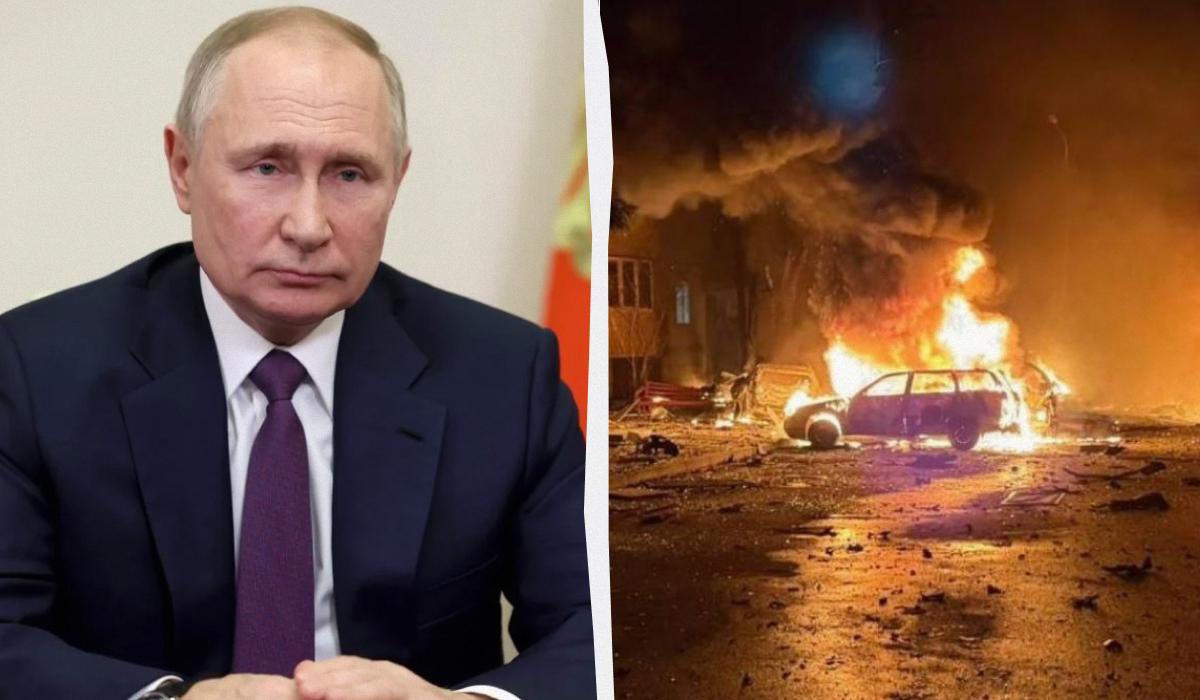
- Moscow continues missile and drone strikes on Ukrainian cities and infrastructure, hoping to damage the economy.
- The Kremlin may be able to assess the results of these calculations by early 2027; their outcome and the durability of support for Ukraine remain uncertain.
Four of Moscow’s bets and their varying durability
According to the assessment cited in the publication, Russia’s strategy rests on four bets. Two appear less promising: Moscow hoped the Ukrainian army would break, and that the Donald Trump administration would force Kyiv to accept the Kremlin’s demands. The other two bets are tied not to a swift military breakthrough but to sustained pressure: missile and drone strikes on Ukraine’s economy, and the possible weakening of European aid.
The talks in Abu Dhabi, mediated by the United States this week, did not suggest that the Kremlin had abandoned its original goals, according to the article. These include seeking to subjugate Ukraine and reshape the postwar order in Europe. The fact that talks are taking place therefore does not mean Moscow is ready to back down from its demands. The publication highlights the gap between the diplomatic process and Russia’s stated military and political objectives.
The timeframe assumed for the assessment is not arbitrary within the strategy outlined: most observers cited in the article believe Putin is most likely to wait until early 2027. Until then, the Kremlin will be able to observe the effects of the strikes and changes in Europe’s political climate. The Russian leadership will then, according to this assessment, decide whether to continue its previous course or adjust its tactics. Revising the strategy does not amount to abandoning its ultimate goals.
US pressure and the situation on the front
One of Moscow’s key expectations was that Trump’s return to the White House and his promise to end the war in a day would lead Kyiv to make concessions. The US president told Volodymyr Zelenskyy that he had no cards, but Ukraine refused to hand over territories that Russian forces had failed to capture. Thus, the US pressure described in the article has so far not produced the territorial settlement the Kremlin seeks.
According to the publication, the Trump administration’s early decisions to almost completely halt military and financial aid to Ukraine did not increase the White House’s leverage as Moscow had hoped—instead, they reduced it. The United States nevertheless retains ways to pressure Kyiv, the article notes. One example is the new disruptions to military Starlink service reported by Zelensky. SpaceX’s network is used by the Ukrainian military and operates in cooperation with the Pentagon.
The article also recalls that in October, Elon Musk had already restricted the Ukrainian military’s access to Starlink amid tensions between Trump and Zelensky. The episode shows that access to technical infrastructure can become a sensitive factor in relations, but the publication does not claim that the new disruptions have the same cause. Meanwhile, Moscow is seeking sanctions relief without a ceasefire and is offering American investors and envoys business projects.
Strikes on the economy and infrastructure
The Kremlin’s economic proposals have yet to gain broad support, although the White House has already eased some sanctions and U.S. officials are promoting deals with Russia as part of the peace process. The prospects for further easing are limited by the political climate in the United States: according to the article, following the recent midterm elections, Democrats took control of Congress. This makes it harder for the Trump administration to continue pursuing the removal of restrictions, but does not prove that this policy will end altogether.
A second weak bet for Moscow concerns the front line. The article says that this year Russia has had its worst results in eastern Ukraine since 2022, and that attempts to encircle Ukrainian defensive positions in the eastern part of Donetsk region have failed. Russian forces, it notes, are making a final push before winter conditions make an offensive even more difficult. Meanwhile, the Ukrainian army continues to resist despite a chronic shortage of troops.
The Russian command in Ukraine was reshuffled at the beginning of the year, partly amid criticism over heavy losses. However, the change in leadership has not yet led to a rapid advance: the offensive remains difficult on a front saturated with drones. Military analyst Konrad Muzyka notes that drones help the defenders, while Russian advances are possible mainly during periods of bad weather, when drones work less effectively. This limits the significance of Moscow’s seasonal expectations.
European support as a factor of uncertainty
With the front line almost frozen, Russia has stepped up missile and drone attacks on Ukrainian cities and critical infrastructure. The targets listed in the article include power plants, warehouses, Black Sea grain ports, and bridges across the Dnipro. The strikes threaten cities’ supplies of electricity, heating, and water ahead of winter. However, the article describes the risk and intent of the campaign; it does not claim that these services have already been widely cut off.
The strategy of economic attrition is tied to the consequences of prolonged strikes: if they trigger a humanitarian crisis and bring Ukraine’s economy to a halt, Kyiv may need more European funding to cover rising military expenses. This means the campaign’s potential impact is not limited to destruction on the ground; it could also increase the financial burden on Ukraine’s allies. The scale of these consequences, and whether they will bring the economy to a standstill, remains uncertain in the article.
The Kremlin’s latest gamble is to weaken European support by exploiting domestic political problems. The article mentions low economic growth, pressure surrounding social programs, high energy prices, and the rising popularity of populists. Marine Le Pen has promised to cut aid to Ukraine; Germany’s Alternative for Germany party supports resuming large-scale purchases of Russian gas; and parties across the political spectrum in Italy oppose supporting Kyiv. But the election results and whether governments will actually change their policies remain uncertain.
Source: UNIAN