AMD tests show a 34% performance increase of the Zen 6c core over Zen 5c
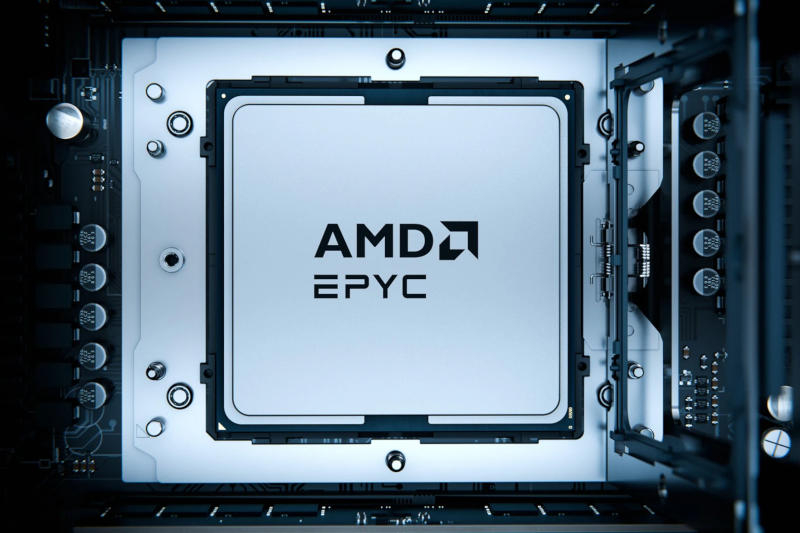
- EPYC 9996 is 78% faster than EPYC 9965 in the SPECrate test.
- The performance increase per core for Zen 6c is approximately 34%.
- AMD 9996 outperforms Intel Xeon 6980P and Nvidia Vera by more than twice.
- Different versions of GCC and power limits can affect comparisons.
In July, AMD presented the first official data on the testing of its new server line Epyc Venice, based on the Zen 6c architecture. The SPECrate 2026_int_base test measures the overall throughput of the system when performing integer tasks and is conducted using the GCC 15.2 compiler.
Comparison with the predecessor Zen 5c
According to the test results, the flagship 256-core processor EPYC 9996 outperformed the 192-core EPYC 9965, built on Zen 5c, by 78%. The increase in the number of cores was 33%, however, the overall performance gain was almost twice as high, indicating a significant improvement in the efficiency of each core. When recalculated per core, the advantage of Zen 6c is estimated at about 34%.
It is important to note that this figure cannot be interpreted as a pure increase in IPC (instructions per cycle), as the compared systems differ not only in chips but also in frequencies, power limits, and memory subsystems. The SPECrate test measures the performance of the entire platform, not just the individual processor.
In addition to comparing with its own predecessor, AMD stated that the EPYC 9996 outperforms the competing Intel Xeon 6980P and Nvidia Vera by more than double in overall performance in the same test. In single-core performance, the 96-core Venice variant surpasses the 88-core Nvidia Vera by about 20%.
In the document, AMD also notes that some data about competitors was taken from public sources, and in some comparisons, different versions of the GCC compiler were used. For the 96-core Venice, GCC 16.1 was used, which contains optimizations for Zen 6c, while Nvidia Vera was tested with GCC 15.2. This may affect the results, especially in integer workloads.
Tests were conducted in different power consumption configurations: the 256-core EPYC 9996 used a limit of 600 W, while the 96-core variant used up to 500 W. However, AMD did not specify the exact power limit for the 96-core configuration used in comparison with Vera.
The company emphasizes that the published figures are preliminary estimates prior to the official release of the SPEC reports. Nevertheless, they demonstrate that the performance increase in Zen 6c is achieved not only through a greater number of cores but also through their enhanced efficiency, which may strengthen AMD's position in the server solutions market.
Source: 3DNews