An ancient Etruscan well with bronze offerings and human remains has been discovered in Italy
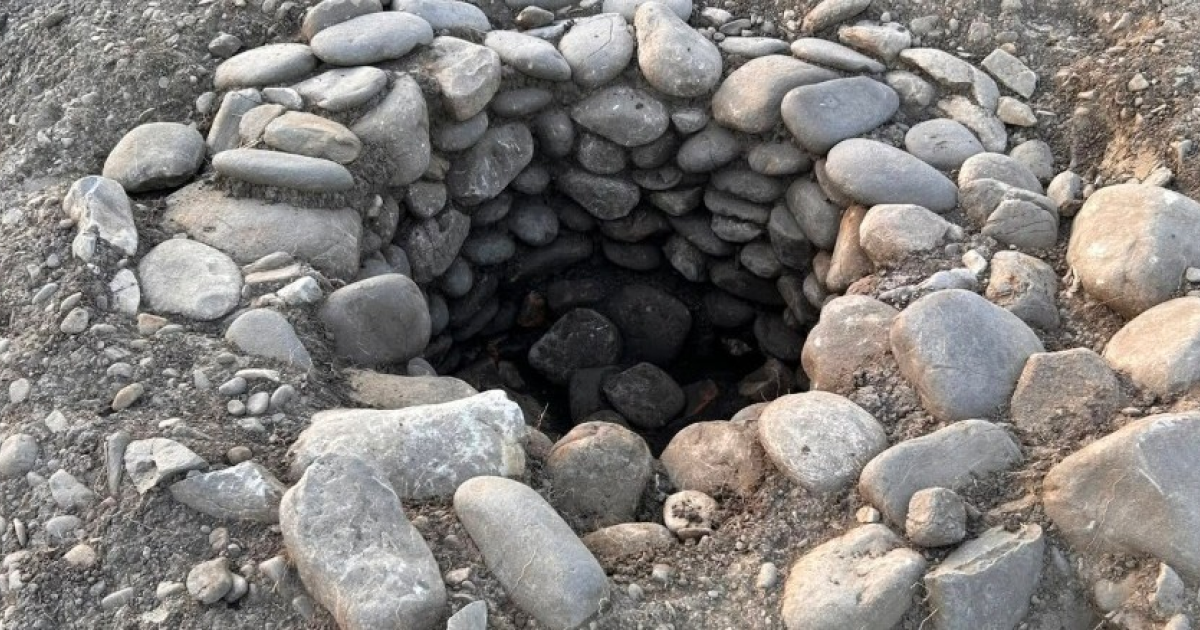
- Archaeologists found an Etruscan well in Kainua, dating back about 2500 years.
- Inside, bronze votive objects were found, placed before the start of its use.
- Human bones are associated with the end of the well's use.
As part of systematic archaeological work in the area of the ancient settlement of Kainua, located in modern-day Italy, researchers from the University of Bologna made an important discovery – a well preserved, built by the Etruscans around the 3rd century BC.
The well is a stone structure with a vertical shaft, typical of water objects from that period. According to experts, its construction occurred during the time when Etruscan culture was at its peak, and the engineering skills of local craftsmen already allowed for the creation of complex hydraulic structures.
Bronze votive finds
Inside the reservoir, archaeologists discovered several small bronze objects that, judging by their shape and wear, were used as offerings. Such 'votive' items were often placed in water objects as a thank you to the gods for providing water or in hopes of protection from drought. According to experts, these items were placed in the well before it began to be used for water extraction.
Of particular interest are the details made of a copper and tin alloy, characteristic of Etruscan craftsmanship. Their condition suggests that they were made in local workshops and brought to Kainua specifically for a ritual ceremony.
Human remains and the end of exploitation
In addition to metal artifacts, human bones were found at the bottom of the well. Their arrangement and degree of preservation indicate that they entered the reservoir after it had already begun to be used. Scholars associate the appearance of the remains with the cessation of the well's functioning, suggesting that at the end of its service, it may have become a burial site or a place for special rituals related to the end of use.
DNA analysis and radiocarbon dating conducted at the University of Bologna allowed for the establishment of the approximate age of the remains, which coincides with the date of the last use of the well, that is, the end of the 3rd century BC.
The discovery is significant for understanding the religious practices and engineering achievements of the Etruscans. It confirms that even in everyday infrastructure objects, such as wells, there were elements of a ritual nature, and it also shows how the functions of such structures changed over time.
Researchers plan to continue studying the found artifacts, as well as conduct a more detailed analysis of the human remains to determine their social status and possible reasons for burial in the well. The data obtained may expand the understanding of the cultural traditions and social structure of the ancient Etruscans.
Source: N+1