Europe is recognized as the birthplace of flying mammals
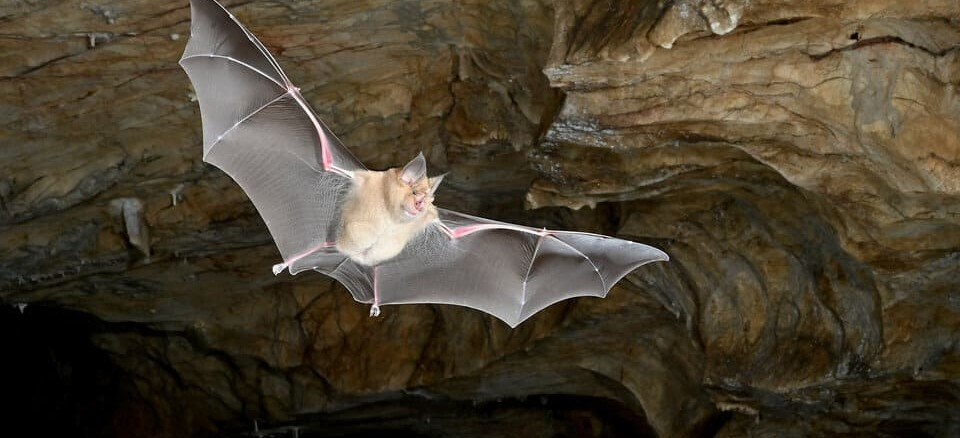
- The first bats appeared in Europe about 60 million years ago
- Then they spread to Africa and gradually covered all continents
- The order Chiroptera consists of 21 families, grouped into two suborders
In a recent study published in the journal Nature, an international team of paleontologists and geneticists presented a new reconstruction of the evolutionary history of bats (Chiroptera). The authors used genomic sequences of modern species and fossils dated to various geological periods to construct a timeline of the emergence and subsequent development of this order.
The analysis showed that the first representatives of bats appeared in the territory of modern Europe in the late Paleocene, about 60 million years ago. It is here that they, according to the researchers, first acquired the ability for active flight, which opened up new ecological niches for them.
After their appearance in Europe, these mammals quickly began to migrate. The initial wave of settlement led them to Africa, from where subsequent waves spread to North and South America, as well as to Asia and Australia. This scenario explains the wide geographical distribution of more than 1,400 modern species.
Taxonomic division
The study also clarified the systematics of the order. Scientists confirmed that bats are divided into 21 families, grouped into two suborders – Yinpterochiroptera and Yangochiroptera. This division reflects deep genetic differences found in DNA analysis.
Previously, most hypotheses pointed to the Asian or African continent as a possible center for the origin of bats. New data call these views into question, suggesting a more southern European starting point and demonstrating how the combination of genetic and paleontological evidence can change the picture of ancient biogeography.
Understanding the place of origin of bats has important implications for studying their adaptive radiation. Flying mammals have played a key role in pollination, seed dispersal, and controlling insect populations, and their rapid growth in diverse ecosystems after their appearance in Europe explains their current ecological significance.
The authors note that further research on fossils from other regions and more detailed genomic analysis could clarify the migration routes and timelines for the emergence of specific families. Such data will help better understand how climate changes and geological events influenced the evolution of bats.
Overall, the work demonstrates how modern genomic methods allow for a reevaluation of established views on ancient groups of animals and emphasizes the need for an interdisciplinary approach to studying evolutionary history.
Source: N+1