NASA plans to explore the Marius lunar crater in search of underground caves
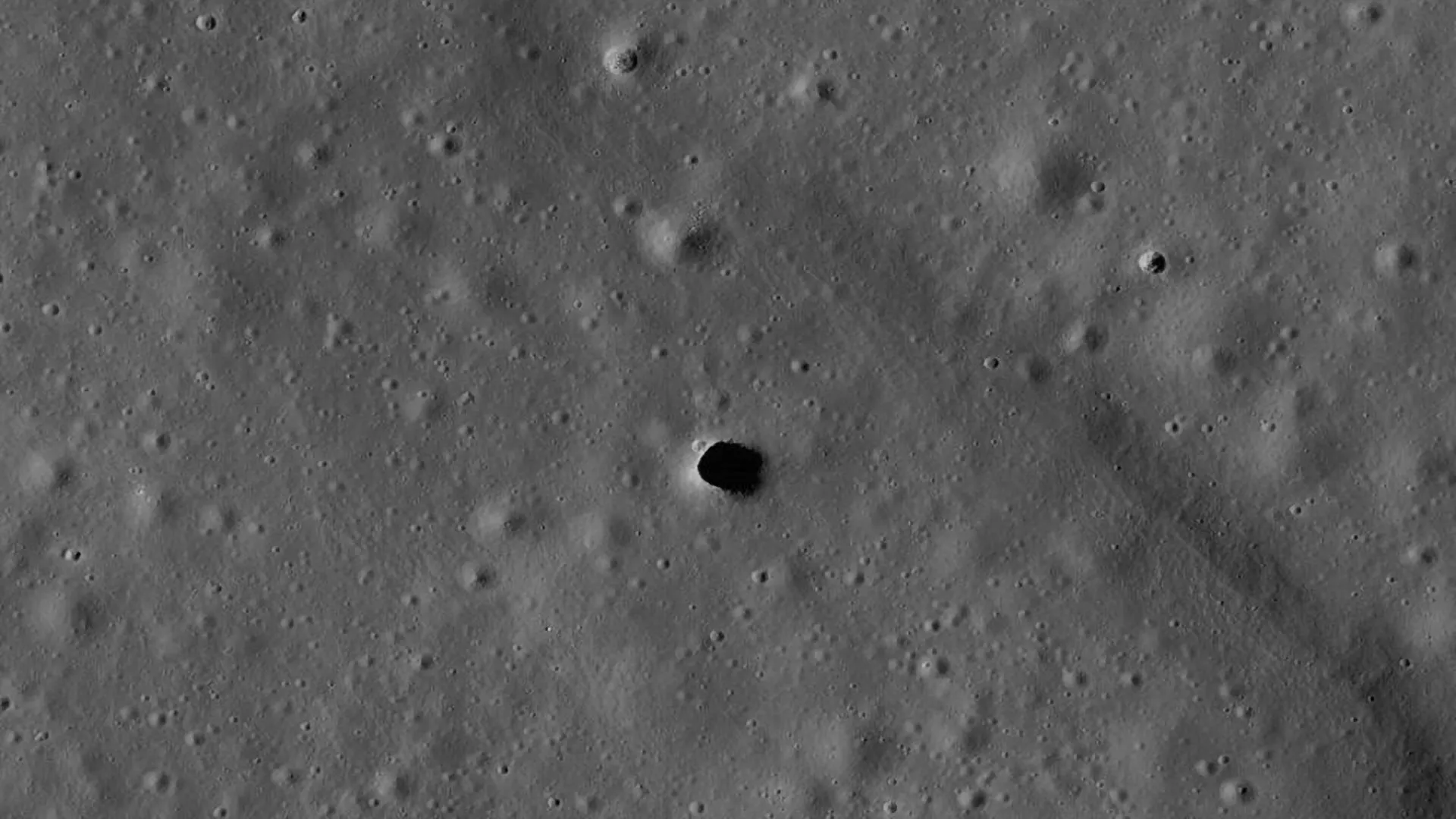
- NASA has approved the GIMLI project to study the lunar crater MHP
- Radar, seismic, and gravimetric methods will be used to search for lava tubes
- The project is funded by the PRISM program and implemented through CLPS
- The discovery of a tunnel could provide shelter for future astronauts
NASA has selected a proposal led by the Planetary Science Institute (PSI) to test the hypothesis of a large underground cavity opening from the lunar crater Marius Hills Pit (MHP). If such a lava tunnel is found, it could provide future astronauts with natural protection from radiation and extreme surface temperatures on the Moon.
The project will be funded under the PRISM program (Payloads and Research Investigations on the Surface of the Moon). Under this scheme, scientific instruments are delivered to the lunar surface using commercial lunar landers participating in the CLPS initiative (Commercial Lunar Payload Services).
The project is named GIMLI (Geophysical Instruments for Marius Lunar pit Investigation). The lead is senior scientist at PSI, Thahn Putzig, and the company Honeybee Robotics, part of Blue Origin, will manufacture most of the equipment. Additionally, PSI is collaborating with the Norwegian Space Agency.
"GIMLI is an example of ambitious planetary science for which PSI was created," noted PSI director Emmanuel Hendricks. She emphasized that Putzig's team is transitioning from orbital observations to direct exploration of the lunar surface, which will allow for a better understanding of the moon's volcanic past.
The subject of the study is MHP, a large fault in one of the most volcanically diverse areas of the Moon – the Marius Hills. According to orbital satellites, there may be lava tubes hidden in this region, formed by ancient eruptions. GIMLI plans to test this hypothesis on-site, using an active seismic method that has not been used in planetary studies since the Apollo missions.
Three main tools will be used to study subsurface structures: ground radar, seismic sensors, and a gravimeter. In addition, cameras will capture the appearance of the crater and its walls. Joint data analysis will not only detect a possible void channel but also assess its dimensions.
Honeybee Robotics will take charge of the project management, assembly of the active seismic system, gravimeter, and cameras, as well as their integration into the lander and rover that will deliver the equipment to the lunar surface. After landing, the company will operate the instruments in collaboration with PSI.
Even in the case of a negative result, the research will provide valuable information about the geology of the Moon, the properties of its regolith, and how underground structures affect the thermal regime. This data could serve as a foundation for future lunar bases, where natural lava tubes are considered potential shelters from radiation and extreme temperatures.
Source: ScienceDaily