October celestial events: Saturn in opposition, the Orionid meteor shower, and the Moon's conjunction with the Pleiades cluster
- Saturn in opposition on October 4 will be visible all night.
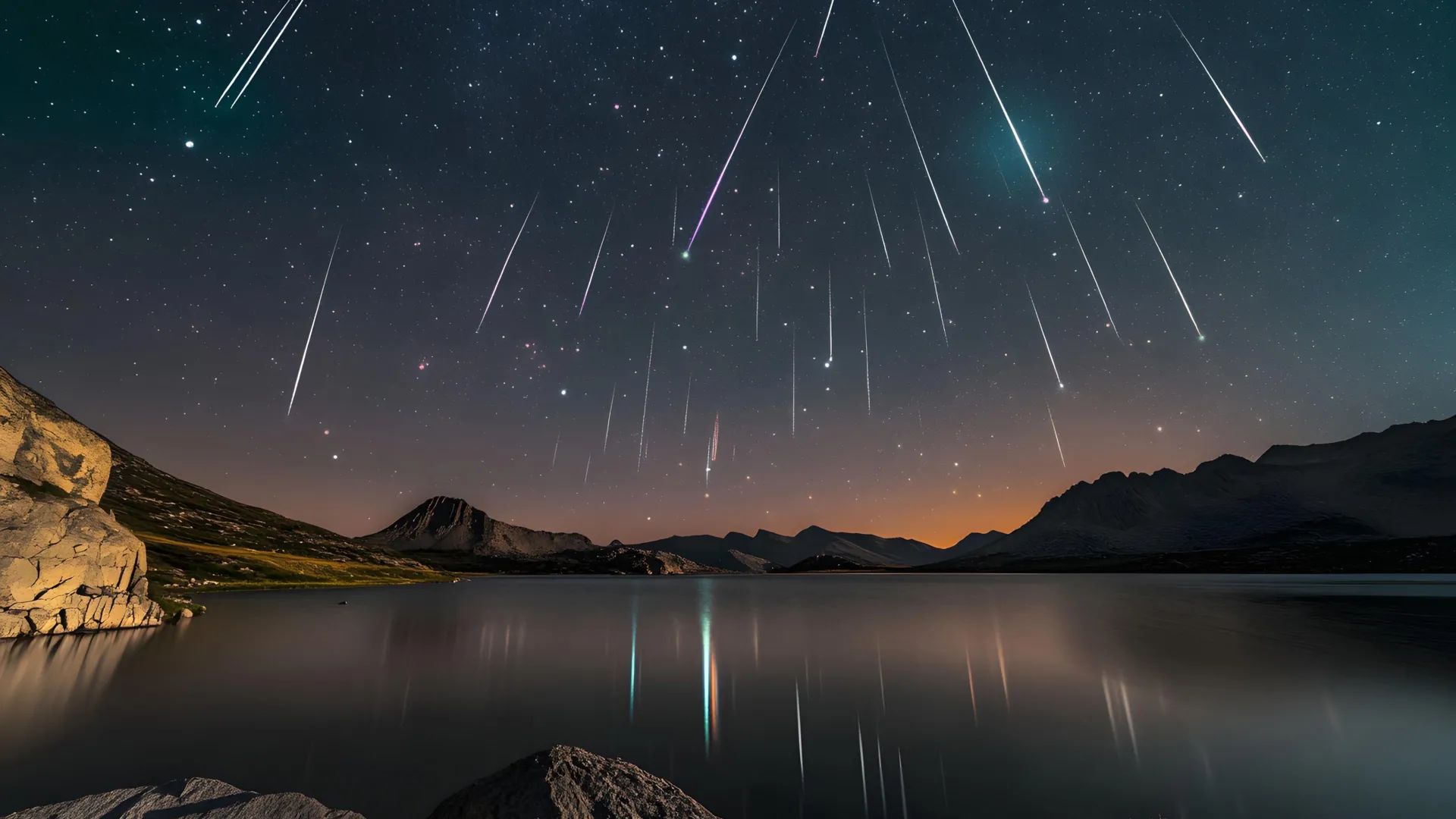
- The Orionids are meteors from Halley's comet, peaking on October 21-22.
- The Moon passes near the Pleiades on October 27-28.
For astronomy enthusiasts, October has become an especially eventful month. The night sky will showcase three bright events, each attracting the attention of both amateurs and professional researchers.
Saturn in opposition
On October 4, the planet Saturn will reach opposition — a position where Earth is between the Sun and Saturn. In this case, the planet rises almost simultaneously with sunset and remains visible for most of the night, making it one of the best times for observation in the year.
In addition, Saturn attracts scientists with its unusual atmospheric structures. The hexagonal jet stream at the planet's north pole has been known for a long time, stretching over 32,000 km. Recent images from the Hubble Space Telescope have shown the emergence of a decagonal wave over the south pole, which researchers believe is intensifying. This development allows for the study of the dynamics of giant atmospheric formations in real time.
Orionid meteor shower
The peak of the Orionid meteor shower is expected on the night of October 21 to 22. These meteors are formed from small particles left behind after the passage of Halley's comet, and although their trajectory points to the constellation Orion, they can appear anywhere in the sky.
This year, observing them will be somewhat more difficult due to the bright waxing moon, which will overshadow the fainter meteors. The best chance to see bright flashes is a few hours before dawn, when the moon has already set below the horizon. For the best results, it is recommended to choose a dark place away from city lights, give your eyes time to adjust, and cover as much of the sky as possible.
The Moon and the Pleiades
On October 27-28, a rare conjunction of the Moon with the Pleiades cluster, also known as the 'Seven Sisters', will occur. It is one of the most recognizable clusters visible from almost any point on Earth, and it is often mentioned in the myths of various cultures.
To observe, it is enough to go east in the evening when the Moon and the Pleiades rise above the horizon. To the naked eye, the cluster appears as a slightly blurred group of six to seven stars; with binoculars or a small telescope, individual stars and even the nebula surrounding them can be seen.
No special equipment is required, however, using optics will allow you to see details that are not visible to the naked eye, making the observation more impressive.
Source: ScienceDaily