A thirty-year experiment in Australian forests showed the benefits of heavy thinning.
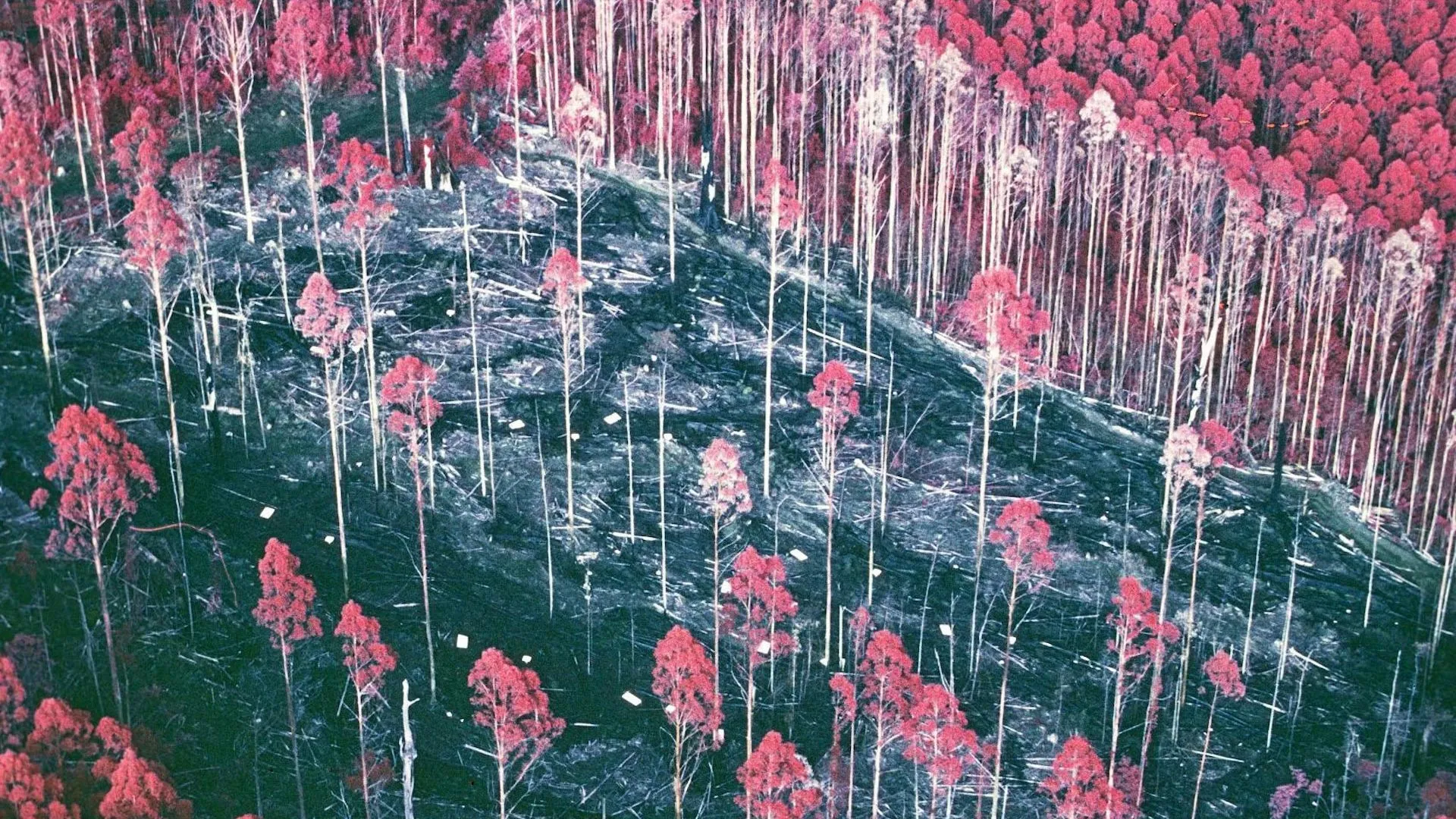
- A 30-year experiment compared four forestry approaches.
- Heavy thinning produced trees with diameters of up to 1.5 m and a 20% increase in growth.
- Carbon in thinned areas is comparable to or exceeds control sites.
- The results show the potential for moderate intervention in forests.
The question of how best to manage forests has been discussed in Australia for several decades. Traditionally, the debate has revolved around two extremes: complete protection of forests or their logging to support local economies. However, the results of a long-term experiment conducted in the mountain forests of Victoria present a more complex picture.
In the mid-1980s, the Victorian state government invested about 26 million Australian dollars in research into alternatives to traditional clearfelling, where the entire area is completely logged. The Silvicultural Systems project was created, which included two experimental sites: Tanjil Bren in the Central Highlands and Cabbage Tree Creek in East Gippsland.
On each of them, four approaches were compared: large clearings 250-350 m wide, small clearings 50-140 m, heavy thinning (removal of 50-70% of trees), and control plots without intervention. At Tandzhil-Bren, where 'mountain ash' pines grew after the 1939 fires, hundreds of observation points were established and thousands of seedlings were monitored.
By the early 2000s, the results showed that pine regenerates best in large clearings. In small clearings and areas with preserved canopy, understory species such as acacia dominated. These findings were published but then forgotten when the road to the experiment became overgrown and the sign disappeared.
In 2014, researchers from the University of Melbourne revisited Tandzhil-Bren. They found that the initial conclusions still hold: after 30 years, pine in large clearings remains healthy and abundant. However, the most surprising observations were made in heavily thinned areas.
The trees remaining after thinning turned out to be enormous: with an average age of 80 years, their diameter exceeded one meter, and some specimens reached 1.5 m. Compared to control plots, the diameter of the largest trees in the thinned areas was 20% larger.
Moreover, in heavy thinning, carbon accumulation in the wood was no less, and sometimes even higher, than in untouched forests. Over thirty years, such areas fully restored the carbon removed during logging and added an additional stock comparable to natural forests.
These data emphasize that moderate but intensive interventions in the forest structure can promote the growth of large trees and effective carbon capture, offering an alternative to both complete deforestation and full conservation mode.
Source: ScienceDaily