Switching to a recombinant shingles vaccine reduces the risk of cardiovascular disease by 9 %.
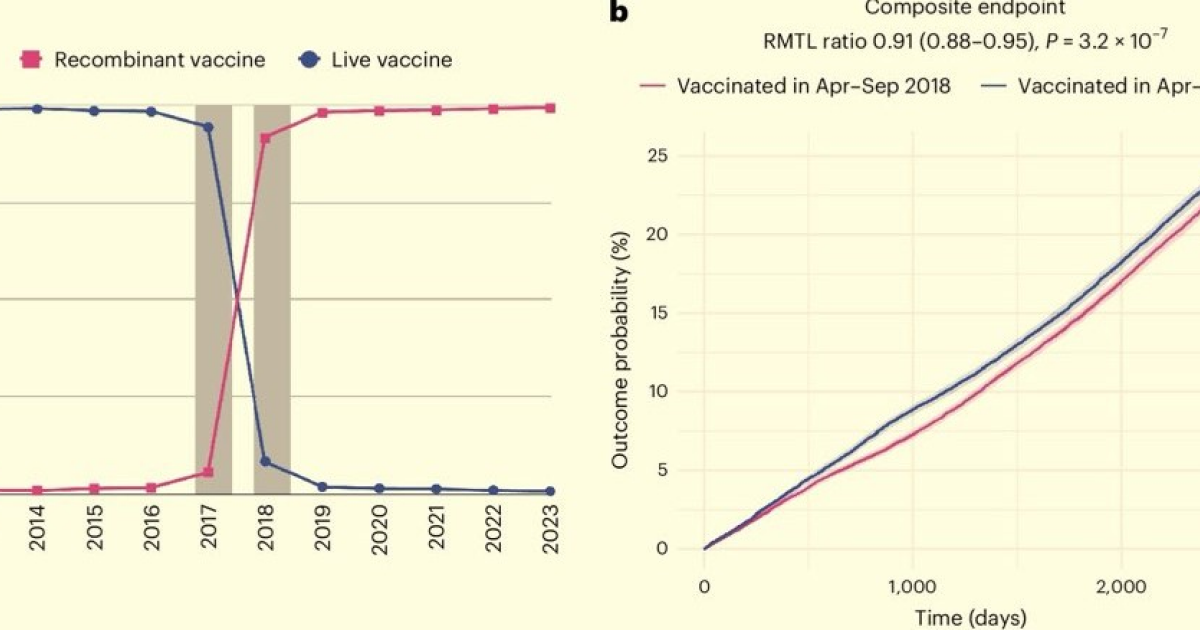
- The transition from live to recombinant vaccine reduces the risk of CVD by 9% over 7 years.
- The reduction in risk is more pronounced in women (≈11%) than in men (≈7%).
- Recombinant drugs are safer for people with weakened immune systems.
In 2023-2024, a group of epidemiologists from the UK conducted a natural experiment comparing two generations of vaccines against shingles (herpes zoster). The first generation consists of live attenuated vaccines that were used in the national immunization program for over ten years. The second generation includes recombinant vaccines based on the protein component of the virus, approved in 2018.
Research methodology
Scientists analyzed data from over 300,000 patients who received the first vaccine between 2005-2015 and compared it with those who were vaccinated with the recombinant drug in 2018-2022. Hospitalization and mortality registries, as well as information on comorbidities, were used to assess the risk of cardiovascular complications. The average follow-up period was seven years after vaccination.
The main result was the discovery of a 9% reduction in the overall risk of three serious conditions – ischemic heart disease, chronic heart failure, and ischemic stroke – among recipients of the recombinant vaccine compared to those who received the live vaccine. This figure was maintained throughout the observed period.
Separate analysis showed that the degree of risk reduction varied by sex. In women, the relative reduction in risk was about 11%, while in men it was about 7%. The authors attribute these differences to known polymorphisms in immune response and the fact that women are generally more sensitive to vaccination reactions.
The importance of the obtained data is due to the fact that shingles is often accompanied by prolonged pain syndrome (postherpetic neuralgia), which in itself increases the likelihood of cardiovascular complications. Reducing the frequency of these complications may lessen the burden on the healthcare system and improve the quality of life for patients.
Recombinant vaccines, unlike live ones, do not contain weakened viruses, making them safer for people with weakened immune systems. Additionally, they elicit a more stable immune response, as evidenced by higher antibody levels in the long term.
The results support the recommendations of international organizations such as the CDC and EMA to transition to the use of recombinant products in national vaccination schedules. In the UK, the process of replacing live vaccines with new ones has already begun, and similar steps are planned in several European countries.
Nevertheless, researchers note that additional observations are needed to assess the long-term effect over more than a seven-year period, as well as to clarify the mechanisms linking vaccination against shingles with a reduction in cardiovascular risk.
Source: N+1