Windows 11 update speeds up application launch through an extended low-latency profile
- The Windows 11 update has expanded the low latency profile to application launches.
- The CPU clock speed sharply increases to 4.6 GHz for a few seconds.
- Tests showed accelerated startup of popular programs without battery loss.
- The profile can be enabled manually via ViVeTool, monitored through HWiNFO
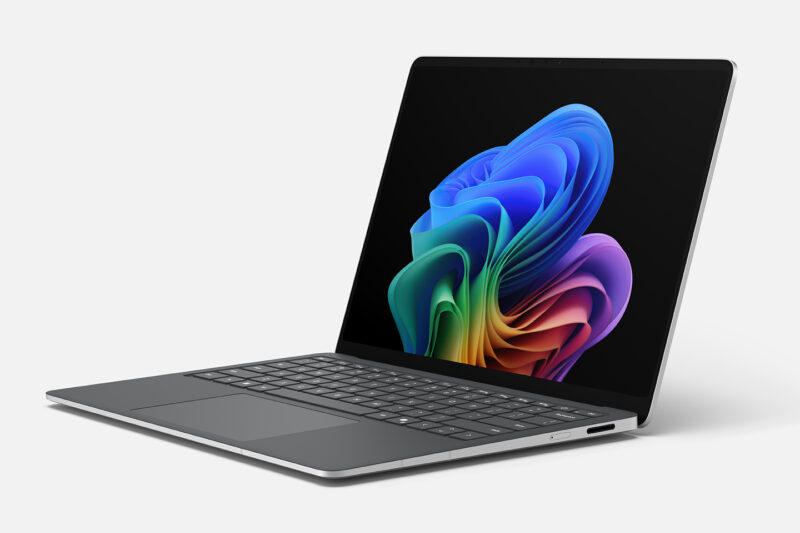
In August 2026, Microsoft released another security update for Windows 11 (build 26200.9168 and higher). It expanded the functionality of the 'Low Latency Profile', which was previously limited to user interface elements, now including CPU acceleration when launching applications.
The 'Low Latency Profile' represents a brief spike in CPU frequency to nearly maximum values for a duration of one to three seconds, after which the cores return to power-saving mode. This technology was initially activated in June 2026 but only covered components such as the Start menu, notification center, and search.
New features appeared in update KB5121003. They are being rolled out gradually, so not all users will notice the change immediately. If desired, the profile can be enabled manually using the free tool ViVeTool, and the current CPU frequency can be monitored through HWiNFO.
Testing conducted by journalists from the Windows Latest site confirmed the acceleration of popular programs: 'Notepad', Epic Games Store, calculator, Google Chrome, Weather app, PowerPoint, and VLC. After installing the update, when opening applications, all performance P-cores of the Intel Core i5-13420H processor reached nearly 4.6 GHz, while the energy-efficient E-cores exceeded 2 GHz, which is about 80% of their maximum potential.
It is important to note that the frequency increase lasts only a few seconds, so there is no significant rise in chip temperature or energy consumption. According to measurements, the difference in battery life before and after the update was negligible.
Similar acceleration schemes are already used in Apple's macOS and in some Linux distributions. On platforms with Qualcomm Snapdragon X2 and Nvidia RTX Spark chips, transitions between power modes occur in microseconds, making the effect particularly noticeable.
Thus, the new extension of the 'Low Latency Profile' allows Windows 11 to respond faster not only to interface actions but also to program launch requests, enhancing the user experience without compromising energy efficiency.
Source: 3DNews