Xpeng opened a factory for assembling humanoid robots Iron, with serial production starting by the end of the year.
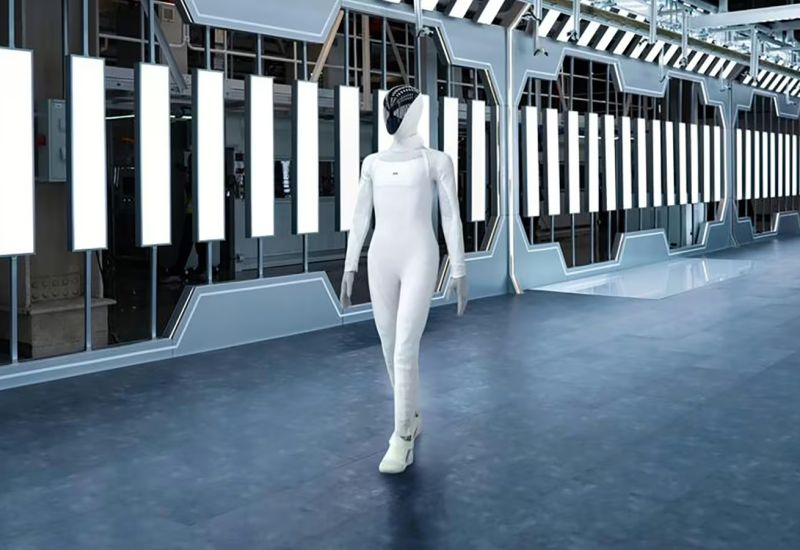
- Xpeng has opened an automated factory for assembling Iron robots.
- Mass production is planned for the end of 2026, with sales expected in 2027.
- Iron has 76 degrees of freedom, three Turing AI processors, and a flexible mesh shell.
Chinese technology company Xpeng, known primarily for its electric vehicles and flying taxi projects, demonstrated the first prototype of its humanoid robot Iron this month, built at a specially constructed factory. The opening of the facility marked the completion of the construction of a manufacturing complex where over 80% of operations are already automated.
Plans for mass production
According to management, the company aims to establish mass production of Iron robots by the end of 2026. The first batches will be used in Xpeng's own showrooms and service centers, while the commercial launch for external clients, including overseas markets, is scheduled for 2027.
The assembly line itself was designed from scratch, and Xpeng emphasizes speed and scale of production. The exact capacities of the factory and the cost of the finished robots have not yet been disclosed.
Technical specifications of Iron
Iron is equipped with three proprietary Turing AI processors, allowing it to perform artificial intelligence tasks locally without a constant connection to cloud servers. The robot's kinematics provide 76 degrees of freedom for the entire body and 21 degrees of freedom in each hand, making it capable of complex manipulations.
The outer shell is made of flexible mesh fabric, combining safety in contact with people and an aesthetic appearance. Such solutions are aimed at enabling the robot to work alongside humans in public and domestic environments.
Context and significance of the project
The Iron project was first announced in November 2025, and now Xpeng demonstrates readiness for mass production. According to the company's estimates, the release of humanoid robots will be more profitable per unit than the production of electric vehicles, highlighting a strategic shift towards service and domestic technologies.
Xpeng's CEO He Xiaopeng personally participated in the ceremony: he greeted the robot, hung a commemorative badge around its neck, and even hugged it during the photo session, emphasizing the emotional attachment that the company plans to develop over the coming decades. According to representatives, the integration of robots into everyday life may take from ten to fifty years.
The launch of Iron production is taking place against the backdrop of increasing competition in China among major technology players striving for leadership in autonomous systems and artificial intelligence. In addition to Xpeng, companies such as Huawei, Baidu, and international competitors including Boston Dynamics and Tesla are also active in this field, developing humanoid platforms.
Thus, the opening of the new factory confirms Xpeng's ambitions to go beyond traditional automotive manufacturing and take a place in the rapidly growing market for service robots, where potential applications range from customer service in car dealerships to assistance in household chores.
Source: 3DNews