On Mars, time flows differently: scientists confirmed Einstein's prediction
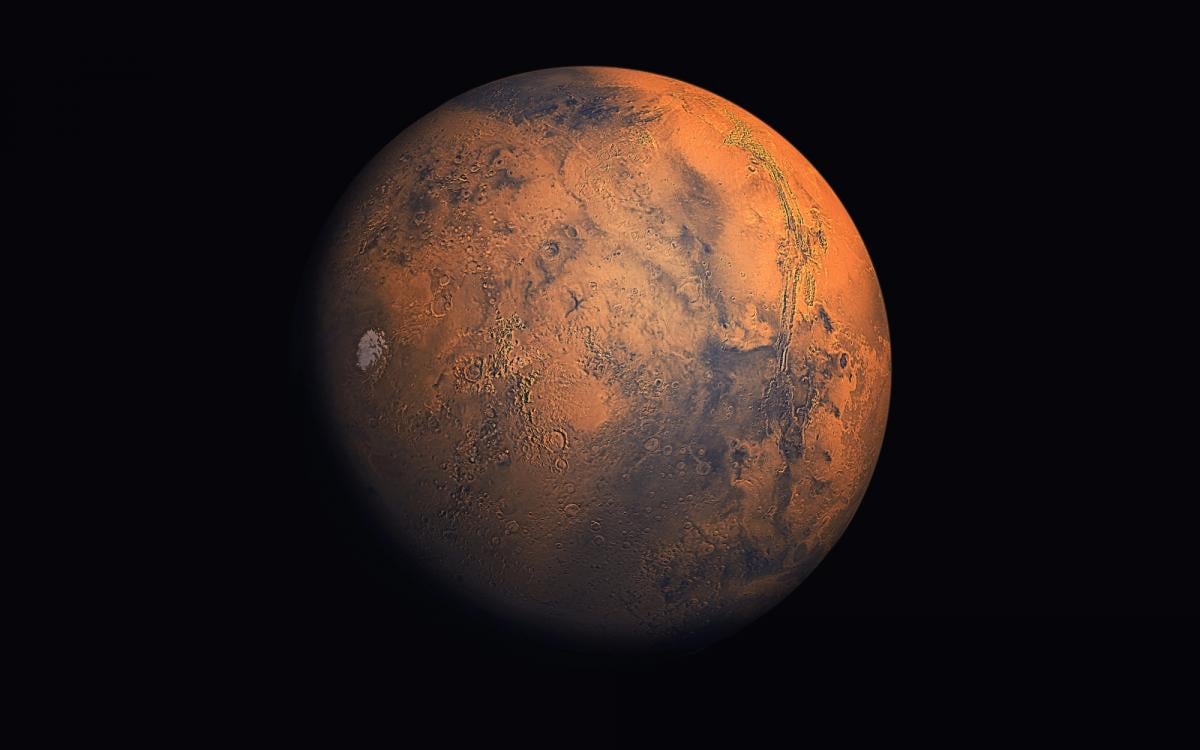
- On Mars, time flows faster by 477 microseconds per day
- This discovery is important for navigation and communication
- A new time system is needed for Martian missions
On Mars, time flows differently than on Earth
A recent discovery made by scientists from the U.S. National Institute of Standards and Technology (NIST) confirmed that time on Mars flows differently than on Earth. This discovery, while it may seem insignificant, has important implications for future Mars missions, communication systems, and navigation. Researchers have developed a time measurement system adapted for the Red Planet, which will be necessary for the successful execution of space tasks.
The basis for this discovery was Albert Einstein's prediction that time is not a universal concept. On Earth, we live in a gravitational 'well' where time is measured using highly accurate clocks. However, as soon as we move away from Earth, this rhythm begins to change. Einstein argued that gravity slows down time, and in areas with less gravitational influence, clocks run faster.
NIST researchers were able to accurately determine how much time on Mars differs from that on Earth. On average, clocks on the surface of the Red Planet run 477 microseconds faster per day than similar clocks on Earth. This discovery was made using a relativistic model that takes into account the influence of not only the Sun but also Earth, the Moon, and Mars's own orbit.
Discovery of time differences on Mars
The time difference on Mars varies by up to 226 microseconds depending on the planet's position in its orbit. These fluctuations can accumulate, and for example, a person who spent 50 years on Mars would age 9 seconds more than if they had stayed on Earth. This discovery highlights the importance of considering time differences when developing navigation systems for interplanetary missions.
GPS systems on Earth require accuracy to the tenth of a microsecond, which becomes a colossal challenge on interplanetary scales. A small time difference can lead to significant disruptions in navigation and communication between planets. Scientists emphasize the need to account for these time differences when creating reliable communication and navigation systems.
Bidzhunat Patla, one of the researchers, noted that this discovery paves the way for the creation of a planetary synchronization network that could maintain a unified time between worlds with different gravitational rhythms. This is particularly relevant in light of humanity's growing space ambitions and plans for the colonization of Mars and the Moon.
Practical implications for space missions
Time accuracy will become as important as energy or engines in future Mars expeditions. Autonomous rovers, communication relays, and 'smart' living modules will need to adapt to the new timekeeping system. This raises the question of how 'standard' Martian time will be determined and where it will be established.
The need to create a new time system for Mars also presents scientists with the challenge of developing a universal Martian clock. This timekeeping mechanism must take into account all the peculiarities of the gravitational field and orbital motion of the Red Planet to ensure measurement accuracy.
A study published in The Astronomical Journal highlights that time differences on Mars are not a trivial matter. These fluctuations can accumulate and affect long-term missions, making them an important aspect for planning future space operations.
The need for a new time system
As space missions become increasingly ambitious, the need for precise time measurements becomes critically important. Scientists emphasize that without accounting for these differences, serious problems can arise in navigation and communication between Earth and Mars.
Thus, the discovery of time differences on Mars not only confirms Einstein's theory but also opens new horizons for future research and space missions. This study underscores the importance of timing accuracy for the successful execution of interplanetary tasks.
In conclusion, the differences in time on Mars become a key element not only for fundamental science but also for practical tasks related to future space expeditions. Scientists continue to explore these aspects to ensure the successful colonization of the Red Planet.
Source: UNIAN