Nuclear technologies against asteroids: new research
- A nuclear explosion can help in destroying asteroids
- Modeling shows high effectiveness of the method
- Research continues to improve Earth's protection
Nuclear technologies against asteroids: new research
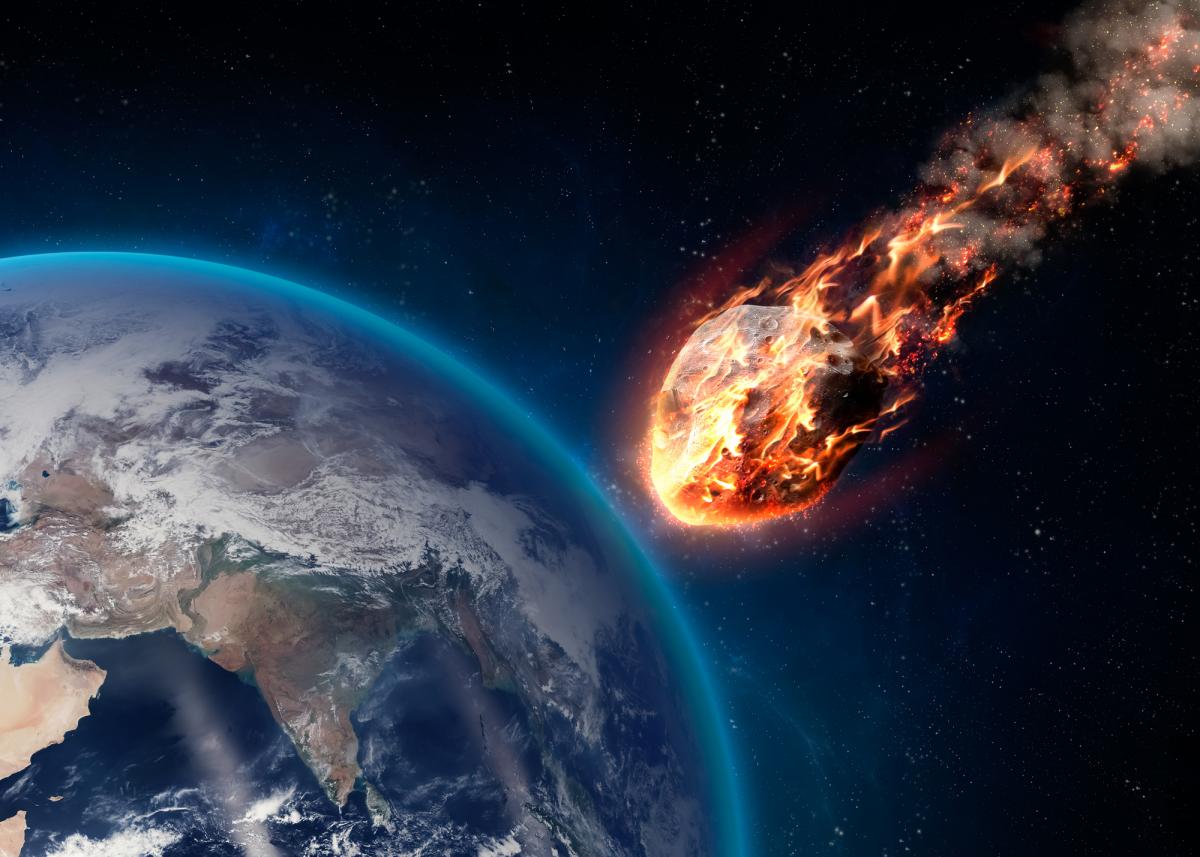
American scientists from the Lawrence Livermore National Laboratory (LLNL) have begun a study aimed at exploring the possibility of using a nuclear explosion to destroy asteroids threatening Earth. As part of this project, they developed three-dimensional models that allow for a more accurate assessment of how an asteroid might react to the X-ray radiation from a nuclear device detonated near its surface. This research could be an important step in developing methods to protect our planet from potential threats.
In their work, scientists used the Spheral code to model various asteroid destruction scenarios. They compared the results of more than 1500 one-dimensional simulations with data obtained using the validated Ares code. This allowed them to confirm the high consistency of the results, giving confidence that Spheral can be used for more complex three-dimensional models. Research shows that with the right approach, it is possible to prevent a collision with an asteroid if it is detected early enough.
One approach to solving the problem is the deflection method, which involves a slight change in the asteroid's velocity so that it passes by Earth. Another method involves breaking the asteroid into small fragments that do not pose a threat to the planet. In 2022, NASA demonstrated the asteroid deflection method as part of the DART experiment, which showed that a targeted collision with an asteroid can be an effective way to protect Earth.
Modeling nuclear impact on asteroids
Modeling conducted by scientists showed that in one scenario, about 98% of the asteroid's material was completely damaged, indicating significant destruction. Meanwhile, about 97% of the material was moving faster than the asteroid's escape velocity, suggesting that the body is disintegrating. These results highlight the importance of further research in this area, as they may help in developing effective methods for asteroid defense.
Researcher Isaiah Santistevan, who leads the project, noted that the ability to model damage and destruction in three-dimensional space is an important step towards improving the assessment of planetary defense options. He emphasized that Spheral is well-suited for tasks related to damage and fragmentation of materials, making it an indispensable tool in this field.
During the modeling, scientists also varied the distance to the hypothetical nuclear explosion and assumptions about how easily the asteroid material can be destroyed. This allowed for a more complete understanding of how the asteroid might react to nuclear impact. The results show that with the right approach, the risk of collision with the asteroid can be significantly reduced.
The effectiveness of nuclear destruction of asteroids
Encouragingly, the modeling showed that the asteroid could suffer significant damage, and its fragments could move at sufficient speed to escape the asteroid's gravitational field. These are important signs that the asteroid is in the process of being destroyed, and three-dimensional modeling allows for a more detailed exploration of this process.
Despite the encouraging results, many questions remain regarding the practical implementation of nuclear destruction of asteroids. Numerous factors must be considered, such as the accuracy of determining the asteroid's trajectory, reaction time, and the potential consequences of a nuclear explosion for the environment. These aspects require further study and discussion within the scientific community.
In addition, it is important to consider international agreements and norms regarding the use of nuclear technologies in space. The application of nuclear explosions to destroy asteroids may provoke disputes and controversies between countries, which must also be taken into account when developing strategies for protecting Earth.
The future of protecting Earth from asteroids
In conclusion, research conducted by scientists from LLNL opens new horizons in the field of protecting Earth from asteroids. Modeling nuclear impacts on asteroids could become an important tool in combating potential threats. However, to successfully implement these methods, many scientific, technical, and ethical issues must be resolved.
Scientific research in this area continues, and the results obtained from modeling may serve as a basis for future experiments and developments. Scientists hope that their work will help create effective methods for protecting Earth from asteroids and other space threats.
Thus, the use of a nuclear explosion to destroy asteroids represents a promising yet complex approach. Further research and discussions are needed to determine how effectively and safely such technologies can be applied to protect our planet.
Source: UNIAN