Early and late bilingualism: development features and advantages.
- Early bilingualism: from birth to 3-4 years.
- Both languages develop as native languages at an early age.
- Late bilingualism is based on the first language.
- Bilinguals gain cognitive and professional advantages.
Bilingualism — the ability to fluently speak two languages — is studied with regard to the age at which a person begins to acquire them. Scientific research typically distinguishes two periods: early and late bilingualism. There are no clear boundaries in the form of official age limits, but most specialists rely on the neuropsychological characteristics of brain development.
Early bilingualism
Early bilingualism covers the period from birth to about three to four years. During this time, the brain has high plasticity, allowing for the simultaneous formation of the phonetic and grammatical systems of two languages. Both languages are acquired as native, without one clearly dominating the other. Children at this age are able to distinguish and reproduce sounds characteristic of each language, as well as switch between them with little effort.
Late bilingualism
Late bilingualism begins after the child has already mastered the first language, usually at the age of four to five years and older. In this case, the second language is learned based on the already formed linguistic structures of the first language. This approach requires more conscious effort: the learner adapts the rules and vocabulary of the new language to the already existing language base. Despite the slower development, late bilinguals often achieve a high level of proficiency, especially with intensive contact with the language environment.
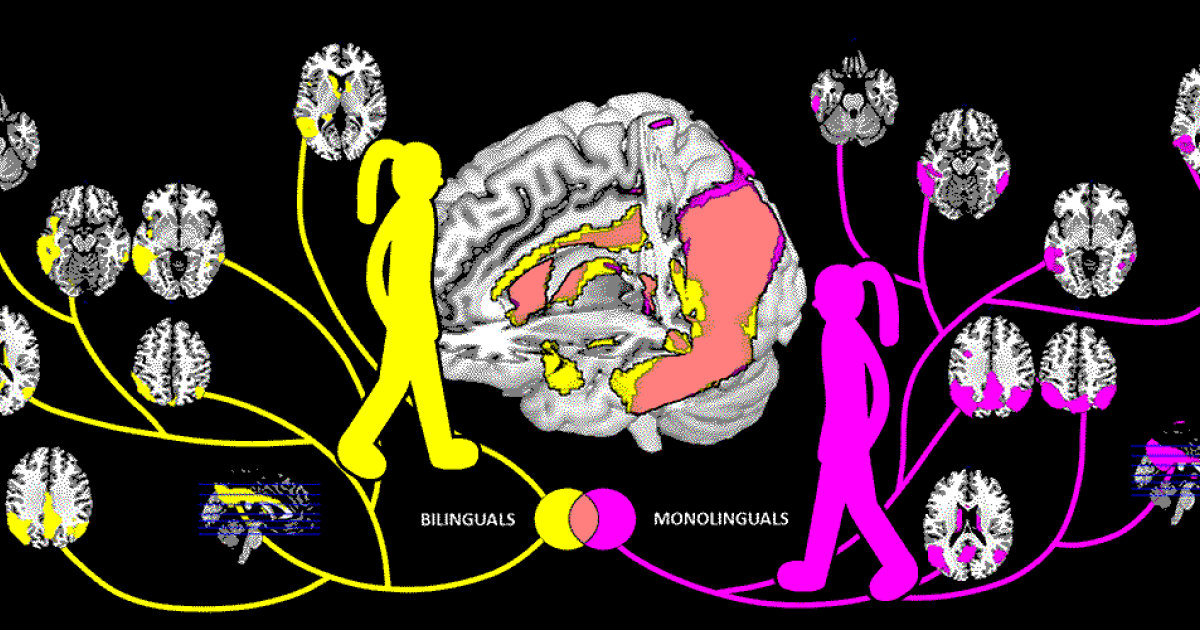
Research shows that bilinguals, regardless of the age of onset, can gain cognitive advantages. These include improved executive functions such as the ability to switch attention, planning, and problem-solving. Additionally, bilingualism is associated with a slower onset of age-related cognitive impairments, including dementia.
The practical benefits of bilingualism go beyond just the ability to watch movies in the original language or communicate with foreigners. Proficiency in two languages opens up access to a wider range of professional opportunities, facilitates the learning of a third language, and promotes a better understanding of cultural differences.
Nevertheless, success in learning a second language depends on many factors: the intensity of contact with the language environment, the quality of instruction, motivation, and support from family and society. Therefore, it is important to create conditions in which children and adults can regularly practice both languages.
Overall, early bilingualism provides a more natural and balanced development of both languages, while late bilingualism requires conscious effort but can still bring significant cognitive and social benefits.
Source: N+1