Neanderthals were closer to us than previously thought: the reasons for their disappearance
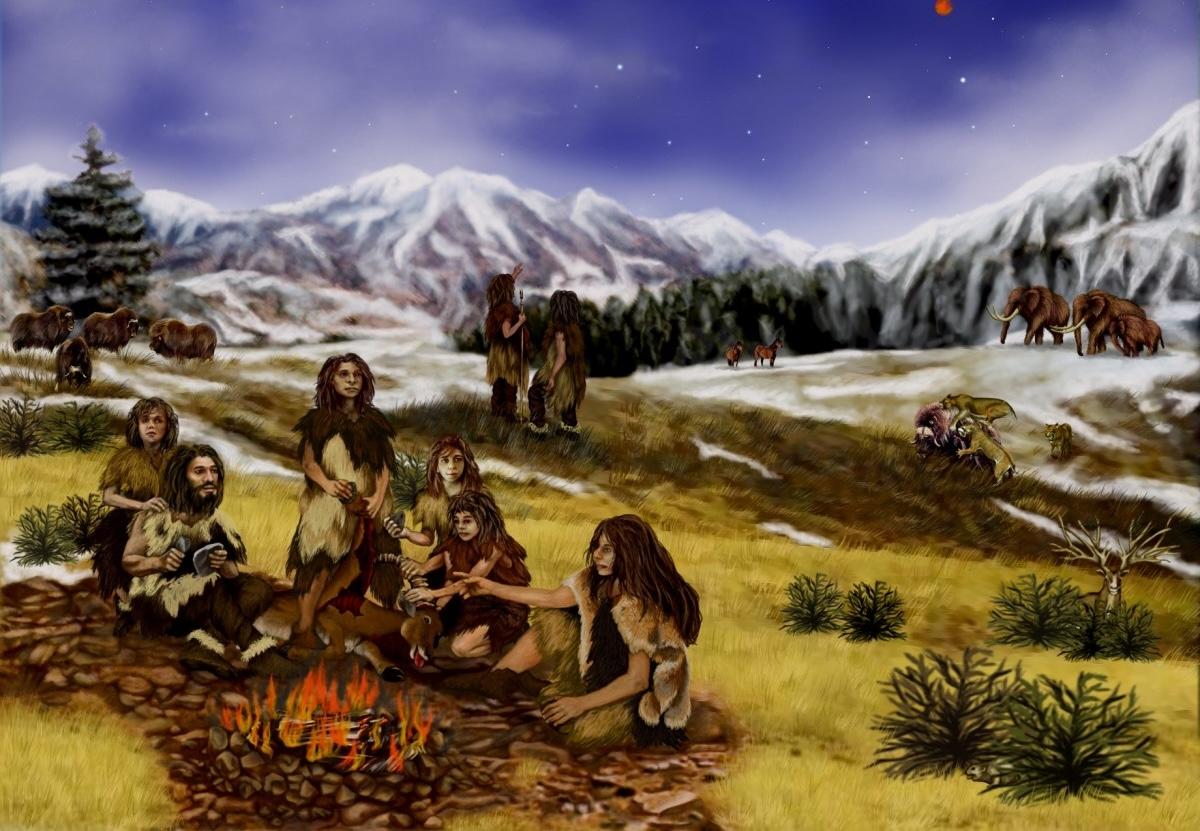
- Neanderthals had advanced skills
- Their genetic material has been preserved in modern humans
- The reasons for their disappearance remain unclear
Neanderthals and their mysterious disappearance
Neanderthals, like other human species, existed on Earth simultaneously with Homo sapiens. Research shows that they were not just primitive ancestors, but possessed advanced skills and culture. Paleoanthropologists, such as Chris Stringer, wonder why Homo sapiens is the only human species left on the planet. This calls into question traditional notions of the biological uniqueness of our species and its evolution.
For a long time, it was believed that human evolution is a linear process, where Homo sapiens is the culmination. However, new data shows that Neanderthals and other hominins also had complex social structures and cognitive abilities. For example, they created art, used fire, and even buried their dead, indicating that they had cultural practices similar to modern humans.
According to research, Neanderthals were 95% genetically similar to Homo sapiens. This discovery changed the perception of them as primitive beings. Paleoanthropologists, such as John Hawks, emphasize that Neanderthals were no less developed than modern humans, and their extinction requires a deeper analysis than simply assuming they were less successful in the struggle for survival.
Neanderthals: closer to Homo sapiens than previously thought
Neanderthals left behind many archaeological finds that testify to their cultural achievements. For example, in the Bruniquel cave in France, structures were found that were likely used for lighting and heating. This indicates that Neanderthals could plan their actions and work as a team, which is a sign of complex social organization.
Despite all the evidence, some scientists believe that the emphasis on the similarities between Neanderthals and Homo sapiens may be excessive. The question of whether Neanderthals adopted technologies and habits from modern humans or vice versa remains open. This raises important questions about how different human species interacted in the past and how this may have affected their survival.
Genetic studies show that Neanderthals did not disappear without a trace. Their DNA has been preserved in modern humans, especially in non-African populations, where about 2% of the genome has Neanderthal origins. This discovery highlights that Neanderthals did not simply go extinct but became part of the genetic heritage of Homo sapiens through interbreeding.
Cultural achievements of Neanderthals
Research also shows that Neanderthals may have had their own unique cultural practices and technologies. For example, findings related to the use of stone tools suggest that they could create tools that were no less complex than those used by Homo sapiens. This challenges the notion that only Homo sapiens possessed unique skills.
There is also evidence that Neanderthals may have had their own forms of art and self-expression. This discovery changes the perception that only Homo sapiens were capable of creating art and complex cultural objects. Thus, Neanderthals may be more similar to us than we thought.
The reasons for the extinction of Neanderthals remain a subject of active research. Some scientists suggest that climate change, competition with Homo sapiens, and other factors may have played a key role in their extinction. However, considering that Neanderthals and Homo sapiens coexisted for a long time, the question of why it is us who survived remains open.
The reasons for the extinction of Neanderthals and their legacy
The comparison of Neanderthals and Homo sapiens also raises questions about how we define human abilities and culture. If Neanderthals possessed many of the same skills as we do, it calls into question traditional notions of what makes us unique. Perhaps we need to reconsider our understanding of human evolution and cultural development.
Ultimately, research on Neanderthals and their interactions with Homo sapiens opens new horizons for understanding our history. They show that human evolution was more complex and multifaceted than we could have imagined. This also emphasizes the importance of studying the genetic heritage and cultural practices that may have been lost in the process of evolution.
Thus, Neanderthals represent an important part of our history, and their study can help us better understand not only our past but also our future. Questions about how different species of humans interacted with each other and what factors influenced their survival remain relevant and require further research.
Source: UNIAN