Meteorites: how they turn into stones on Earth
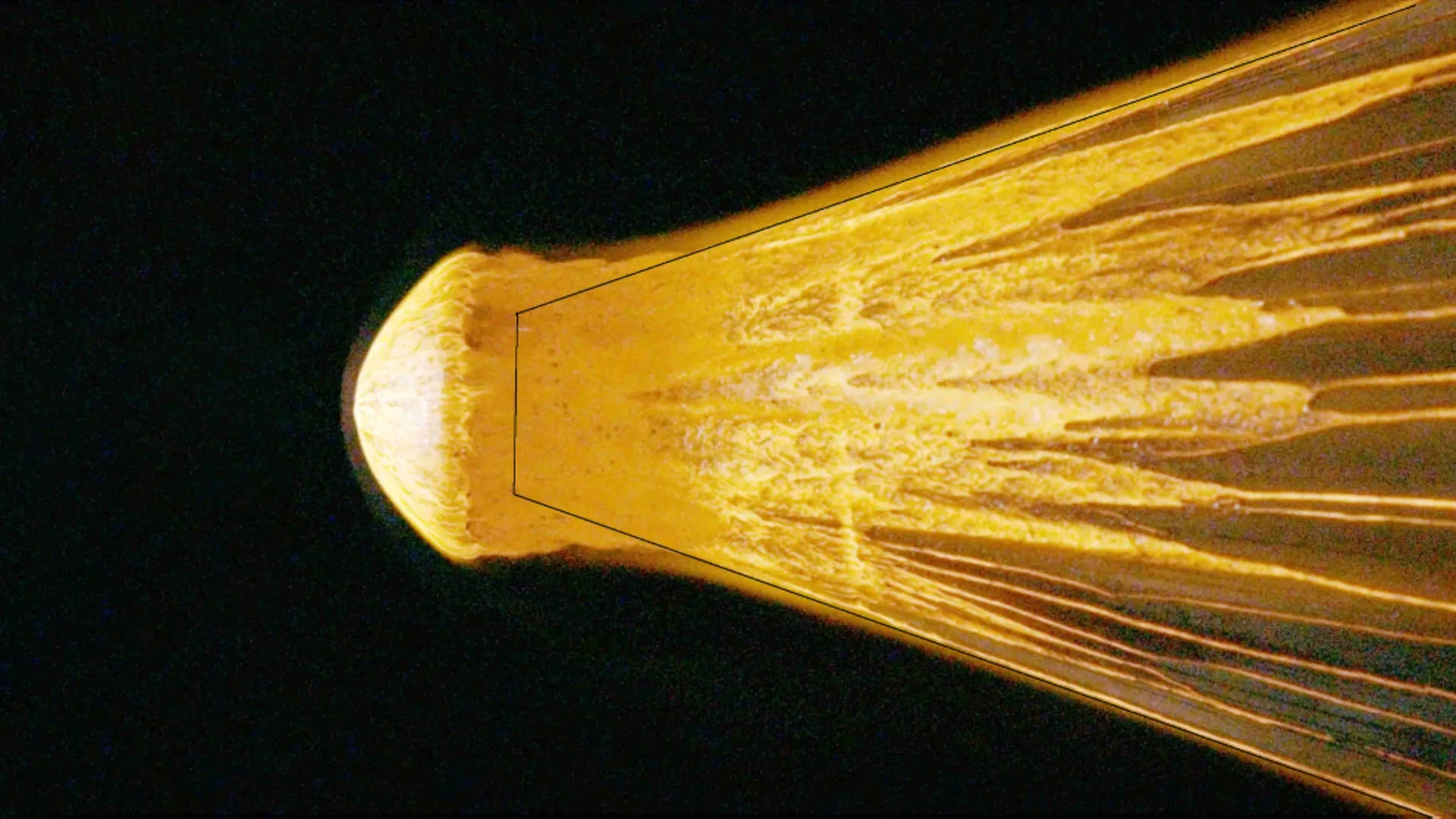
- The study identified seven stages of meteorites turning into stones on Earth
- Melting and fragmentation play a key role in this process
- Scientists found that meteorites lose mass faster than previously thought.
Meteorites: how they turn into stones on Earth
A recent study conducted by scientists from the SETI Institute and NASA sheds light on the process of meteorites turning into stones on Earth. The study covers 75 meteorite falls and highlights seven stages that meteorites go through before reaching the surface. These stages include various physical processes that affect the appearance and behavior of meteorites during their descent through the atmosphere.
The first stage begins at a height where the atmosphere becomes dense enough for the meteorite to start generating a shock wave. Upon colliding with air molecules, the meteorite heats up and begins to glow, creating a bright trail known as a meteor. In the second stage, the meteor continues to move through denser air, leading to an increase in brightness and a change in its intensity, which may indicate the rotation speed of the meteorite.
In the third stage, the meteor becomes a fireball, and melting begins to play a key role in mass loss. An intense airflow strips melted material from the surface of the meteorite, forming droplets that continue to evaporate after separating from the main body. This discovery changes the understanding of how meteorites lose mass during their descent.
Stages of meteorite transformation
The fourth stage occurs at an altitude of about 60 kilometers, when melting reaches a stable balance. At this stage, the brightness of the fireball either remains constant or increases. Studies show that melting can remove up to 40% of the initial mass of the meteorite. As it descends further into denser layers of the atmosphere, pressure begins to break apart the meteorite, leading to the fifth stage, when pieces start to separate from the main body.
At the fifth stage, scientists found that fragmentation begins much earlier than expected. This occurs at a pressure that is only one-fifth of the force measured in meteorites found on Earth. This may be related to heating during atmospheric entry and cracks left over from previous collisions in space. As a result, the meteorite begins to rapidly lose speed and mass.
The sixth stage begins when the rear part of the main meteorite disintegrates. This leads to a bright flash and scattering of fragments at high relative speeds. Unlike the bright green colors observed in earlier stages, the last flashes are usually red. This is because the meteorite has already significantly slowed down, and the fragments that reach Earth start as relatively large pieces.
The impact of melting and fragmentation
In the seventh stage, the processes of melting and fragmentation continue until the remaining pieces slow down to the point where they no longer emit visible light. After melting stops, a thin outer layer known as the melt crust remains on their surface. Then the dark fragments complete their fall, and atmospheric winds may deflect them from their original trajectory before they land as meteorites.
These results have important implications for understanding meteorites and their behavior upon entering the atmosphere. They may assist in developing more accurate models for predicting the landing locations of meteorites, which is significant for scientific research and potential future use of meteorites. Furthermore, understanding the processes occurring with meteorites can aid in assessing the risks associated with potential collisions with Earth.
However, some uncertainties remain. For example, scientists cannot accurately reproduce the conditions under which meteorites enter the atmosphere in laboratory settings. This limits the ability to fully understand all the processes occurring during atmospheric entry. It is also unclear how different compositions of meteorites may affect their behavior in the atmosphere.
Practical implications and uncertainties
The study emphasizes the importance of a multidisciplinary approach to the study of meteorites, including astronomy, physics, and geology. This may lead to new discoveries and improvements in existing theories about the origin and evolution of meteorites. Scientists hope that further research will help fill gaps in knowledge and enhance understanding of these cosmic objects.
In conclusion, the new research on meteorites opens new horizons in understanding their behavior upon entering the atmosphere. The identification of seven stages of transformation of meteorites into stones on Earth highlights the complexity of this process and the importance of melting and fragmentation. These discoveries may have a significant impact on future research and practical applications of meteorites.
Thus, understanding how meteorites lose mass and how their fragments are distributed across the Earth's surface can aid in developing more effective methods for searching and studying meteorites. It may also contribute to a deeper understanding of the processes occurring in space and their impact on our planet.
Source: ScienceDaily