Archaeologists discovered mysterious symbols on an ancient stone in Spain
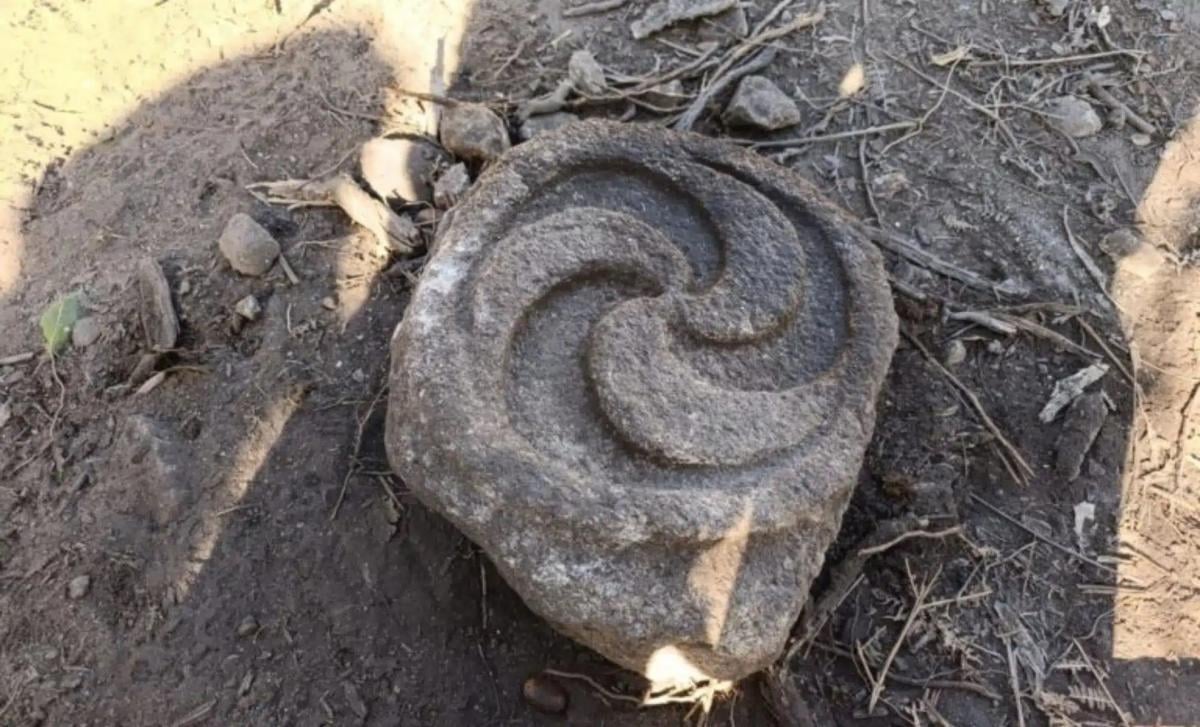
- Archaeologists found a stone with a triskelion and a petroglyph
- The find raises questions about the time and culture of creation
- Excavations continue, and many details remain unclear
Mysterious symbols on an ancient stone in Spain
Recent excavations in Galicia, in the northwest of Spain, have led to an unexpected discovery that may shed light on the ancient cultures of the region. Archaeologists uncovered a granite stone with two different symbols, one of which is a triskelion, while the other is a less detailed petroglyph. This finding was made at the site of an ancient settlement located on top of a hill, adding historical value to this discovery.
The stone was found among the ruins of a large round structure in Castro do Pico da Bandeira, near the town of A Guarda. Archaeologists note that the triskelion they discovered was hidden under the debris of a collapsed building, which likely contributed to its good state of preservation. This discovery raises many questions about the time and culture to which these symbols belonged.
The triskelion, consisting of three curved spirals radiating from a central point, is often associated with Celtic culture and the artistic traditions of ancient Europe. However, despite its prevalence in this region, the exact meaning and context of its use remain unclear. Archaeologists are questioning when this symbol was created and how it relates to another image on the stone.
An unusual find in Galicia
On the other side of the stone is a less detailed petroglyph that has yet to be identified. This difference in the quality of the symbols raises additional questions: were they created simultaneously or in different eras? Researchers suggest that the stone may have been reused over several generations, which also requires further study.
Comparison with other finds in the region may help in understanding these symbols. For example, there is mention of a stone found in the thermal complex of the Iron Age in the Portuguese settlement of Брітейруш, which also features a mysterious petroglyph. However, this is merely a hint at possible parallels, not proof of a common origin or purpose.
The triskelion is not uncommon in the northwest of the Iberian Peninsula. It appears on various architectural elements and stones dating back to the Iron Age. Some historians suggest that such circular motifs may symbolize the sun or celestial phenomena, but their exact meaning remains a subject of debate.
Triskelion and its meaning
Archaeologists continue to investigate not only the symbols on the stone but also the structure in which it was found. This structure was used from the 1st century BC to the 1st century AD, and fragments of Roman amphorae and other artifacts have been discovered within it. However, much of the finds are still hidden underground, and excavations are ongoing.
The work of archaeologists is just beginning, and they hope that further excavations will help clarify many aspects of this find. It is important to understand how these symbols relate to other cultural artifacts of the region and what role they may have played in the lives of ancient people.
Comparison with other finds may provide a key to understanding the cultural connections between different peoples who inhabited this region. For example, studying similar symbols in other places may help establish timelines and cultural links between various civilizations.
The future of research and unanswered questions
Nevertheless, many questions remain unanswered. What were the motives behind the creation of these symbols? How were they used in everyday life? These and other questions require further study and analysis to gain a more complete understanding of the culture and traditions of ancient peoples.
In conclusion, the find in Galicia represents an important step in the study of the ancient history of the region. It opens new horizons for research and emphasizes the need for further excavations and analysis to understand how these symbols fit into the broader context of historical development.
Thus, the discovery of the stone with the triskelion and the mysterious petroglyph not only adds new pages to the history of Galicia but also poses many questions for scholars that still need to be answered. This discovery could serve as a foundation for future research and a deeper understanding of ancient cultures.
Source: UNIAN