Indri can regulate voice formants like professional singers.
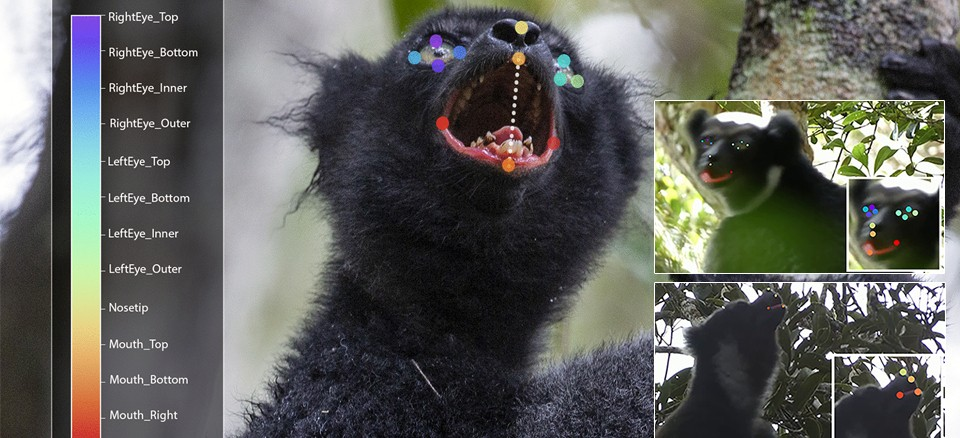
- Indri regulate the shape of the voice by widening the mouth on high notes
- Formants shift upwards, coinciding with the fundamental frequency or harmonics
- The mechanism is similar to voice control in human singers
- The study is published in PLoS Computational Biology
Researchers from Italy, along with colleagues from Madagascar, conducted an acoustic analysis of the vocalizations of the indri — the largest representatives of the lemur family. These nocturnal mammals are known for their loud and prolonged calls, which can often be heard over significant distances in tropical forests.
To study the characteristics of their voice, scientists recorded several hundred sound snippets in their natural habitat and then processed them using spectral analysis. Special attention was paid to changes in spectral characteristics when transitioning from low to high notes.
Main results
It was found that when performing high notes, indris significantly widen their mouths, which leads to an increase in the resonant frequencies of the vocal tract. As a result, the formants — resonant peaks that shape the timbral quality of the sound — shift upwards and often coincide with the fundamental frequency or its harmonics. This alignment enhances certain frequency components and makes the sound more penetrating.
A similar mechanism is known in humans: singers change the shape and volume of the throat, oral cavity, and larynx to emphasize the desired harmonics. Thus, indris demonstrate a level of vocal control previously thought to be characteristic only of certain birds and mammals.
The significance of the study
The ability of primates to purposefully regulate formants expands the understanding of the evolution of complex sound communications. This indicates a more advanced motor coordination of the vocal apparatus in lemurs than previously assumed and may serve as a bridge to understanding the earlier stages of human singing development.
The authors emphasize that such findings open new perspectives for comparative studies between humans, birds, and other mammals, allowing for a better understanding of the biological mechanisms underlying complex vocal signals.
The results of the work are published in the international journal PLoS Computational Biology, where they underwent peer review and received widespread attention in the scientific community.
The study highlights that even in modern ecosystems, there are still underexplored aspects of animal behavior, and studying their vocal abilities may provide valuable clues about the origins of human speech and music.
Source: N+1