Archaeologists discovered remains of a medieval Chinese woman who underwent nose amputation
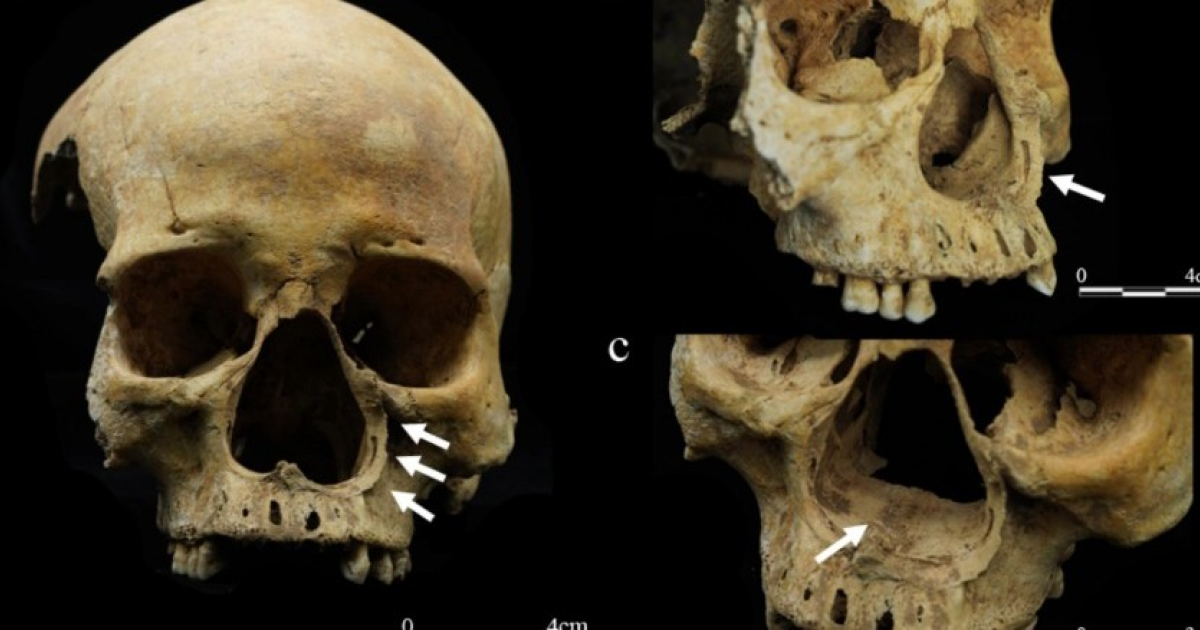
- The remains of a woman with signs of amputation were found in Henan province.
- Radiocarbon analysis showed: the burial dates back to the 13th—15th centuries.
- Nose amputation was a form of punishment in medieval China.
- This is likely the first such paleopathological case in science.
An international team of scientists conducted an analysis of the remains of an adult woman found during excavations in Henan province, China, in 2019. According to a study published in the Journal of Archaeological Science: Reports, the skeletal remains indicate that the woman survived a nose amputation — a rare case in paleopathological research.
Radiocarbon dating has allowed us to establish the time period to which the remains belong: the end of the 13th to the beginning of the 15th century AD. This time encompasses the late Yuan dynasty and the early Ming dynasty, when a complex system of criminal punishments was in place in the Chinese state.
The historical context of the find is important for understanding the medieval Chinese penal system. Nose amputation was one of the forms of corporal punishment used in ancient and medieval China. Such measures served not only as a means of intimidation but also as a way of social branding — they left an indelible physical mark, identifying the punished person for life.
The discovery of such skeletal changes in burial is a rare find for paleopathology — the science that studies diseases and pathological conditions in ancient people. Most archival evidence of punishments reaches us through historical documents, literary sources, and visual arts. Direct physical evidence in the form of skeletal remains is much rarer and allows scientists to confirm historical descriptions on a biological level.
The study of this burial contributes to the understanding of the social history of medieval China, the structure of criminal law of that period, and the living conditions of people affected by state punishments. The find also emphasizes the value of systematic analysis of remains to reconstruct a detailed picture of the lives of ancient societies.
Source: N+1