Why old CD and DVD start cracking without visible reasons
- Optical discs can spontaneously crack.
- Possible causes include chemical degradation of polycarbonate.
- Excessive cleaning and closed foam boxes are dangerous.
- It is recommended to use soft spirits and ensure ventilation.
In recent weeks, several reports have emerged online about optical media, which are usually stored in closed boxes for years, beginning to spontaneously deteriorate. This is reported by Tom’s Hardware, citing messages from Japanese collectors and similar posts on social media.
What is being observed
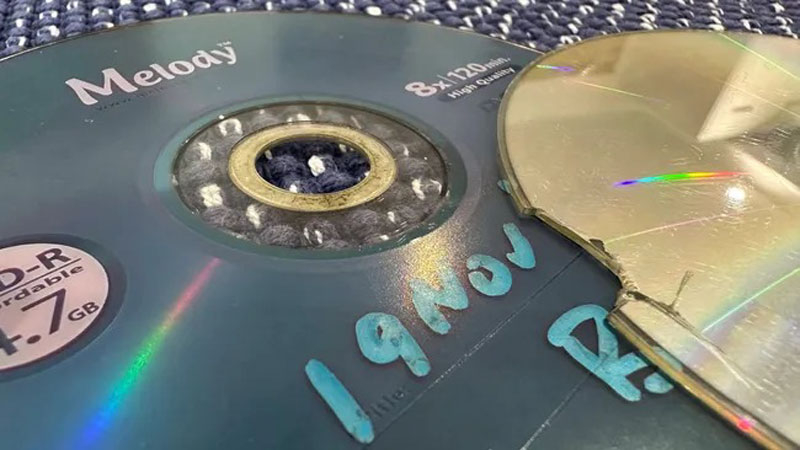
Users note the appearance of deep microcracks, and sometimes the disc literally shatters into pieces. Such defects appear on CDs, where the polycarbonate substrate is a single solid plate, as well as on DVDs, where two thinner plates are glued together, but the process of deterioration differs between them.
Among the suspected factors is not just natural aging, but chemical exposure. According to 'armchair experts', polycarbonate may react with certain substances, causing clouding, a microgrid of cracks, and ultimately, loss of impact strength.
One of the most frequently mentioned sources of the problem is excessive disk cleaning. When using strong solvents such as acetone or benzene, polycarbonate can dissolve. Even milder alcohols (isopropyl, methyl) with frequent use can accelerate degradation.
Another scenario is storage in airtight cases lined with polyurethane foam. Over time, such foam can emit volatile compounds, including ammonia, which is known for its ability to cause micro-cracks in polycarbonate. In a closed volume, gases accumulate near the surface of the disk, increasing internal stress.
These phenomena add to the already known problems of long-term storage of optical media: oxidation of the aluminum reflective layer, degradation of dyes, exposure to ultraviolet light, and delamination of DVD layers.
Experts emphasize that there is currently no laboratory confirmation of specific chemical reactions, and the conclusions are based on user observations. Nevertheless, it is recommended to limit the use of aggressive cleaning agents, choose mild solvents, and ensure ventilation when storing in polyurethane boxes.
For archivists and owners of large collections, this is an important reminder that even 'static' media require careful maintenance and monitoring of storage conditions, otherwise they may become unsuitable for reproduction without data loss.
Source: 3DNews