The Spinosaurus from "Jurassic Park" could have been an aquatic predator: what scientists have discovered
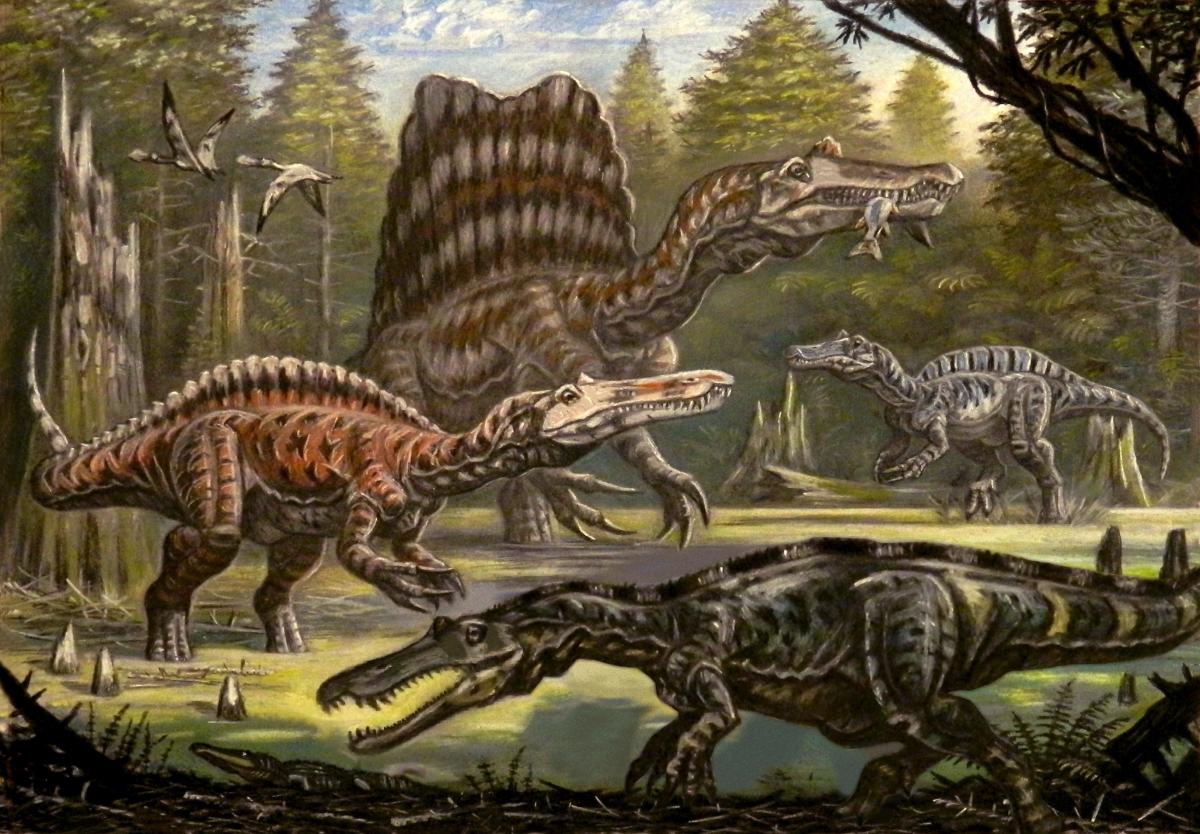
- The Spinosaurus likely spent most of its time underwater
- The study used over 11,000 measurements
- Artificial intelligence helped analyze the lifestyle of a dinosaur
The Spinosaurus from "Jurassic Park" could have been an aquatic predator
A recent study published in the journal Current Biology sheds new light on the lifestyle of Spinosaurus, a dinosaur known from the movie 'Jurassic Park 3'. Scientists analyzed over 11,000 measurements, photographs, and CT scan results, leading to the conclusion that Spinosaurus spent most of its time underwater. This discovery changes the understanding of its behavior and ecology, as there were previously different hypotheses about its lifestyle.
The study showed that many groups of animals, including reptiles and mammals, returned to an aquatic lifestyle during the course of evolution. Spinosaurus, as scientists found out, could hunt underwater, similar to modern seals or penguins. This discovery confirms the assumptions that Spinosaurus was not just a terrestrial predator but had adaptations that allowed it to hunt effectively in an aquatic environment.
Caleb Gordon, one of the authors of the study, noted that the new artificial intelligence model helped establish connections between the proportions of the skeleton and known lifestyles of animals. This allowed for an assessment of how well the Spinosaurus was adapted to an aquatic environment. The results of the study show that the Spinosaurus spent most of its time underwater, confirming its status as an aquatic predator.
New data on the Spinosaurus
The methods used in the study included analyzing a large dataset, including computed tomography and measurements of fossil remains. Scientists examined hundreds of samples stored in museums around the world, which provided a more complete understanding of the life of the Spinosaurus. This research also highlights the importance of using modern technologies, such as artificial intelligence, in paleontology.
The difficulty in determining the lifestyle of ancient animals lies in the fact that fossil remains do not always provide clear answers. Different skeletal features can indicate both aquatic and terrestrial lifestyles. This creates challenges for paleontologists, who often encounter contradictory data. A new artificial intelligence model helps overcome these challenges by providing more accurate predictions.
The study also addresses the issue of mesosaurs, marine reptiles that were thought to be fully adapted to the aquatic environment. However, new data shows that mesosaurs also spent significant time on land, changing the perception of their lifestyle. This discovery emphasizes that even the most water-adapted species retained the ability to live on land.
Research Methods
Gordon noted that the study's results show that mesosaurs did not completely abandon life on land, but rather had a hybrid lifestyle, moving between aquatic and terrestrial environments. This discovery could change the approach to studying other ancient reptiles and their adaptations to various habitats.
Thus, the new study of Spinosaurus and Mesozoic reptiles emphasizes the importance of a comprehensive approach to the study of ancient animals. The use of modern technologies, such as artificial intelligence, opens new horizons in paleontology and allows for a more accurate reconstruction of the lifestyles of fossil species.
In conclusion, the results of the Spinosaurus study may have significant implications for understanding the evolution of reptiles and their adaptations to various habitats. This discovery also highlights that many ancient species may have led more complex lifestyles than previously thought.
Impact on the understanding of ancient reptiles
The study also raises questions about how ecosystems changed during the Mesozoic era and how different species adapted to environmental changes. Understanding these processes may help scientists better understand how modern animals adapt to climate and environmental changes.
In the future, scientists plan to continue research using new technologies and analysis methods to gain a deeper understanding of the evolution and lifestyle of ancient animals. This could lead to new discoveries and a reevaluation of existing theories in paleontology.
Thus, the new study of Spinosaurus not only changes the perception of its lifestyle but also opens new horizons for future research in the field of paleontology, emphasizing the importance of using modern technologies to study ancient ecosystems.
Source: UNIAN