Migration of Ukrainian storks: routes and challenges in Africa
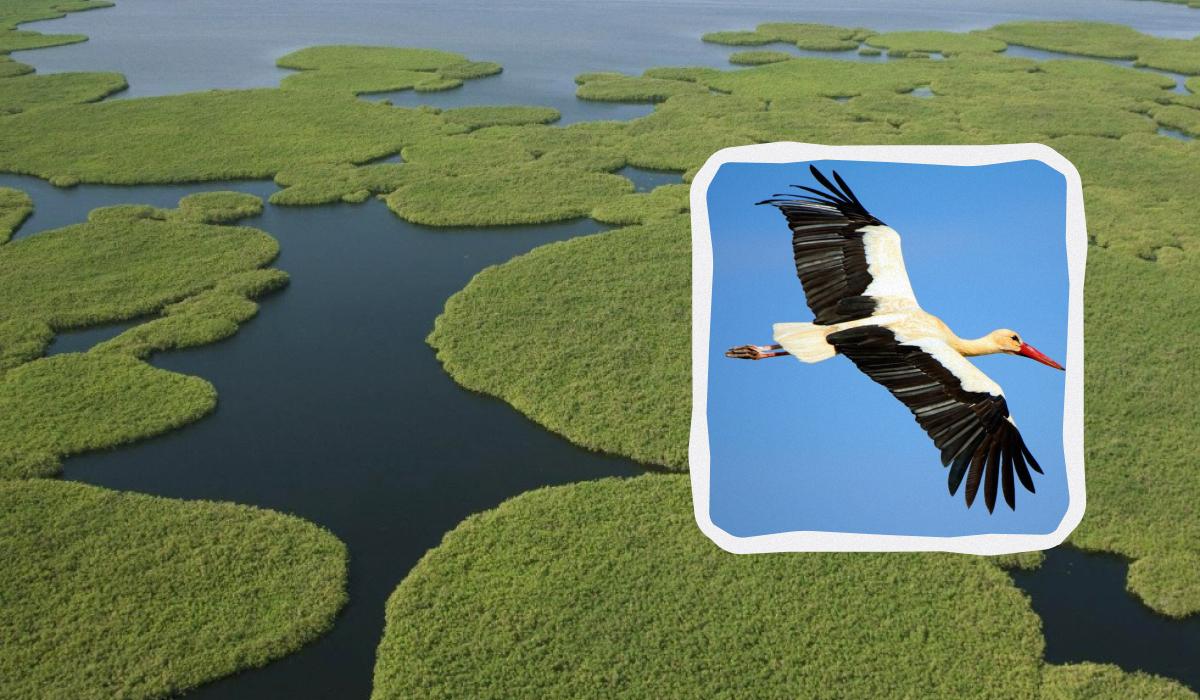
- Storks Boy and Hartbit continue their migration across Africa
- They have covered thousands of kilometers through Sudan and Chad
- GPS communication is hindered due to conflict in the region
Migration of Ukrainian Storks: Boy and Hartbit in Africa
Two Ukrainian storks, Boy and Hartbit, continue their migration across Africa, covering significant distances. Their paths traverse diverse natural zones, including deserts, savannas, and wetlands. Scientific studies show that the storks use GPS trackers to monitor their routes, allowing ornithologists to better understand their behavior and preferences for stopover sites.
Boy, for example, began his journey on September 3, departing from Lake Nasser in Egypt. In eight days, he covered over 2000 kilometers, crossing Sudan and reaching the eastern part of Darfur. It is important to note that storks may linger in certain areas, which is related to searching for food and suitable conditions for rest.
Hartbit, on the other hand, started his migration earlier, on August 24, and also covered a significant distance, reaching South Sudan. His route also passed through Sudan, where he encountered similar conditions as Boy. Both storks demonstrate an amazing ability to adapt to various natural conditions.
Migration routes of storks
However, the migration of storks is complicated by the ongoing conflicts in the region, especially in Sudan. Due to hostilities and damaged telecommunications infrastructure, GPS trackers are not always able to transmit current data on the birds' locations. This creates uncertainty in tracking their routes and status.
Scientific studies emphasize that the lack of new coordinates does not always indicate problems with the equipment or the death of the bird. In remote areas of Sudan, mobile communication is often absent, which can lead to delays in data transmission. This makes tracking the migration of storks more challenging and requires additional efforts from researchers.
Despite the difficulties, ornithologists continue to monitor the movements of Boy and Hartbit. Their routes pass through important ecosystems, such as savannas and wetlands, which play a key role in providing food and resting places for the birds. These areas are crucial for biodiversity conservation and ecosystems.
The impact of conflicts on migration
Wetlands, such as the Sudd swamps, are among the largest tropical wetlands in the world. They provide storks with essential resources, making them important for successful migration. Studies show that such ecosystems may be threatened by climate change and human activities.
The storks Boy and Hartbit represent just a small part of the migratory birds facing similar challenges. Their journeys highlight the importance of preserving natural areas and ecosystems that support the lives of many species. Ornithologists hope that further research will help better understand the migration routes and behaviors of these birds.
It has been previously reported that storks can adapt to various conditions, including using unconventional nesting sites. For example, one stork was observed building a nest on the body of a car mounted on a pole. This demonstrates the flexibility and adaptability of these birds in situations where traditional nesting sites are unavailable.
The significance of wetlands for storks
Moreover, the migration of storks also highlights the importance of international cooperation in nature conservation. Since storks cross the borders of several countries, a joint effort is necessary to protect their migration routes and habitats. This requires interaction between government agencies, environmental organizations, and local communities.
In conclusion, the migration of Boy and Hartbit is an important example of how natural and human factors affect the lives of wild animals. Their journeys show that despite the challenges they face, storks continue to seek better conditions for living and breeding. This inspires further research and conservation of natural resources.
Thus, the migration of Ukrainian storks in Africa is not only an interesting subject for scientific research but also an important reminder of the need to protect the ecosystems that support the lives of many species. Ornithologists continue to monitor their movements, hoping for a successful completion of the migration and the return of the storks to their homeland.
Source: UNIAN