Hubble and Webb found traces of the Solar System’s early history in objects beyond Neptune
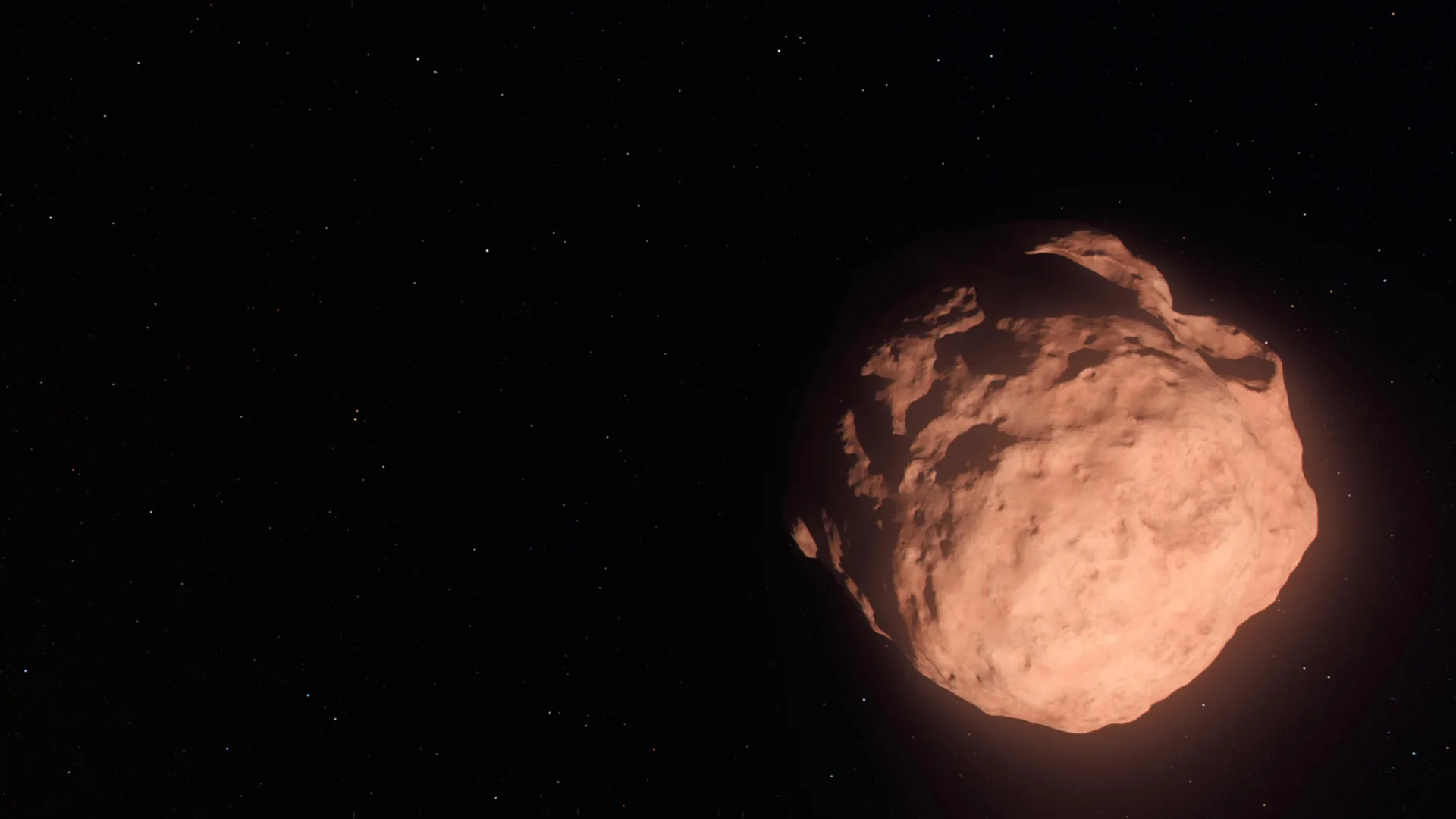
- Hubble and Webb jointly observed one patch of sky and helped discover 27 previously unknown trans-Neptunian objects.
- Small objects retained color patterns similar to those of larger bodies, contrary to expectations that collisions would have a strong influence.
- The size distributions of the cold and hot populations proved similar, but the explanation for this similarity and the preservation of their surfaces has yet to be established.
What telescopes discovered beyond Neptune’s orbit
The Hubble and James Webb telescopes helped astronomers study small bodies beyond Neptune’s orbit and discover 27 previously unknown trans-Neptunian objects. The combined analysis provided not only new information about the sizes and colors of these distant icy bodies, but also an unexpected result: there were fewer small objects than some theories predicted. At the same time, their color characteristics proved similar to those of larger bodies in the same regions.
Trans-Neptunian objects are important for studying the early Solar System because many of them never became full-fledged planets and have survived as small bodies. In this study, they are considered remnants of the material from which planets formed. Their surfaces may hold clues to the conditions in which they originated and the changes they underwent afterward. They are difficult to observe: these objects shine more than a hundred million times fainter than objects visible to the naked eye.
The results are presented in two studies published in The Astronomical Journal. The papers focus on the sizes, composition, and ancient history of newly identified objects. Research teams led by doctoral students at the University of Victoria in Canada and Northern Arizona University conducted the deepest survey of trans-Neptunian objects to date. The Victoria team was led by the National Research Council of Canada.
How the study of distant icy bodies works
Both space telescopes observed the same patch of sky at the same time, but collected different kinds of light. Hubble recorded visible light, while Webb observed infrared light. Comparing the data allowed astronomers to study the objects’ colors, estimate their sizes, and determine details of their motion around the Sun. Combining the two types of observations made it possible to study faint objects that are difficult to detect and investigate using just one method.
Colors give researchers clues about the chemical composition of a surface and help distinguish the possible histories of objects. In this study, their significance is compared to fingerprints: they can reveal an object's individual properties. However, color alone does not provide a definitive answer about what happened to the surface. It was therefore compared with size and orbital characteristics to identify general patterns among distant objects.
Researchers divided trans-Neptunian objects into dynamically “cold” and “hot” populations. These terms describe not temperature, but orbital characteristics. Cold bodies move along relatively circular paths and remain close to the plane in which most planets orbit. Hot objects, by contrast, have more elongated orbits and travel above and below the Solar System's main plane.
Two populations with different orbital histories
According to the study’s account, cold trans-Neptunian objects mostly remained in the regions where they formed. Their orbits are relatively calm and not highly elongated, and their motion stays close to the common plane of the planets’ orbits. This makes them important for comparison with bodies whose trajectories changed significantly. Observations showed that even the smallest members of the cold population retain color features similar to those of larger objects.
Hot objects are thought to have a different history: they formed between the present-day orbits of Uranus and Neptune, then were scattered outward as the giant planets shifted position in the early Solar System. Their orbits are now more elongated, and their paths pass both above and below the planets’ main orbital plane. Despite this dynamic past, the population’s color patterns are also linked to its formation conditions.
The similarity in the color properties of cold and hot objects is especially striking given the differences in their orbital histories. Hot bodies underwent orbital rearrangement, whereas cold ones largely remained near their birthplaces. Nevertheless, both groups exhibit color correlations that researchers consider traces of their origins. Observations indicate that these features changed less than might have been expected over the lifetime of the Solar System.
Unexpected Results and Open Questions
Before the data were obtained, scientists expected small trans-Neptunian bodies to be especially strongly affected by repeated collisions over billions of years. Impacts could fragment objects, expose fresh material, and thereby alter the composition and color of their surfaces. However, the newly observed objects showed overall color relationships similar to those seen in larger bodies. This does not fit the simple expectation that small bodies should necessarily look different because of frequent collisions.
At least two possible explanations remain. The objects may have experienced fewer collisions than astronomers expected, or their surfaces may be able to preserve their original composition even after impacts. The data do not yet allow researchers to choose between these possibilities. Anastasia Morgan, the Northern Arizona University doctoral student who led the study of colors and composition, noted that small bodies seem to preserve the history of their formation. Co-author David Trilling emphasized that hot objects bear traces of their birthplace despite changes in their orbits.
Webb data added another finding: the size distributions of the hot and cold populations turned out to be remarkably similar. This is especially interesting because, according to the study, the groups formed in different regions of the early Solar System. The similarity may mean that planetesimal-formation processes worked in similar ways under different conditions. But the observations do not yet explain why the distributions match, exactly how surfaces are preserved, or how often collisions occurred.
Source: ScienceDaily