Decagon in the southern polar region of Saturn discovered by the Hubble telescope
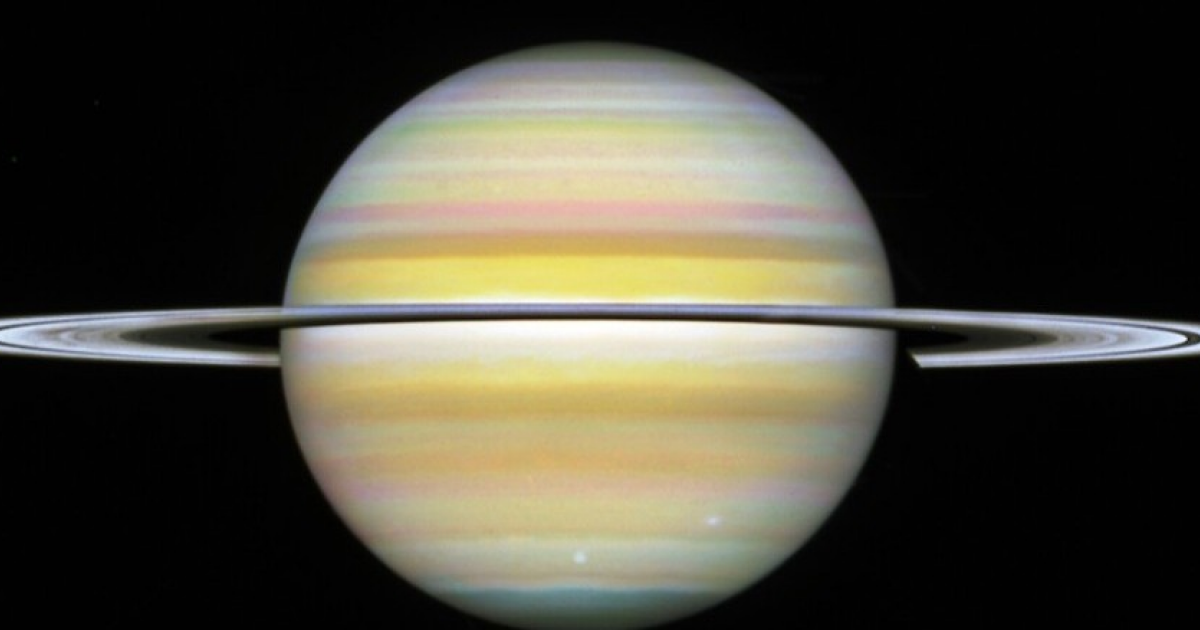
- Hubble has detected a decagon in the southern polar region of Saturn
- The hexagonal atmospheric wave was theoretically predicted
- The structure helps to understand the mechanisms of polygonal formations
- The results are published in Science Advances
The American Hubble Space Telescope has recorded an unusual atmospheric structure in the southern near-polar area of Saturn – a decagon, that is, a wave taking the shape of a regular decagon. This is the first observation of such a polygonal pattern at the planet's south pole.
Prediction and confirmation
Scientists studying the dynamics of the atmospheres of gas giants predicted several years ago the possibility of the emergence of polygonal waves in the polar regions of Saturn. Models indicated that under certain conditions, zonal winds could become unstable, forming stable geometric shapes.
New data from Hubble confirmed these theoretical calculations: the images clearly show a regular decagon, the boundaries of which are defined by sharp gradients in wind speed. According to researchers' estimates, such a structure can persist from several weeks to several months, depending on changes in atmospheric flows.
Comparison with a known polygon
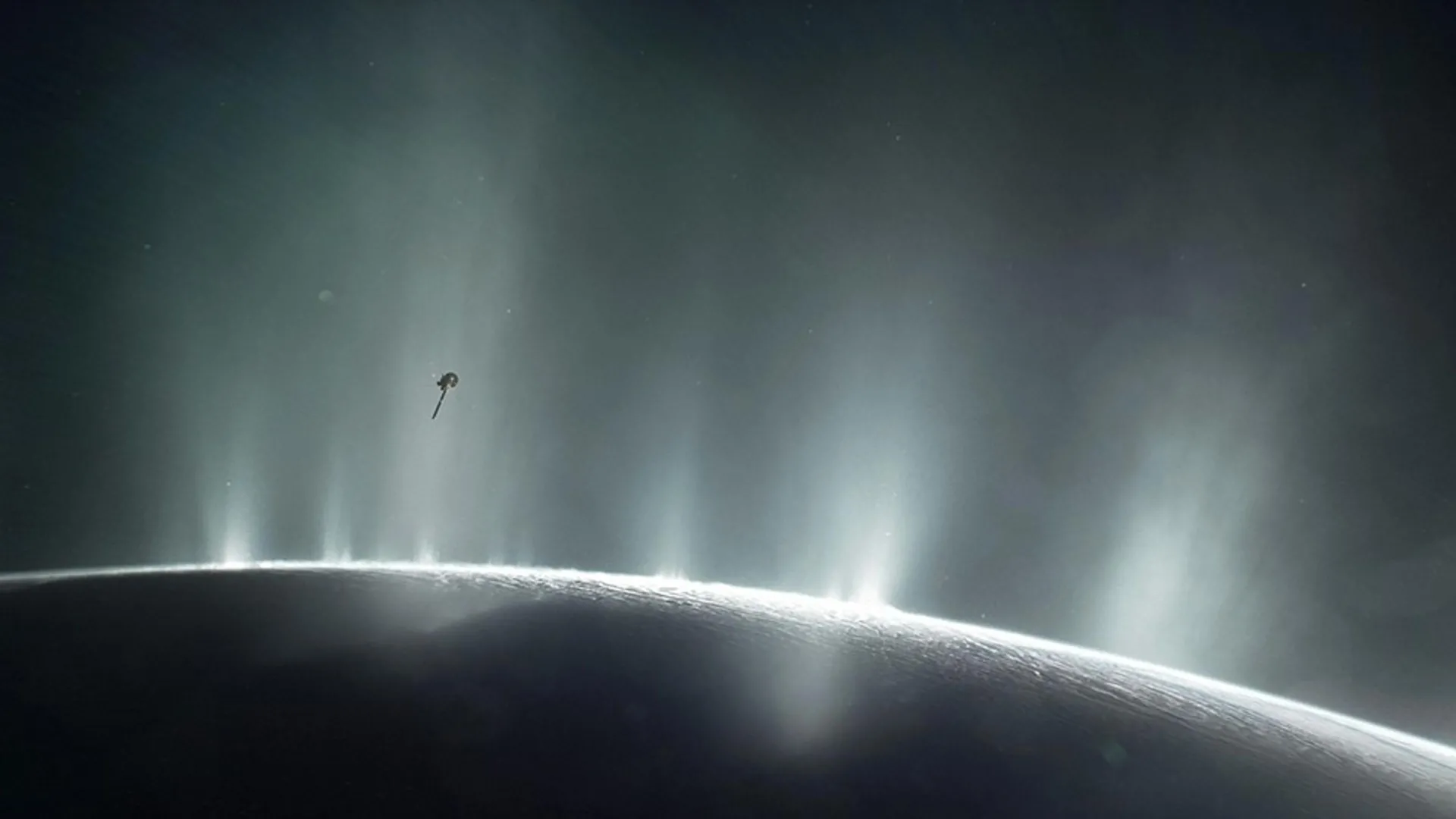
The most famous polygonal feature of Saturn is the hexagonal vortex over the north pole, discovered in the 1980s and extensively studied by the Cassini mission. The decagon in the southern polar region differs not only in the number of sides but also in its location: it is closer to the equatorial part of the polar cap, where wind flows are more complex.
The comparative analysis shows that both polygonal formations arise from similar mechanisms – barotropic and baroclinic instability, however, differences in temperature profiles and the chemical composition of Saturn's atmosphere lead to different geometric shapes.
The significance of the discovery
The discovery of the decagon opens new opportunities for studying both long-term and short-term polygonal structures in the atmospheres of giant planets. Scientists will be able to refine the parameters of atmospheric dynamics models, which, in turn, will help better understand the climatic processes on Saturn and compare them with similar phenomena on Jupiter, Uranus, and Neptune.
Furthermore, the results of the study may influence planetary climate models used to assess conditions on gas-giant exoplanets. Understanding the mechanisms of geometric wave formation in atmospheres will help predict their appearance in distant worlds, where direct observations are currently impossible.
The opening of the decagon was published in the scientific journal Science Advances, where the authors detailed the methodology for processing Hubble data, the parameters of the observed wave, and its potential duration. The article has already sparked interest in the international scientific community, and further observations are planned using both ground-based telescopes and future space missions.
Source: N+1