The new activation pathway of the pyrin protein through the CDC42 regulator
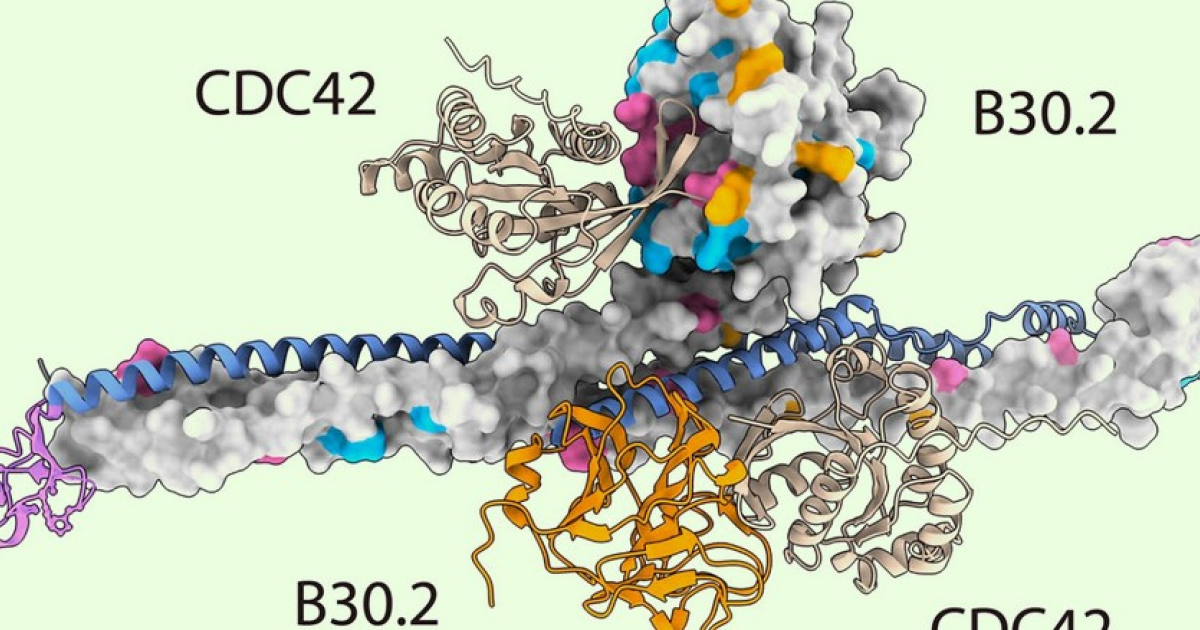
- CDC42 directly activates pyrin by binding to the C-terminal domain.
- The mechanism complements the known RhoA-dependent activation pathway.
- The studies are published in Science Immunology.
- The discovery may impact the treatment of familial Mediterranean fever.
Three independent laboratories, using different experimental approaches, identified a previously unknown way to activate pyrin — a key inflammasome protein, mutations in the gene of which cause familial Mediterranean fever and other autoinflammatory diseases.
Researchers found that the cell cycle regulator CDC42 can directly interact with the C-terminal domain of pyrin. This binding leads to the activation of pyrin, similar to the already described mechanism dependent on the RhoA protein.
Experiments conducted in different models showed that increased CDC42 activity is associated with enhanced inflammasome assembly, as evidenced by the rise in levels of active caspases and pro-inflammatory cytokines. Blocking CDC42 suppressed these effects, indicating its key role in the process.
It was previously thought that the activation of pyrin occurs exclusively through the RhoA-dependent pathway, which regulates actin structures and thereby controls the availability of pyrin to its substrates. The discovery of an alternative CDC42-dependent pathway expands the understanding of how a cell can rapidly respond to stress signals.
The importance of the result is confirmed by the fact that familial Mediterranean fever is characterized by recurrent episodes of fever, abdominal pain, and inflammation associated with the dysregulation of pyrin. The new mechanism may serve as a basis for developing more precise therapeutic strategies aimed at modulating CDC42 or its interaction with pyrin.
Context and perspectives
CDC42 is known as one of the main regulators of the cell cycle, polarity, and migration. Its involvement in immune responses is just beginning to be studied, and current data suggest a broader role in controlling inflammatory processes than previously thought.
The publication of results in the journal Science Immunology is accompanied by comments from an independent expert, who noted that the discovery could change the approach to treating autoinflammatory diseases by allowing for the consideration of two parallel signaling pathways in drug development.
Thus, the discovered CDC42-dependent pathway of pyrin activation represents an important step towards a more complete understanding of the molecular mechanisms underlying familial autoinflammatory syndromes and opens new opportunities for clinical intervention.
Source: N+1