A medieval Scotsman died from a catapult shot, scientists discovered.
- The remains date back to the 14th century, found in Scotland
- The skeleton has numerous severe fractures
- The injuries indicate a shot from a trebuchet
- The results were presented at the conference in Berlin
During the annual meeting of specialists in paleopathology held in Berlin, one of the speakers drew the attention of colleagues with a rare find – a human skeleton excavated from an archaeological layer in Scotland several decades ago. The remains belonged to a man whose age was estimated by specialists to be around thirty years.
The study showed that the bones exhibit a vast number of fractures of varying severity: from microcracks in small bones to massive fractures of large limbs and the spine. Moreover, the nature of the injuries indicates not ordinary combat wounds or falls, but the impact of a powerful, directed impulse.
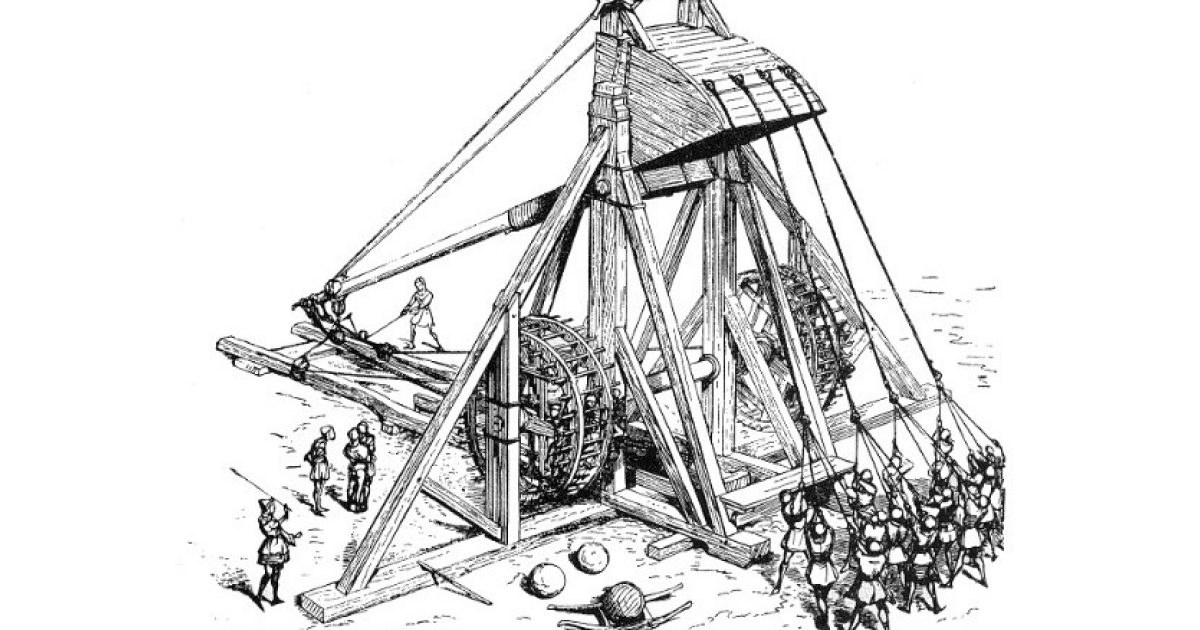
To clarify the cause of the injuries, scientists conducted a comparative analysis with known samples of injuries sustained from impacts by siege engines. The specialists concluded that the only explanation for such large-scale and simultaneously uniform fractures could be a shot from a trebuchet – a large catapult capable of throwing heavy projectiles over distances of several hundred meters.
Historical context of trebuchets
The trebuchet became one of the most effective siege systems in 14th century Europe. Its use allowed besieged cities and fortresses to deliver devastating blows to walls and defensive structures. However, direct hits on living people were rare: usually, projectiles destroyed fortifications rather than striking individual figures.
Thus, the discovered skeleton represents a unique example of how siege technology could have caused fatal trauma to an individual who was likely near the impact site. This finding expands the understanding of the real impact of trebuchets on the battlefield and in civilian contexts.
For paleopathology, such a case is of particular value. It demonstrates how modern methods of analyzing bone structures allow for the reconstruction of details of combat that took place more than seventeen centuries ago. Furthermore, the finding confirms that serious armed conflicts occurred in Scotland during that period, where advanced siege technologies were used.
The study was published in the popular science journal Live Science, and the report proves that archaeological finds can shed light on the little-studied aspects of medieval warfare, helping to better understand both technological progress and the human losses associated with it.
Source: N+1