How to verify the authenticity of an online store before payment
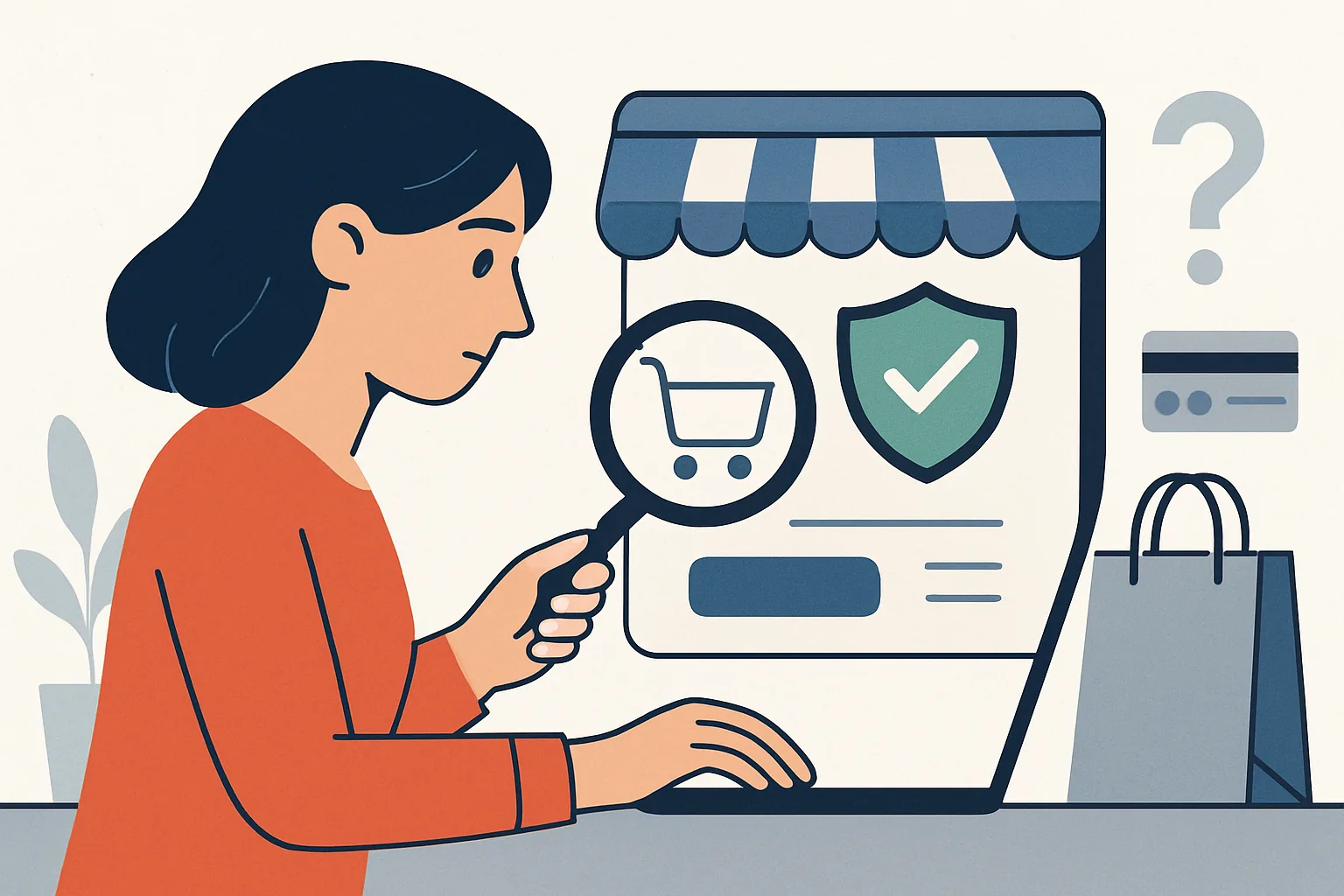
How to verify the authenticity of an online store before payment: a step-by-step guide
Shopping online has long ceased to be something unusual. We order household appliances, clothing, books, gifts, sometimes even medicines and groceries — and we do almost all of this with just two clicks. But it is in this convenient habit that the main vulnerability lies: the appearance of the site can be very convincing, but often behind a beautiful facade lies an empty shell. Therefore, before making a payment, it is useful to take a moment to check who exactly is on the other side of the screen.
The good news is that you don't need to be a cybersecurity expert for this. It is enough to carefully look at the site, verify the information, and not be lazy to perform a few simple checks. Below is a clear step-by-step guide that helps distinguish a normal online store from a questionable project. If you want to delve deeper into the topic website fraud check, start with the basic signs and only then move on to the details.
1. Signs of a reliable and suspicious online store
The first impression says a lot about the website, although it does not provide a full guarantee. A reliable store usually has a clear structure, neat design, decent product photos, clear descriptions, and not overly aggressive promises. Suspicion should be raised by the opposite things: too tempting prices, constant 'super promotions' without explanations, strange texts with errors, and empty sections where instead of useful information there are general phrases.
It is especially important to look at the contact information. If the website only has a feedback form and messenger, while the phone, address, and details are hidden or absent, this is a reason to be cautious. Reliable stores do not hide: they provide the company name, legal information, contact methods, return and delivery policies. Yes, sometimes it looks boring. But in such matters, boredom is better than surprises.
Another marker is the return policy and guarantee. If the store sells electronics, clothing, or shoes, and there are no sections with return conditions at all, it's better not to rush into payment. The same applies to sites where the 'Buy' button is immediately visible, but information about the seller has to be searched for with a flashlight and a magnifying glass.
And finally, the SSL certificate. The padlock in the address bar does not make the store honest by itself, but its absence on a modern site is a bad sign. Especially if the site asks for personal data or card information. If the text is full of errors, the photos look like they were randomly gathered from different sources, and the prices are too good to be true, it's worth taking a step back and double-checking everything once more.
2. Step 1. Check the domain, website address, and the age of the store
You should start with the website address. Fraudulent schemes often use domains that resemble well-known brands: one extra letter, a symbol replacement, a strange hyphen, or an extra subdomain. At first glance, the difference is almost imperceptible, but this is exactly how the deception is built. For example, instead of the usual domain, there may be an address with a typo or a suspicious ending. Read the entire browser line carefully, not just the name on the homepage.
Suspicious long subdomains can also be a red flag. When a well-known brand seems to be in the name, but then there’s a chaotic mix of words, it’s a reason to think twice. Especially if the site looks 'official', but the address has extra levels, technical words, or strange combinations of symbols. A serious store usually has a simple and logical address.
Next is the age of the domain. A newly created site is not necessarily fraudulent, but if it’s only a few days or weeks old and already selling expensive equipment at huge discounts, it requires caution. You can check the registration date through whois or through services that show when the domain was created and when its registration expires. If the store claims to have been operating for many years, but the domain was registered very recently, the discrepancy is obvious.
It’s important not to fall into extremes here. An old domain is not a guarantee of reliability, and a new one is not a death sentence. But it’s useful to compare the age of the site with other data: how long the company has been mentioned online, whether it appears on maps, if the brand shows up in searches, and whether old pages have been preserved. The more discrepancies there are, the less trust there is.
3. Step 2. Review legal information and contact methods
A legal store should have not only beautiful photos and a payment button but also a legal 'foundation'. Look for the INN, OGRN, legal address, full name of the company or individual entrepreneur, as well as a public offer. This information is usually placed in the footer of the website, in the 'About Us', 'Contacts', 'Delivery and Payment', or 'Legal Information' sections.
If the company's name is listed on the website, it should be verified against government registries and searches. Sometimes it turns out that the name exists, but it does not relate to the store, or the details belong to a completely different organization. Another alarming sign is template data without real-world ties: a beautiful address without an office, a phone number that does not answer, and an email on a free domain instead of a corporate one.
Contact methods should be active. It is helpful when there is a phone, e-mail, messenger, feedback form, and preferably, a working schedule. If you are only offered to write in a chat-bot or leave a request without a guarantee of response, this is too fragile communication for a store to which you are going to entrust money. In dubious projects, there is often no proper communication channel at all: people write to the email but do not receive a response, and the phone either does not exist or the call goes unanswered.
Take a close look at the offer. It should outline the terms of purchase, return, liability of the parties, delivery times, and the procedure for dispute resolution. When a store has only a short page with general words, it is not a crime yet. But if the legal block is hastily assembled, with copy-pasting and without specifics, trust in such a seller noticeably decreases. And if there is no legal information at all, it's better to stop.
4. Step 3. Checking the website for fraud
When a person searches for the query 'check website for fraud', they usually want not theory, but a quick answer: can this store be trusted. And the answer consists of several simple signals. First, check the domain's reputation in search engines and on special services. Sometimes the browser already warns about an unsafe connection, phishing, or an attempt to spoof the page. Such warnings cannot be ignored: they do not appear for no reason.
Pay attention to blacklists and complaint databases. If users are reporting en masse that they did not receive the product after payment, that they were pressured into additional payments, or that the site disappeared after transfers, this is a serious reason to refrain from making a purchase. It is useful to search not only for the store name but also for the entire domain: sometimes the brand name is different, but the site has long been involved in negative discussions.
Compare the details provided on the site with those that appear in reviews, on maps, and in the organization's cards. Scammers often change the store name but keep the old phone number, email address, or payment details. When identical discrepancies are found in different places, the scheme starts to become very clear.
You should also be wary of signs of phishing: a request to urgently enter card details on a separate page, strange redirects, pop-up windows with 'identity confirmation', branding errors, and discrepancies between the website address and the page content. Sometimes the site looks almost professional, but the internal links lead to different domains. This is no longer a minor detail, but a full-fledged risk signal.
In such cases, it is better not to rush and to additionally check the material about that, how to check a website for fraud: guideThe less haste, the less likely you are to make an expensive mistake.
5. Step 4. How to check reviews about the site
Reviews are a useful tool, but only if you read them carefully. Start with a regular search: enter the store name, domain, and then add the words 'reviews', 'scam', 'fraud', 'return'. This way, you will quickly see not only positive comments but also complaints. Then check maps, social networks, and independent platforms where people write more vividly and less formally than on the site itself.
What to look at first? Identical phrasing. If the reviews are too similar to each other, as if written from the same template, this is a warning sign. Fake reviews often reveal themselves with the same style: 'Great store, fast delivery, highly recommend', 'Everything is great, the product arrived on time', 'Thank you, the quality is top-notch'. When there are many such messages in a row, and little specificity, it is wise to treat them with caution.
Look at the freshness of the reviews as well. In a reliable store, they are usually spread out over time: there are old ones, there are new ones, and there are different moods. If all the positive comments appeared in a short period, and then silence followed, it’s possible that someone just launched a reputation improvement campaign. Sometimes the store itself does this, sometimes intermediaries do. In any case, this does not strengthen trust.
It’s useful to check the profiles of the authors. If an account has one or two posts, no avatar, a strange name, and reviews only in favor of one store, it looks like a one-time activity. Real buyers usually write not only in one place, and their style is less sterile. Sometimes the review shows everyday details: how it was packaged, when it was delivered, how the courier communicated, what happened during the return. It’s these details that deserve attention.
Don’t forget about negative ratings either. One angry comment doesn’t prove anything, but repeated complaints about non-working support, delivery delays, and refusal to return money create a significant picture. Especially if the store simply deletes messages instead of responding or replies with the same templates.
6. Step 5. Check the payment, delivery, and return conditions
The safest payment scenario is one where the buyer has protection. This can be payment by card through a well-known payment gateway, cash on delivery, payment upon receipt, or services that allow disputing the transaction. If the store insists only on 100% prepayment to an individual's card, especially without a contract, receipts, and transparent details, this is a very bad sign.
Why is this dangerous? Because after transferring the money, the buyer has almost no leverage. If the goods are not shipped or the wrong items are sent, proving anything will take a long time and be stressful. Yes, prepayment itself is not prohibited and is not always fraudulent, but in combination with empty contacts, dubious reviews, and a lack of legal information, it becomes risky.
Check how delivery and returns are described. A reputable store usually specifies order processing times, delivery methods, exchange procedures, return policies, and guarantees. If the rules contain many vague formulations and the seller's responsibility is unclear, it raises concerns. It is important for the buyer to understand: where to turn if the product is unsuitable, how long to wait for a refund, and in what cases the seller may refuse.
Sometimes it is useful to check the financial side of the purchase as well. If the website promises 'no fees', but additional charges, insurance, verification services, processing fees, or 'automatic deductions' appear during the process, it is worth stopping and carefully reviewing the terms. You can read more about this in the material how to check a website for hidden fees. Such things are often disguised in fine print and can lead to unpleasant surprises after payment.
7. Step 6. What to do before payment and if there are doubts
Before clicking the payment button, it's useful to go through a short final checklist. First, double-check the details: company name, TIN, address, phone, email. Second, make sure that the website and brand are consistent everywhere — in the header, in the contacts, in the details, in receipts, and in emails. Third, look for mentions of the store outside its own website: in search, on maps, in social media, in reviews. Fourth, take screenshots of the product page, payment and return conditions, as well as the page with the details. If something goes wrong, these materials will be useful.
A good habit is a test call or message. If a number is provided, try calling and asking a simple question about the product, delivery times, or returns. The reaction will reveal a lot. In a normal store, they respond calmly and directly. In a questionable one, either they don't answer the phone, or they avoid specifics, or they start pressuring: 'hurry up and pay, the product is running out.' The pressure of urgency is an old but still effective trick.
If doubts remain after all checks, it is better to refrain from making a purchase. This is not 'over-caution', but normal buyer discipline. Money appreciates not only counting but also attentiveness. And if you feel that the site is rushing too much, promising too much, and explaining too little, trust that feeling.
When there is suspicion of fraud, action should be taken without pause: save correspondence, screenshots, payment data, name the bank or payment service through which the transaction was made, and immediately contact the support of the platform or bank. If the payment has already gone through, the sooner you start the dispute, the greater the chances of stopping the charge or fixing the disputed transaction. And if you see clear signs of fraud, you can report it to specialized services, the bank, and law enforcement agencies — depending on the situation and the amount of damage.
And one more practical tip: don't be ashamed to double-check even a 'solid' website. A polite seller won't be offended by questions about details, returns, or payment methods. On the contrary, such questions are a natural part of the purchase. And they often separate a normal online store from a beautiful but short-lived decoration.
| What to check | What to look for | Alarm signal |
|---|---|---|
| Website address | Typos, subdomains, strange symbols | Looks like a well-known brand, but with changes |
| Details | TIN, OGRN, company name, address | No data or they do not match |
| Reviews | Different sources, live details, timeline history | Identical texts and fresh mass manipulation |
| Payment | Safe method, clear terms | Only transfer to an individual's card |
| Return and delivery | Terms, rules, guarantee | Vague or missing terms |
As a result, the authenticity of the online store is checked before payment not by one 'secret' sign, but by a combination of details. The more matches between the name, details, contacts, reviews, and legal information, the more at ease.