How to document damage: step‑by‑step guide
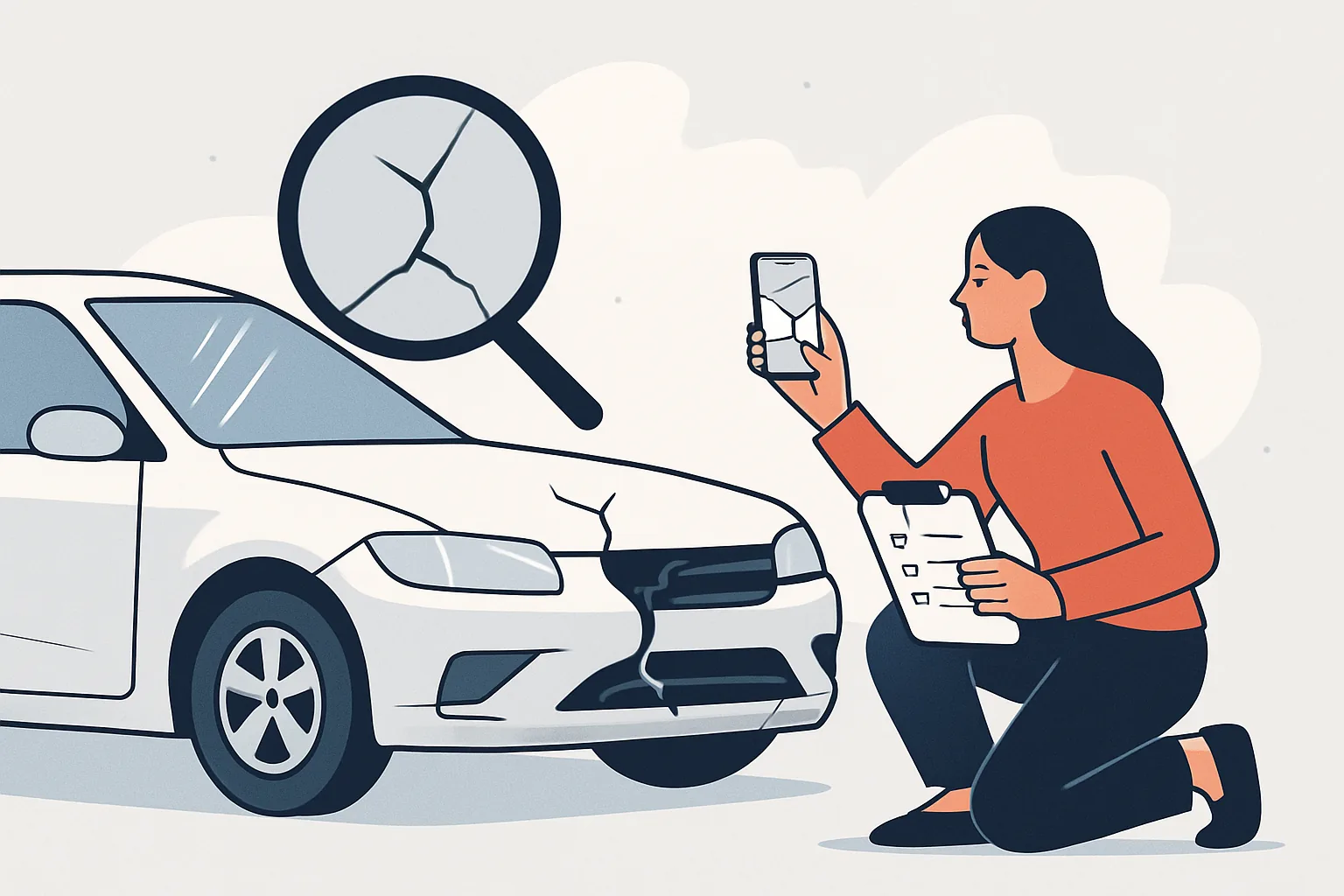
How to document damage: step‑by‑step guide
When an accident, flooding, fire, or theft occurs, people often rush to save their belongings and only then think about how to document the damage. This is a mistake. The first 10-15 minutes often determine whether your words will be taken seriously later. And yes, this is not just about a major accident: a broken door, a shattered window, a damaged laptop, or a flooded ceiling also require proper documentation.
1. What is considered damage and when should it be recorded
Damage is not an abstract inconvenience, but a specific harm to property, premises, vehicles, or health that can be described, photographed, and assessed. Documentation is needed after a car accident, flooding of an apartment, fire, short circuit, falling tree, damage to goods in a store, theft, burglary, roof leaks, and any other cases where the question of compensation may arise later.
In practice, it is better to document the damage immediately, even if it seems that 'everything is already visible.' It is visible today. In two days, the traces may dry up, cleaning will change everything, and a neighbor may say that the stain appeared earlier. In disputes, it is not emotion that wins, but evidence.
There is a simple rule: if the damage could cost money, time, or lead to a dispute with the other party, it needs to be documented. This also applies after a small crack in the glass. After a major accident — even more so.
2. Ensure safety and stop the progression of damage
First — safety. Then — paperwork. If there is a water leak in the apartment, turn off the riser or faucet; if there is a smell of gas, leave the premises and call the emergency service; if you see sparking, cut off the power to the area through the panel. Don't be a hero. One extra step can sometimes turn damage into even more damage.
In case of fire, smoke, structural collapse, or explosion threat, call emergency services. If there is damage in the entrance, parking lot, or yard, cordon off the area with makeshift means to prevent anyone from stepping in, driving in, or destroying evidence. One fallen passerby can complicate everything for months.
If you can stop the damage from worsening without risk, do it. Place a bucket, cover furniture with plastic, move appliances away from water, and take valuable items out of the danger zone. But do not throw away the damaged items or start urgent repairs. Early repairs are a common cause of disputes.
3. Take photo and video documentation
Photos and videos are not for aesthetics. They show the scale, location, and connection between the event and its consequences. Capture a wide shot of the room, entrance, yard, car, or store, then move on to close-up details: cracks, leaks, soot marks, dents, cuts, peeling, broken locks, and wet areas.
It is useful to document apartment numbers, car license plates, entrance, date on the phone screen, sign, address plate, or any other landmark that ties the shot to the location. If the damage is related to equipment, capture serial numbers, markings, seals, and the condition of cords. If it’s about a car, show the license plate, the position of the vehicle on the road, and skid marks.
Take your time when shooting. One good shot is better than three blurry ones. Videos should be made slowly, with a voice commentary: where you are, what exactly is damaged, how many rooms are affected, who is nearby. This helps to remember details later, especially if two weeks have passed.
The materials should be understandable without your explanations. The judge, expert, and insurance employee are not obliged to guess where exactly the pipe leaked. Therefore, shoot in such a way that it can be understood from the frame: here is the kitchen, here is the ceiling, here is the source of water. Small items are also important, but only together with the overall plan.
4. Prepare the initial report or inventory of damages
The initial report is needed to translate emotions into a list. It indicates the date, place, circumstances, participants, a list of damaged property, and the nature of the damages. For example: 'sofa - wet spots on the right side, musty smell, deformation of the filling' or 'door - signs of forced entry, lock damaged, scratches on the surface.'
If there are many items, prepare an inventory in a table or list. Do not write 'furniture was damaged'; write specifically: table, wardrobe, armchair, television, carpet, lamp. For each item - a short description of the damage and, if known, the approximate cause. The more precise, the fewer disputes later.
| What to indicate | Why is it needed |
|---|---|
| Date and time | To link the damage to the event |
| Address and premises | To avoid confusion between objects |
| List of property | To understand the extent of the damage |
| Nature of the damages | To compare with the assessment later |
| Participants and witnesses | To confirm the circumstances |
The document can be signed by the victim, the guilty party, the management company, a representative of the homeowners' association, a neighbor, or other participants in the situation. If someone refuses to sign, it's not the end of the story. A note about the refusal is made in the act, and those present are indicated. It's better to even record an awkward pause. It is also a fact.
If you don't know how to document the damage on site, start with this act. It does not replace photos and videos, but puts everything into a clear scheme. Without a scheme, evidence can easily scatter.
5. Call the competent services and obtain official documents
In case of an accident, the police and, if necessary, emergency services are needed. In case of fire — the Ministry of Emergency Situations. In case of flooding in the house — the management company, emergency crew, and sometimes a representative of the utility provider. In case of theft — the police. In case of an electrical accident — the electrical service. The point is the same: an official trace is needed.
After the service visit, request an act, certificate, protocol, conclusion, or other document that confirms the very fact of the event and its consequences. If it concerns an apartment, look for a flooding act; if it's about a store — an inspection act; if it's about a car — documents about the accident and the incident scheme. Document numbers, full names of officials, and the date of issuance are also important.
Sometimes the service arrives in an hour, sometimes in 6. It's frustrating. But while you wait, do not completely clean the scene and do not hide the damages. Otherwise, the document will look into an empty room instead of the actual damage.
A good practice is to immediately write down the name, position, and phone number of the employee who created the report. It will be easier to clarify details later if the insurance requests corrections or the court asks for explanations. One phone number can save a lot of nerves.
6. Document the witnesses and correspondence
Witnesses are needed not only in movies. A neighbor, security guard, courier, technician, passerby, store employee — anyone who saw the event or its consequences can later confirm your version. Take their name, phone number, and, if possible, a short written explanation in 3–5 sentences.
Witnesses are needed not only in movies. A neighbor, a security guard, a courier, a handyman, a passerby, a store employee — anyone who saw the event or its consequences can later confirm your version. Take their name, phone number, and, if possible, a short written explanation in 3–5 sentences.
If the person is willing, ask them to describe what they saw: the time, place, what happened, and the condition of the room or item. No long speeches are needed. It's better to be brief and to the point. For example: 'At 14:20, I saw water on the floor in the hallway, the ceiling was wet, the owner called the emergency service.' how to check a website for fraud, the same principle applies here: document the source of information, not your memory of it.
There is also a practical detail: do not discuss the damage only verbally if the issue is disputed. Written correspondence leaves a better record than any verbal agreement. People forget faster than they think.
7. Conduct an independent damage assessment
If the amount of damage is disputed or the responsible party refuses to pay, invite an independent appraiser. Their report shows the cost of restoration, replacement, or repair. This is no longer the owner's emotion, but a formal assessment with a description of the methodology, a list of damaged items, and calculations.
An appraisal is usually ordered after the initial recording, when there are already photos, a report, and documents from the services. Then the appraiser sees not only the current state of the item but also the circumstances. If everything is done the other way around, it may later be claimed that the item was damaged after the event. And the dispute will start all over again.
The report will be useful for a claim, insurance payout, or court. Sometimes the parties come to an agreement after they see not 'approximately 50 thousand,' but an official calculation with details. In other cases, the dispute drags on, but you already have a basis. No magic. Just paper.
If you're interested in how people behave in complex and stressful situations, also take a look at the most brutal experiments of psychologists — it clearly shows how differently people react to pressure, fear, and loss of control. This happens in life more often than it seems.
8. Prepare documents for a claim, insurance, or court
The final package usually includes photos, videos, the initial report, certificates, protocols, correspondence, witness contacts, receipts for property, the appraisal report, and a claim for damages. If something is missing, it's not a reason to abandon the case. But the more complete the package, the less chance there is that you will be told to 'send another page.'
Receipts and purchase documents help confirm the value of items. If there are no receipts, warranty cards, bank statements, purchase photos, work orders, or other confirmations will suffice. For old furniture, equipment, or finishes, the price can be disputed particularly harshly, so every trace of purchase carries weight.
The claim states what happened, when, what damage was incurred, what documents are attached, and what amount you are requesting for compensation. Brevity is better than verbosity here. There is no need for a literary novel of 5 pages if a coherent text of 1 page with attachments is sufficient.
If the case goes to court, keep the originals of all documents and make copies for submission. At each stage, it is useful to have a separate folder: digital and paper. In the digital one, store scans, photos, and videos in two places. It is easier to lose one phone than to explain later where the evidence has disappeared.
When you know how to document the damage, the dispute ceases to be chaos and turns into a chain of facts: event, trace, document, assessment, claim. And it is this chain that most often withstands scrutiny when the other party has only words left.